
- Pozovite nas
- +8618633052223
- njhdvlz@163.com
sep . 05, 2025 14:28 Povratak na listu
Efficient Flow Control with Lug Type Butterfly Valves
Robust Engineering Behind the Lug Type Butterfly Valve
The lug type butterfly valve is a high-performance flow control solution designed to deliver reliable shutoff, isolation, and modulation in a wide range of industrial applications. Featuring a strong cast body with threaded inserts (or lugs) around the valve circumference, this design allows it to be securely bolted between flanges—making it ideal for dead-end service.
Common in chemical processing, HVAC, fire protection systems, and water treatment, the lug type butterfly valve offers bidirectional sealing and excellent torque transfer under varying pressure conditions. Its design also permits independent removal of either end of the pipeline without disturbing the valve or the opposite side of the line. This feature ensures flexibility and ease during maintenance, repairs, or modifications.
Many leading manufacturers, such as those producing Series F170 valves, ensure the lug type butterfly valve complies with international standards including MSS SP-67, BS5155, and API 609. Compatibility with global flange standards like GB, ANSI, DIN, BS, and JIS further enhances its appeal in international engineering projects.
In addition to structural strength, advanced designs use a one-piece through shaft and reinforced disc materials for superior alignment and leak-free operation. Whether automated or manually actuated, the lug type butterfly valve stands out for its resilience and versatility in demanding environments.
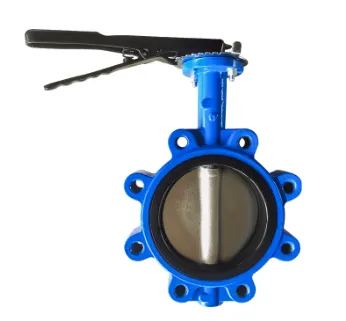
Application Flexibility with the Lug Type Valve
Engineered for strength, adaptability, and safety, the lug type valve is a popular choice for isolating sections of pipeline or enabling dual-direction shutoff without compromising line integrity. Its unique configuration supports use in both inline and end-of-line applications—a significant advantage for industries that require modular pipeline management.
Unlike wafer-style designs, the lug type valve features tapped lugs that match corresponding bolt holes on flanges, allowing for a more rigid, vibration-resistant connection. This level of security is essential in pressurized systems such as compressed air lines, petrochemical pipelines, and large-scale industrial water networks.
Moreover, the lug type valve is typically manufactured in a wide range of sizes—ranging from 1½″ to 24″—and built using high-performance materials like ductile iron, stainless steel, and epoxy-coated carbon steel. Seat and seal materials can be customized to handle high-temperature fluids, aggressive chemicals, or slurry media, offering users a tailored solution for any process condition.
The valve’s rugged build, combined with field-proven performance, positions the lug type valve as a dependable option in both high- and low-pressure environments. It integrates easily into automated control systems and meets the mechanical and flow performance expectations of today’s industrial infrastructure.
Simplifying Flow Management with the Lug Style Butterfly Valve
Designed to maximize efficiency without sacrificing durability, the lug style butterfly valve offers an ideal solution for operations requiring space-conscious installation and precise flow regulation. This valve’s slim profile reduces the footprint within a pipeline, while still providing excellent sealing and operational performance.
The lug style butterfly valve typically utilizes a resilient seat and a concentric disc arrangement, which creates a tight shutoff even under fluctuating pressure. In addition, it supports quarter-turn operation—allowing for rapid opening and closing, making it particularly valuable in emergency shutoff or fast-response systems.
As global industries expand into automation, the lug style butterfly valve proves highly compatible with electric, pneumatic, and hydraulic actuators. These valves are not only designed to meet the latest flow control requirements but also to withstand rigorous operating conditions.
Installation is also straightforward, as the lug style butterfly valve aligns with multiple international flange patterns, including GB, ANSI, DIN, BS, and JIS. This compatibility makes it ideal for export-oriented manufacturers or multinational engineering projects. The robust shaft connection—often a one-piece thru shaft as in the Series F170—adds further structural integrity to the valve’s operation.
For sectors prioritizing precision and reliability, such as food and beverage processing, pharmaceuticals, and marine systems, the lug style butterfly valve consistently delivers consistent and economical results.
Choosing Between Lug and Wafer Type Butterfly Valve Designs
When selecting the right valve for your system, understanding the distinctions between a lug and wafer type butterfly valve can greatly influence operational efficiency and maintenance needs. Both designs serve the same purpose—regulating flow—but differ in installation and service capabilities.
A wafer type valve is sandwiched between two pipe flanges and secured with bolts that run through both flanges and around the valve body. While this offers a lightweight and cost-effective solution, the lug and wafer type butterfly valve differs in that the lug version contains threaded inserts for bolts, allowing independent disconnection of piping on either side.
The lug and wafer type butterfly valve combination gives engineers flexibility when designing complex pipelines. For instance, a wafer valve might be used for through-line flow systems with minimal servicing needs, while a lug type is installed at end-of-line positions or places where isolation is necessary for maintenance.
Both types are available in wide size ranges, with various materials and disc options to suit the pressure and temperature conditions of the system. By understanding these structural and functional differences, operators can balance weight, installation cost, and valve function more effectively.
Ultimately, whether selecting a lug and wafer type butterfly valve for municipal, industrial, or offshore applications, the right choice comes down to operational goals, required access, and flow control needs.
Best Practices for Lug Style Butterfly Valve Installation
Proper lug style butterfly valve installation is critical for ensuring long-term valve performance and pipeline safety. Following best practices during installation minimizes risks such as misalignment, leakage, or operational failure—especially in high-pressure or critical applications.
Before installation, ensure the flanges are clean and free from burrs or debris. The lug style butterfly valve should be centered between flanges with the disc in a partially open position to prevent seat damage. All flange bolts must be tightened evenly in a cross-pattern sequence to maintain uniform pressure and avoid stressing the valve body.
When used in automated systems, it’s important to verify that the actuator is properly calibrated to the valve’s open/closed positions. Incorrect torque settings or misalignment can lead to premature wear or damage to the disc and seat. In addition, many manufacturers recommend supporting the pipeline around the valve to reduce stress on the valve body—particularly for larger sizes.
Installers should also verify compatibility with existing piping systems. Because the lug style butterfly valve installation is designed for specific flange types (e.g., ANSI, DIN), mismatched bolt patterns or misaligned gaskets can compromise sealing integrity.
Following the manufacturer’s specific guidelines—such as those provided for Series F170 valves—ensures not only compliance with industry standards like API 609 and MSS SP-67, but also optimal flow performance for years to come.
Lug Type Butterfly Valve FAQs
What is a lug type butterfly valve best used for?
A lug type butterfly valve is ideal for systems requiring frequent isolation, dead-end service, or disconnection of pipeline sections without affecting the opposite side. It is widely used in fire protection, chemical, and water treatment systems.
How does a lug type valve differ from a wafer type?
A lug type valve includes threaded lugs for bolting directly into flanges, allowing one-side pipeline removal. A wafer valve, in contrast, is clamped between flanges with through-bolts and does not support dead-end service.
Where is a lug style butterfly valve commonly installed?
The lug style butterfly valve is often installed in critical isolation points within pipelines, especially where maintenance access or system segmentation is necessary. It's used in HVAC, marine, and industrial processing systems.
What’s the difference between a lug and wafer type butterfly valve in terms of structure?
A lug and wafer type butterfly valve differ primarily in flange connections. Lug valves have threaded bolt holes and can support dead-end service. Wafer valves rely on flange bolts going around the body and must be clamped on both sides.
What are key tips for proper lug style butterfly valve installation?
Ensure clean flanges, center the valve properly, keep the disc slightly open, and tighten bolts in a cross-pattern. Make sure the actuator is aligned correctly and that flange compatibility is verified to avoid leaks or stress failures.
-
Industrial Guide to Wholesale Large Butterfly Valve Procurement
VijestiApr.16,2026
-
High Quality Wholesale Inlet Butterfly Valve for Industrial Systems
VijestiApr.09,2026
-
Comprehensive Guide to Wholesale Butterfly Valve 8 Inch Price and Selection
VijestiApr.07,2026
-
Comprehensive Guide to Wholesale SS 304 Butterfly Valve Selection and Applications
VijestiApr.04,2026
-
Comprehensive Guide to Wholesale Valve Material Selection and Cost Optimization
VijestiMar.31,2026
-
Comprehensive Guide to Wholesale Inline Hydraulic Check Valve Solutions
VijestiMar.28,2026
 English
 Afrikaans
 Albanian
 Amharic
 Arabic
 Armenian
 Azerbaijani
 Basque
 Belarusian
 Bengali
 Bulgarian
 Catalan
 Cebuano
 Corsican
 Croatian
 Czech
Czech
 Danish
 Dutch
Dutch
 Esperanto
 Estonian
 Finnish
 French
 Frisian
 Galician
 Georgian
 German
 Greek
Greek
 Gujarati
 Haitian Creole
 Hausa
Hausa
 Hawaiian
 Hebrew
 Hindi
Hindi
 Miao
Miao
 Hungarian
 Icelandic
 Igbo
Igbo
 Indonesian
 Irish
Irish
 Italian
 Japanese
 Javanese
 Kannada
 Kazakh
 Khmer
Khmer
 Rwandese
 Korean
 Kurdish
 Kyrgyz
 Lao
Lao
 Latin
Latin
 Latvian
 Lithuanian
 Luxembourgish
 Macedonian
 Malgashi
 Malay
Malay
 Malayalam
 Maltese
 Maori
Maori
 Marathi
 Mongolian
 Myanmar
 Nepali
 Norwegian
 Norwegian
 Occitan
 Pashto
 Persian
 Polish
 Portuguese
 Punjabi
 Romanian
 Russian
 Samoan
 Scottish Gaelic
 Serbian
 Sesotho
 Shona
Shona
 Sindhi
 Sinhala
 Slovak
 Slovenian
 Somali
 Spanish
 Sundanese
 Swahili
 Swedish
 Tagalog
 Tajik
Tajik
 Tamil
Tamil
 Tatar
Tatar
 Telugu
 Thai
Thai
 Turkish
 Turkmen
 Ukrainian
 Urdu
Urdu
 Uighur
 Uzbek
Uzbek
 Vietnamese
 Welsh
Welsh
 Bantu
Bantu
 Yiddish
 Yoruba
 Zulu
Zulu
 Bosnian