
- અમને કૉલ કરો
- +8618633052223
- ઈ-મેલ
- njhdvlz@163.com
સપ્ટેમ્બર . 05, 2025 14:45 યાદી પર પાછા
Reliable Sealing Starts with Butterfly Valve Rubber
The Essential Role of Butterfly Valve Rubber in Flow Control
The butterfly valve rubber is a critical component in the performance and durability of butterfly valves across various industries. Whether in chemical processing, HVAC systems, water treatment, or power generation, rubber-lined butterfly valves provide tight sealing and flexibility under a wide range of pressures and temperatures.
The primary function of butterfly valve rubber is to form a resilient seat that ensures bubble-tight shutoff while resisting abrasion, corrosion, and chemical attack. High-performance elastomers such as EPDM, NBR, and Viton are commonly used, each tailored to specific operational environments. EPDM, for instance, is excellent for water and steam applications, while Viton is better suited for aggressive chemicals.
By enhancing the sealing interface between the disc and the valve body, butterfly valve rubber increases service life and reduces maintenance frequency. Moreover, the rubber seat absorbs pipeline vibrations and mitigates misalignment stress, which is especially valuable in dynamic systems. The rubber liner also contributes to lower torque requirements, enabling easier operation whether by lever, gear, or actuator.
Modern rubber-lined butterfly valves, including those from Series F101, comply with international standards such as MSS SP-67, BS5155, and API 609. Their compatibility with global flange patterns—GB, ANSI, DIN, BS, and JIS—ensures seamless integration into both legacy and modern pipelines. With sizes available from 1½″ up to 48″ and bodies offered in wafer, lug, and U-section wafer types, valves with quality butterfly valve rubber deliver performance, versatility, and reliability.
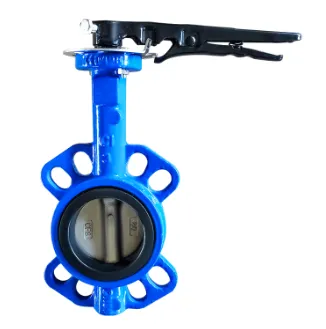
Durability and Versatility of Cast Steel Butterfly Valve Design
The cast steel butterfly valve is engineered for durability in high-pressure, high-temperature, and abrasive service conditions. Cast steel, known for its strength and resistance to thermal expansion, offers structural integrity that makes these valves ideal for demanding industrial environments such as oil and gas, petrochemicals, and marine applications.
Unlike valves made from standard ductile iron, the cast steel butterfly valve can operate at higher temperatures without deforming or compromising its mechanical properties. This makes it particularly suitable for steam lines, high-temperature chemical processes, or systems carrying corrosive media. When paired with high-performance liners such as rubber or PTFE, it can handle both physical and chemical stress with minimal maintenance.
In terms of design, the cast steel butterfly valve is often equipped with a through-shaft construction, heavy-duty bearings, and reinforced necks to accommodate actuators. The discs may be coated or made from stainless steel to increase erosion resistance, especially in high-velocity flow conditions.
These valves are fully compatible with international flange standards and are available in wafer, lug, and double-flanged body types, depending on application requirements. Combined with options for manual, electric, or pneumatic actuation, the cast steel butterfly valve is a long-term investment in operational reliability and safety.
Maximizing Chemical Resistance with PTFE Lined Butterfly Valve
The PTFE lined butterfly valve is the premier choice for highly corrosive and aggressive chemical media. PTFE (polytetrafluoroethylene) is chemically inert, offering outstanding resistance to acids, alkalis, solvents, and oxidizing agents. This makes the PTFE lined butterfly valve ideal for applications in chemical manufacturing, pharmaceuticals, wastewater treatment, and food processing.
The internal lining of PTFE ensures that the media never contacts the valve body or disc directly, thereby eliminating the risk of corrosion or contamination. The liner extends across the bore, seat, and often the disc’s surface, providing full isolation. The non-stick nature of PTFE also prevents buildup of scale or residues, making cleaning and flushing much easier.
Unlike traditional elastomer-lined valves, the PTFE lined butterfly valve can operate at a broader range of temperatures, from cryogenic levels up to 200°C (depending on construction). The combination of chemical compatibility and thermal stability means it excels in the most hostile environments, including chlor-alkali plants, acid recovery systems, and bioprocessing facilities.
Valve designs like the Series F101 accommodate PTFE lined butterfly valve configurations with various body types, including wafer and lug. These valves are also designed to accept all common actuator interfaces, facilitating seamless integration into automated process systems. For industries where failure is not an option, the PTFE lined butterfly valve is a trusted ally.
Plastic Engineering Excellence: PPH and PP Butterfly Valve Solutions
For lightweight, corrosion-resistant applications, the PPH butterfly valve and PP butterfly valve offer economical and effective flow control solutions. Constructed from polypropylene homopolymer (PPH) or polypropylene (PP), these valves are particularly suitable for non-metallic piping systems in chemical handling, water treatment, aquaculture, and electroplating operations.
The PPH butterfly valve excels in conveying hot corrosive fluids such as acids, alkalis, and solvents, withstanding temperatures up to 90°C. It features a one-piece molded body for structural stability, and a resilient seat made from EPDM or FPM to ensure tight sealing. Meanwhile, the PP butterfly valve is commonly used in lower temperature or less aggressive applications but still offers excellent resistance to a broad range of chemicals.
Both PPH butterfly valve and PP butterfly valve options are significantly lighter than their metal counterparts, making them easier to install and maintain. Their non-corrosive nature reduces long-term degradation, particularly in marine or acidic environments, and eliminates the need for protective coatings.
With compatibility across GB, ANSI, DIN, and JIS standards, these plastic butterfly valves can be configured in wafer, lug, or flanged styles. Available in sizes from 1½″ to 24″ or larger, they also support manual and automated operations. For industries looking to reduce weight, lower costs, and enhance chemical resistance, the PPH butterfly valve and PP butterfly valve provide unmatched value.
Engineering Confidence with Compliance and Customization
The quality and performance of modern butterfly valves are not just defined by materials like butterfly valve rubber, cast steel, or પીટીએફઇ, but also by adherence to global engineering standards. Leading manufacturers design butterfly valves to comply with MSS SP-67, BS5155, and API 609, ensuring structural integrity, face-to-face consistency, and pressure handling across all use cases.
Valves in the Series F101 line, for example, are engineered with compatibility in mind, conforming to all major flange systems (GB, ANSI, DIN, BS, JIS) and offering multiple body types such as wafer, lug, and U-section wafer. This wide range of customization ensures that valves can be tailored to specific installations without compromise.
In terms of actuation, every valve type—from PPH butterfly valve to cast steel butterfly valve—can be fitted with manual levers, gear operators, pneumatic cylinders, or electric actuators. End users can choose sealing types based on media and temperature requirements, and even integrate smart features such as position indicators and control feedback for process automation.
With careful selection of materials, precise design, and global standard compliance, manufacturers enable clients across industries to operate more safely, efficiently, and sustainably. Whether it's resisting acids, handling steam, or simplifying pipe installation, today’s butterfly valves are engineered for excellence at every level.
Butterfly valve rubber FAQs
What is the role of butterfly valve rubber in a valve system?
Butterfly valve rubber forms the sealing surface inside the valve, ensuring a tight shutoff and absorbing vibration. It’s essential for preventing leaks and ensuring smooth operation under various pressure conditions.
Where is a cast steel butterfly valve typically used?
A cast steel butterfly valve is ideal for high-pressure and high-temperature systems such as steam lines, oil and gas processing, and marine applications where mechanical strength and heat resistance are crucial.
What are the advantages of a PTFE lined butterfly valve?
The PTFE lined butterfly valve offers superior chemical resistance and a wide operating temperature range, making it ideal for corrosive and hazardous media found in chemical, pharmaceutical, and food industries.
How is a PPH butterfly valve different from a PP butterfly valve?
While both are made from polypropylene, the PPH butterfly valve is a homopolymer version suitable for higher temperature and aggressive media. The PP butterfly valve is ideal for less demanding environments but still offers solid chemical resistance.
Can all these valves be automated?
Yes, whether it’s a PTFE lined butterfly valve, cast steel butterfly valve, or PPH butterfly valve, all can be equipped with electric or pneumatic actuators for automated control, depending on system requirements.
-
Industrial Guide to Wholesale Large Butterfly Valve Procurement
સમાચારApr.16,2026
-
High Quality Wholesale Inlet Butterfly Valve for Industrial Systems
સમાચારApr.09,2026
-
Comprehensive Guide to Wholesale Butterfly Valve 8 Inch Price and Selection
સમાચારApr.07,2026
-
Comprehensive Guide to Wholesale SS 304 Butterfly Valve Selection and Applications
સમાચારApr.04,2026
-
Comprehensive Guide to Wholesale Valve Material Selection and Cost Optimization
સમાચારMar.31,2026
-
Comprehensive Guide to Wholesale Inline Hydraulic Check Valve Solutions
સમાચારMar.28,2026
 English
 Afrikaans
 Albanian
 Amharic
 Arabic
 Armenian
 Azerbaijani
 Basque
 Belarusian
 Bengali
 Bosnian
 Bulgarian
 Catalan
 Cebuano
 Corsican
 Croatian
 Czech
Czech
 Danish
 Dutch
Dutch
 Esperanto
 Estonian
 Finnish
 French
 Frisian
 Galician
 Georgian
 German
 Greek
Greek
 Haitian Creole
 Hausa
Hausa
 Hawaiian
 Hebrew
 Hindi
Hindi
 Miao
Miao
 Hungarian
 Icelandic
 Igbo
Igbo
 Indonesian
 Irish
Irish
 Italian
 Japanese
 Javanese
 Kannada
 Kazakh
 Khmer
Khmer
 Rwandese
 Korean
 Kurdish
 Kyrgyz
 Lao
Lao
 Latin
Latin
 Latvian
 Lithuanian
 Luxembourgish
 Macedonian
 Malgashi
 Malay
Malay
 Malayalam
 Maltese
 Maori
Maori
 Marathi
 Mongolian
 Myanmar
 Nepali
 Norwegian
 Norwegian
 Occitan
 Pashto
 Persian
 Polish
 Portuguese
 Punjabi
 Romanian
 Russian
 Samoan
 Scottish Gaelic
 Serbian
 Sesotho
 Shona
Shona
 Sindhi
 Sinhala
 Slovak
 Slovenian
 Somali
 Spanish
 Sundanese
 Swahili
 Swedish
 Tagalog
 Tajik
Tajik
 Tamil
Tamil
 Tatar
Tatar
 Telugu
 Thai
Thai
 Turkish
 Turkmen
 Ukrainian
 Urdu
Urdu
 Uighur
 Uzbek
Uzbek
 Vietnamese
 Welsh
Welsh
 Bantu
Bantu
 Yiddish
 Yoruba
 Zulu
Zulu
 Gujarati