
- Call Us
- +8618633052223
- njhdvlz@163.com
Sep . 22, 2025 13:30 Back to list
Butterfly Valve Rubber: Durable & Resilient Sealing Solutions
Industry Trends in Butterfly Valve Technology
The industrial valve market is continually evolving, driven by demands for increased efficiency, reliability, and sustainability across diverse sectors. Within this landscape, butterfly valve rubber components are experiencing significant innovation. Key trends include the development of advanced elastomer compounds for enhanced chemical resistance and temperature tolerance, moving beyond traditional EPDM and NBR to explore options like FKM and PTFE-lined variants for more aggressive media. There's a strong push towards smart valve technology, integrating sensors for real-time monitoring of valve position, pressure, and temperature, which optimizes operational efficiency and predictive maintenance strategies.
Environmental regulations are also a major catalyst, promoting valves with lower fugitive emissions and longer service life to reduce overall ecological footprints. The demand for specialized materials, such as cast steel butterfly valve bodies for high-pressure applications or PTFE lined butterfly valve options for highly corrosive environments, continues to grow. Furthermore, the adoption of lightweight and corrosion-resistant plastics like PPH (Polypropylene Homopolymer) and PP (Polypropylene) in valves, often seen in PPH butterfly valve and PP butterfly valve designs, is expanding into applications where traditional metal valves are prone to degradation. This shift underscores a broader industry trend towards material optimization for specific process demands, emphasizing both performance and cost-effectiveness. The increasing complexity of industrial processes necessitates valves capable of precise flow control and exceptional durability, making the material science behind the sealing elements, particularly the rubber or elastomer lining, critically important.
Manufacturing Process of Butterfly Valve Rubber
The manufacturing of a high-quality butterfly valve rubber liner is a meticulous process demanding precision engineering and stringent quality control. This process ensures the liner provides reliable sealing, corrosion resistance, and longevity in demanding industrial applications. The Series F101 Wafer Type Butterfly Valve, for instance, relies heavily on this precision.
Schematic Process Flow:
- 1. Material Selection and Preparation:
- Materials: High-grade elastomers such as EPDM, NBR, Viton (FKM), or PTFE are selected based on application requirements (temperature, chemical compatibility, pressure). For typical general-purpose applications, EPDM or NBR are common choices for butterfly valve rubber liners. Specific gravity, hardness (Shore A), tensile strength, and elongation properties are critical.
- Compounding: Raw rubber polymers are blended with various additives including curing agents (e.g., sulfur for vulcanization), accelerators, activators, fillers (e.g., carbon black, silica for reinforcement), plasticizers, and anti-degradants. This process occurs in internal mixers or two-roll mills, ensuring a homogeneous mix crucial for consistent performance.
- 2. Pre-forming:
- The compounded rubber mixture is then processed into a pre-form, typically through extrusion or calendering, to create sheets or blanks of the desired thickness and shape. This prepares the material for the subsequent molding stage.
- 3. Molding and Vulcanization (Curing):
- Compression Molding/Injection Molding: The pre-forms are placed into precision molds, often integrated with the valve body or as a separate component, which are then subjected to high pressure and elevated temperatures (e.g., 150-180°C). During this stage, the rubber undergoes vulcanization – a chemical process that transforms the plastic-like rubber into a durable, elastic thermoset material. This cross-linking process is critical for achieving the required mechanical properties, resilience, and sealing integrity of the butterfly valve rubber liner.
- Integrated vs. Replaceable Liners: Some designs feature a fully bonded rubber lining to the valve body, while others use a replaceable liner, often a seat ring.
- 4. Trimming and Finishing:
- After molding, excess rubber (flash) is carefully trimmed from the cured liner. This step ensures clean edges and precise dimensions for optimal fit within the valve body and tight sealing against the disc.
- 5. Post-Curing (if applicable):
- For certain high-performance elastomers like FKM, a post-curing process in an oven at controlled temperatures may be performed to further enhance physical properties and remove volatile byproducts, ensuring maximum chemical resistance and thermal stability.
- 6. Quality Control and Testing:
- Dimensional Inspection: Each liner is checked against technical drawings for adherence to specified tolerances (e.g., using ISO 5752 standards for face-to-face dimensions).
- Material Property Testing: Samples of the rubber compound are tested for hardness, tensile strength, elongation at break, compression set, and specific gravity.
- Hydrostatic Shell Test & Seat Leakage Test: Once assembled into the valve body, the valve undergoes rigorous testing. This includes a hydrostatic shell test (e.g., to API 598 or EN 12266-1 P10) to confirm the integrity of the body and a seat leakage test (e.g., P11 for Class A tight shut-off) to verify the sealing capability of the butterfly valve rubber liner against the disc.
- Visual Inspection: Checks for surface defects, foreign inclusions, or inconsistencies.
These robust manufacturing and testing protocols, often in compliance with international standards like ISO 9001 for quality management and ISO 5208 for pressure testing of industrial valves, ensure that the final butterfly valve rubber liner delivers exceptional performance and reliability. The service life of these liners can range from 5 to 15 years, depending on the media, temperature, pressure cycles, and frequency of operation, making proper material selection paramount.
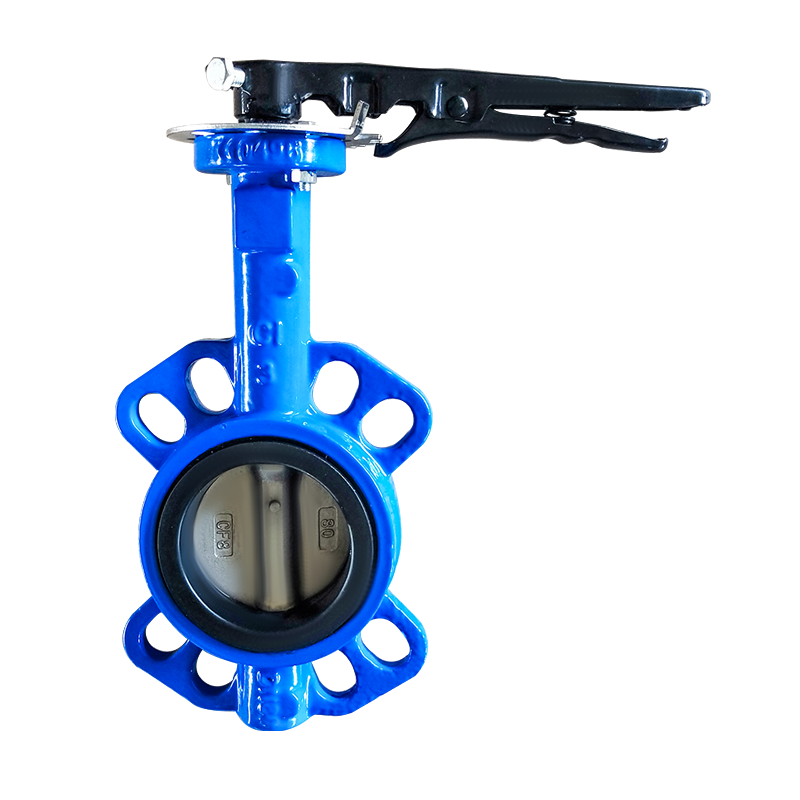
Technical Specifications of Series F101 Wafer Type Butterfly Valve
The Series F101 Wafer Type Butterfly Valve is engineered for optimal performance in a wide range of industrial applications. Its design incorporates robust materials and precise manufacturing to ensure reliable flow control. The integrated butterfly valve rubber liner is a key component, providing bubble-tight shut-off and excellent resistance to media.
Product Specification Table (Series F101 Wafer Type Butterfly Valve)
| Parameter | Specification |
|---|---|
| Valve Type | Wafer Type Butterfly Valve |
| Nominal Diameter (DN) | DN50 - DN600 (2" - 24") |
| Nominal Pressure (PN) | PN10 / PN16 (Class 150) |
| Body Material | Ductile Iron (GGG40/50), Cast Iron (GG25), WCB (Cast Steel) |
| Disc Material | Ductile Iron Nickel Plated, Stainless Steel (CF8/CF8M), Aluminum Bronze |
| Seat Material | EPDM, NBR, Viton (FKM), PTFE (Rubber Lined) |
| Stem Material | Stainless Steel (SS410, SS304, SS316) |
| Operation | Lever, Worm Gear, Pneumatic Actuator, Electric Actuator |
| Temperature Range | -20°C to +120°C (depending on seat material) |
| Design Standard | API 609, EN 593 |
| Face to Face Standard | API 609, ISO 5752, EN 558 Series 20 |
| Flange Drilling | ASME B16.5, EN 1092-2, JIS B2220 |
| Test Standard | API 598, EN 12266-1 |
These specifications demonstrate the versatility and robust construction of the Series F101. The selection of the appropriate butterfly valve rubber seat material is paramount for chemical compatibility and temperature resistance, ensuring optimal performance and extended service life in specific process environments.
Application Scenarios and Target Industries
Valves with robust butterfly valve rubber liners are indispensable across a multitude of industries due to their versatility and reliable performance. Their compact design and efficient sealing capabilities make them ideal for various flow control applications, from simple on/off functions to throttling services.
- Water Supply & Drainage: These are primary applications. Butterfly valves, particularly those with EPDM or NBR rubber seats, are extensively used in municipal water treatment plants, pumping stations, and distribution networks. They are crucial for controlling raw water intake, treated water distribution, and wastewater management. Their low-pressure drop design contributes to energy saving in large-scale pumping systems.
- HVAC Systems: In heating, ventilation, and air conditioning systems for large commercial and industrial buildings, butterfly valves regulate water flow in chiller and boiler lines. Their quick quarter-turn operation and relatively lightweight design are advantageous for ease of installation and maintenance.
- Petrochemical Industry: While more demanding processes often require specialized materials like PTFE lined butterfly valve or metal-seated valves, rubber-lined butterfly valves find application in utility lines, cooling water systems, and less aggressive chemical transfer. For more corrosive media, polypropylene butterfly valve options are explored.
- Food & Beverage: With proper material selection (e.g., FDA-compliant EPDM or NBR), these valves are used for controlling process water,CIP (Clean-in-Place) systems, and non-viscous product lines. The smooth internal bore and ease of cleaning are beneficial.
- Power Generation: Utilized in cooling water circuits, ash handling, and flue gas desulfurization (FGD) systems within power plants. The ability to handle large volumes of fluid efficiently is key.
- Mining and Metallurgy: For slurries and abrasive media, heavy-duty rubber-lined valves or those with specialized coatings might be preferred, but standard butterfly valve rubber options are used in less abrasive water lines and general utility services.
The ability of the butterfly valve rubber liner to provide a tight shut-off, even with minor particulate matter, ensures operational integrity and minimizes downtime in these critical applications. The low torque requirement for operation also translates to smaller, more cost-effective actuation systems, contributing to overall energy saving.
Technical Advantages of Rubber-Lined Butterfly Valves
The selection of a butterfly valve rubber liner confers several distinct technical advantages, making these valves a preferred choice in many industrial settings.
- Excellent Sealing Performance: The primary advantage is the superior bubble-tight shut-off capability. The resilient rubber seat conforms around the disc, providing a secure seal against reverse pressure and preventing leakage. This is particularly crucial for applications requiring zero leakage.
- Corrosion and Abrasion Resistance: Depending on the elastomer chosen (EPDM, NBR, Viton, etc.), the rubber liner provides an effective barrier against corrosive media. For instance, EPDM is excellent for water, mild chemicals, and some acids/alkalis, while Viton offers superior resistance to hydrocarbons and higher temperatures. In applications with mild slurries, the rubber also offers better abrasion resistance than metal seats.
- Lower Operating Torque: The inherent elasticity and lubricity of the butterfly valve rubber seat reduce the friction between the disc and the seat during operation. This translates to lower operating torque requirements, allowing for smaller, less expensive actuators and reduced energy consumption.
- Cost-Effectiveness: Compared to more complex valve designs or those requiring exotic metal alloys, rubber-lined butterfly valves offer an economical solution for flow control without compromising performance for suitable applications. Their simplified construction contributes to lower manufacturing costs.
- Compact Design and Light Weight: Butterfly valves are inherently more compact and lighter than ball or gate valves of equivalent size. This reduces installation space, simplifies handling, and lowers structural support requirements.
- Ease of Maintenance: In many designs, the butterfly valve rubber seat can be easily replaced without removing the entire valve body from the pipeline, significantly reducing maintenance time and costs.
- Versatility: With a range of body materials (e.g., cast steel butterfly valve, ductile iron, plastic) and diverse rubber lining options, these valves can be tailored to suit a vast array of media, temperatures, and pressures, bridging the gap between general utility and more specialized applications.
These advantages underscore why butterfly valve rubber technology remains a cornerstone in modern fluid handling systems, offering a reliable, efficient, and economically sound solution for critical infrastructure.
Vendor Comparison: Key Differentiators
Selecting the right vendor for butterfly valve rubber solutions requires a thorough evaluation beyond initial price. Factors like product quality, material certifications, engineering support, and after-sales service play a crucial role in the total cost of ownership and operational reliability. Leading manufacturers differentiate themselves through specific commitments and capabilities.
Comparative Analysis of Key Vendor Attributes
| Attribute | Vendor A (e.g., Hongda Valve) | Vendor B (Competitor) |
|---|---|---|
| Material Sourcing & Quality | Utilizes premium virgin rubber compounds (e.g., EPDM from LANXESS, NBR from LG Chemical). Full traceability and material certificates (e.g., FDA-compliant EPDM). In-house material testing lab. | Standard industrial compounds. Limited material traceability. Outsourced testing. |
| Manufacturing Precision | State-of-the-art CNC machining for valve bodies, precision injection/compression molding for rubber seats. ISO 9001 certified. Tight tolerance control (e.g., ±0.1mm for seat dimensions). | Standard molding techniques. General industrial tolerances. |
| Testing & Certification | 100% hydrostatic and seat leakage testing per API 598 / EN 12266-1 Class A. Fire-safe certifications available (API 607) for relevant models. CE, WRAS, ACS approvals where applicable. | Batch testing. Basic pressure tests. Limited external certifications. |
| Customization & Engineering Support | Strong R&D team, offering specialized butterfly valve rubber compounds, custom body materials (e.g., special cast steel butterfly valve, polypropylene butterfly valve), and tailored automation solutions. Dedicated application engineers. | Limited customization to standard catalog. Basic technical support. |
| Warranty & After-Sales Service | Extended warranty (e.g., 24 months). Global service network, spare parts availability for 10+ years. Comprehensive technical documentation. | Standard 12-month warranty. Regional service. Limited long-term parts. |
| Lead Time & Logistics | Optimized supply chain, standard products often ex-stock. Efficient international logistics. Average lead time for custom orders: 4-6 weeks. | Variable lead times. Standard shipping only. |
This comparison highlights the importance of choosing a vendor with a proven track record in manufacturing expertise, quality assurance, and customer-centric services. Premium materials and rigorous testing for the butterfly valve rubber component directly translate to enhanced reliability and reduced operational risks for end-users.
Customized Solutions for Specific Applications
While standard butterfly valve rubber configurations meet the needs of many general applications, complex industrial processes often demand highly customized solutions. A reputable manufacturer offers extensive customization capabilities to address unique challenges related to extreme temperatures, aggressive chemicals, abrasive media, or specific operational controls.
- Specialized Elastomers: Beyond standard EPDM and NBR, custom formulations of Viton (FKM) for high temperatures and chemical resistance, Silicone for food-grade or biomedical applications, Hypalon for strong oxidizers, or even specialized PTFE for ultra-corrosive media (as seen in PTFE lined butterfly valve designs) can be developed or sourced.
- Body and Disc Material Variations: Custom options for body materials include specific grades of cast steel butterfly valve (e.g., A216 WCC for low temperatures), duplex stainless steels, Hastelloy for exceptional corrosion resistance, or engineered plastics like PPH butterfly valve or PP butterfly valve for chemical processing. Disc coatings such as PTFE, Ceramic, or Stellite can also be applied for enhanced wear or chemical resistance.
- Actuation and Control Systems: Customization extends to actuation, integrating specific pneumatic, electric, or hydraulic actuators, positioners, limit switches, solenoids, and control panels to meet precise process control requirements, including remote operation or integration into existing DCS/SCADA systems.
- End Connections and Dimensions: Non-standard face-to-face dimensions, specific flange drilling patterns, or weld-end preparations can be accommodated to ensure seamless integration into existing pipeline infrastructure.
- Industry-Specific Certifications: Custom solutions can be engineered to meet specific industry standards such as API, ASME, NACE (for sour service), FDA (for food & pharmaceutical), or ATEX (for explosive atmospheres), ensuring compliance and operational safety.
Working with an experienced engineering team for these customized solutions ensures that the chosen valve, including its critical butterfly valve rubber components, is perfectly aligned with the application's demands, optimizing performance, extending service life, and minimizing operational risks.
Application Case Studies: Real-World Performance
These case studies illustrate the tangible benefits and proven reliability of using high-quality butterfly valve rubber lined valves in demanding industrial environments.
Case Study 1: Municipal Water Treatment Plant Upgrade
- Client: Major Municipal Water Authority, North America.
- Challenge: An aging water treatment plant required an upgrade of its flow control valves for raw water intake and treated water distribution lines (DN300-DN600). Existing valves experienced frequent leakage and required high maintenance due to sediment and mild chemical exposure (chlorination).
- Solution: We supplied Series F101 Wafer Type Butterfly Valves with ductile iron bodies and EPDM butterfly valve rubber liners. These valves were chosen for their robust design, superior sealing capabilities, and excellent resistance to water treatment chemicals and abrasives.
- Results: After 5 years of continuous operation, the new valves demonstrated zero detectable leakage (Class A shut-off per EN 12266-1). Maintenance requirements were reduced by over 70%, translating into significant operational cost savings. The low torque operation also allowed for smaller, more energy-efficient actuators, contributing to overall energy saving across the plant.
Case Study 2: Chemical Processing Facility – Corrosive Effluent Line
- Client: Specialty Chemicals Manufacturer, Europe.
- Challenge: An effluent line carrying a mixture of dilute acids and organic solvents at elevated temperatures (up to 90°C) was causing rapid degradation of existing valve seats. Standard NBR butterfly valve rubber liners failed within months.
- Solution: We recommended and supplied Series F101 valves with a WCB cast steel butterfly valve body and specially formulated Viton (FKM) butterfly valve rubber liners. Viton's superior chemical and thermal resistance was critical for this application. For some secondary lines, PPH butterfly valve options were considered for extreme acid resistance.
- Results: The FKM-lined butterfly valves have been in service for over 3 years without any signs of material degradation or leakage. The client reported a substantial improvement in process reliability and safety, eliminating costly unscheduled downtime associated with valve failures. This demonstrated the value of selecting the correct elastomer for severe service conditions.
Frequently Asked Questions (FAQ)
- Q1: What is the typical service life of a butterfly valve rubber seat?
- A1: The service life varies significantly based on operating conditions (temperature, pressure, media, cycling frequency), but a well-selected rubber seat can last anywhere from 5 to 15 years in typical applications. Regular inspection and appropriate material selection for the specific media are key to maximizing longevity.
- Q2: How do I choose the correct butterfly valve rubber material for my application?
- A2: Selection depends on the fluid properties (chemical composition, temperature, concentration), operating pressure, and environmental factors. EPDM is excellent for water and general chemicals, NBR for oils and hydrocarbons, and Viton (FKM) for high temperatures and aggressive chemicals. For highly corrosive or sensitive media, PTFE lined butterfly valve options are often recommended. Consult our technical team for a detailed compatibility assessment.
- Q3: Can these valves be used for throttling applications?
- A3: Yes, soft-seated butterfly valves can be used for throttling, especially within a certain range (typically 30% to 70% open). For precise, continuous throttling, especially with abrasive media, specific V-port or high-performance butterfly valves with specialized disc designs or harder seat materials might be more suitable to minimize wear on the butterfly valve rubber liner.
- Q4: Are your valves certified to international standards?
- A4: Yes, our valves, including the Series F101, are designed and manufactured in accordance with international standards such as API 609, EN 593, ISO 5752, and tested per API 598 / EN 12266-1. Our manufacturing facilities are ISO 9001 certified, ensuring consistent quality and adherence to global benchmarks.
- Q5: What are the advantages of a wafer type butterfly valve over a lug type?
- A5: Wafer type butterfly valves are generally more economical and lighter, suitable for applications where the valve doesn't need to be isolated from the pipeline (e.g., when the other side of the flange is removed for maintenance). Lug type valves have threaded inserts for bolts, allowing for dead-end service or easy removal of the downstream pipeline while the upstream remains pressured. Both offer reliable butterfly valve rubber seating.
Lead Time, Warranty, and Customer Support
Lead Time and Fulfillment
We understand the critical nature of timely delivery in industrial projects. For standard configurations of Series F101 Wafer Type Butterfly Valves with common butterfly valve rubber seats (EPDM, NBR), we maintain a substantial inventory, allowing for shipment within 3-5 business days. Customized orders or valves with specialized materials (e.g., FKM, cast steel butterfly valve bodies) typically have a lead time of 4-6 weeks, depending on material availability and production queue. We employ robust supply chain management to ensure efficient fulfillment and on-time delivery globally.
Warranty Commitments
All our products, including Series F101 butterfly valves, are backed by a comprehensive 18-month warranty from the date of shipment or 12 months from installation, whichever comes first. This warranty covers defects in materials and workmanship, including the integrity of the butterfly valve rubber seat. Our commitment to quality, verified by ISO 9001 certification, ensures that our valves meet the highest performance standards, providing our clients with peace of mind and reliable operations.
Customer Support and After-Sales Service
Our dedication to customer satisfaction extends far beyond the sale. We offer extensive after-sales support, including technical assistance, troubleshooting, and spare parts availability. Our team of experienced engineers is available to provide guidance on installation, operation, and maintenance, ensuring optimal performance and extended service life of your valves. We maintain a global network of service partners to provide prompt and efficient support wherever our products are deployed. For inquiries, please contact our dedicated support line or visit our website for comprehensive technical documentation.
Authoritative References
- API Standard 598, Valve Inspection and Testing. American Petroleum Institute, Washington D.C.
- EN 12266-1: Industrial valves - Testing of valves - Part 1: Pressure tests for industrial valves. European Committee for Standardization.
- ISO 9001: Quality management systems – Requirements. International Organization for Standardization.
- D.A. Johnson, "Elastomeric Materials for Valve Seats: Selection and Performance," Journal of Fluid Engineering, vol. 125, no. 3, pp. 450-458, 2003.
- S. R. Davis, "Chemical Resistance of Rubber and Plastic Materials," Industrial Piping & Equipment, pp. 201-215, 2010.
-
Comprehensive Guide to Wholesale 3 Butterfly Valve Price and Supplier Selection
NewsJan.28,2026
-
Comprehensive Guide to Wholesale Water Main Check Valve Selection and Application
NewsJan.27,2026
-
Wholesale 6 Lug Butterfly Valve – Durable & Cost-Effective Solutions for Industrial Applications
NewsJan.06,2026
-
Wholesale Composeal Butterfly Valve - Reliable Industrial Sealing Solutions
NewsJan.06,2026
-
Wholesale Marine Check Valve | Durable & Certified Marine Valves
NewsJan.06,2026
-
Wholesale Butterfly Valve Gas – B2B Solutions for Efficient Gas Flow Control | Hongda Valve
NewsJan.05,2026
 Afrikaans
 Albanian
 Amharic
 Arabic
 Armenian
 Azerbaijani
 Basque
 Belarusian
 Bengali
 Bosnian
 Bulgarian
 Catalan
 Cebuano
 Corsican
 Croatian
 Czech
Czech
 Danish
 Dutch
Dutch
 Esperanto
 Estonian
 Finnish
 French
 Frisian
 Galician
 Georgian
 German
 Greek
Greek
 Gujarati
 Haitian Creole
 Hausa
Hausa
 Hawaiian
 Hebrew
 Hindi
Hindi
 Miao
Miao
 Hungarian
 Icelandic
 Igbo
Igbo
 Indonesian
 Irish
Irish
 Italian
 Japanese
 Javanese
 Kannada
 Kazakh
 Khmer
Khmer
 Rwandese
 Korean
 Kurdish
 Kyrgyz
 Lao
Lao
 Latin
Latin
 Latvian
 Lithuanian
 Luxembourgish
 Macedonian
 Malgashi
 Malay
Malay
 Malayalam
 Maltese
 Maori
Maori
 Marathi
 Mongolian
 Myanmar
 Nepali
 Norwegian
 Norwegian
 Occitan
 Pashto
 Persian
 Polish
 Portuguese
 Punjabi
 Romanian
 Russian
 Samoan
 Scottish Gaelic
 Serbian
 Sesotho
 Shona
Shona
 Sindhi
 Sinhala
 Slovak
 Slovenian
 Somali
 Spanish
 Sundanese
 Swahili
 Swedish
 Tagalog
 Tajik
Tajik
 Tamil
Tamil
 Tatar
Tatar
 Telugu
 Thai
Thai
 Turkish
 Turkmen
 Ukrainian
 Urdu
Urdu
 Uighur
 Uzbek
Uzbek
 Vietnamese
 Welsh
Welsh
 Bantu
Bantu
 Yiddish
 Yoruba
 Zulu
Zulu
 English