
- Call Us
- +8618633052223
- njhdvlz@163.com
Sep . 12, 2025 08:20 Back to list
Robust Cast Iron Butterfly Valve: Reliable Flow Control
Advancing Industrial Flow Control with cast iron butterfly valve Technology
In the demanding landscape of industrial fluid handling, the selection of appropriate valve technology is paramount to operational efficiency, system integrity, and long-term cost-effectiveness. Among the myriad options, the cast iron butterfly valve stands out as a foundational component, widely adopted for its robustness, versatility, and economic advantages. This comprehensive overview delves into the critical aspects of modern cast iron butterfly valves, focusing on their manufacturing, application, technical merits, and the strategic considerations for B2B decision-makers and engineers. From process flow to customized solutions, we explore how these valves, such as the Short Neck Lug Type Model 20 Butterfly Valve, continue to be indispensable in various sectors.
Industry Trends and Market Dynamics for Industrial Valves
The global industrial valve market is experiencing sustained growth, driven by expansion in infrastructure, manufacturing, and energy sectors. Within this market, the demand for reliable and cost-effective flow control solutions remains high. Key trends include the increasing adoption of automated valve systems, a growing emphasis on energy efficiency, and stringent regulatory requirements for environmental protection and operational safety. While advanced materials like `butterfly valve stainless steel body` and high-performance alloys are gaining traction for niche, highly corrosive, or extreme temperature applications, the cast iron butterfly valve retains a significant market share due to its excellent balance of performance, durability, and affordability.
There's also a noticeable trend towards specialized designs, such as `short neck lug type` configurations, which offer easier installation and maintenance. The market sees a diversification of material choices, with `carbon steel butterfly valve` options prevalent in high-pressure, high-temperature oil and gas applications, and `aluminum butterfly valve` solutions for lightweight, corrosion-resistant needs in specific industries. However, for general utility and a broad spectrum of medium-pressure applications, the robust nature of the cast iron butterfly valve continues to make it a preferred choice, especially when factoring in the total cost of ownership over its extended service life. Innovations in coating technologies and improved sealing materials further enhance their capabilities.
Detailed Manufacturing Process of the Cast Iron Butterfly Valve
The production of a high-quality cast iron butterfly valve is a meticulous process, combining traditional foundry techniques with modern precision engineering. This ensures the final product meets rigorous industry standards for performance and longevity. The process typically involves several critical stages:
- Pattern Making & Molding: Precision patterns, often made from wood or metal, are created based on detailed CAD designs. These patterns are used to form molds (typically sand molds) that define the valve body's intricate shape. This initial step is critical for dimensional accuracy.
- Melting & Casting: High-grade cast iron, such as ductile iron (e.g., GJS-500-7) or grey cast iron (e.g., GG25), is melted in induction furnaces to precise metallurgical specifications. The molten metal is then poured into the prepared molds. The controlled cooling process is crucial to achieve the desired microstructure and mechanical properties, ensuring the durability of the butterfly valve cast iron body.
- De-coring & Cleaning: Once cooled, the cast valve bodies are removed from the molds, and any sand or excess material (flash) is meticulously cleaned. Shot blasting is often employed to achieve a smooth surface finish and remove scale.
- Heat Treatment (as required): For certain applications or specific cast iron types (e.g., ductile iron), heat treatment processes like annealing may be performed to enhance material properties, such as ductility and machinability, further extending the service life of the valve.
- CNC Machining: This is where precision comes into play. Modern CNC (Computer Numerical Control) machines accurately machine critical surfaces, boreholes, and seating areas. This ensures tight tolerances for disc rotation, shaft alignment, and seal integrity. Components like the valve stem and disc are also precisely machined to fit perfectly within the cast body.
- Assembly: The machined body, disc (often coated or made of materials like `butterfly valve stainless`), stem, seat (rubber, PTFE, or EPDM), and operating mechanism (lever, gearbox, or actuator) are carefully assembled. Each component is fitted to ensure smooth operation and proper sealing.
- Testing & Quality Control: Every valve undergoes rigorous testing to meet international standards such as ISO 5208, API 598, and ANSI/ASME B16.34. Tests include hydrostatic shell test, seat leakage test, and operational torque testing. This ensures the valve's integrity under pressure, leak-tightness, and reliable performance. Our commitment to ISO 9001 quality management ensures consistent product excellence.
- Surface Treatment & Finishing: Finally, the valve body is coated (e.g., epoxy powder coating) to provide enhanced corrosion resistance and a durable finish, particularly important for `cast iron butterfly valve` installations in corrosive environments.
This meticulous manufacturing process ensures that the cast iron butterfly valve delivers exceptional performance in target industries such as petrochemical, metallurgy, and water supply & drainage, offering advantages like energy saving through low-pressure drop and superior corrosion resistance when properly coated.
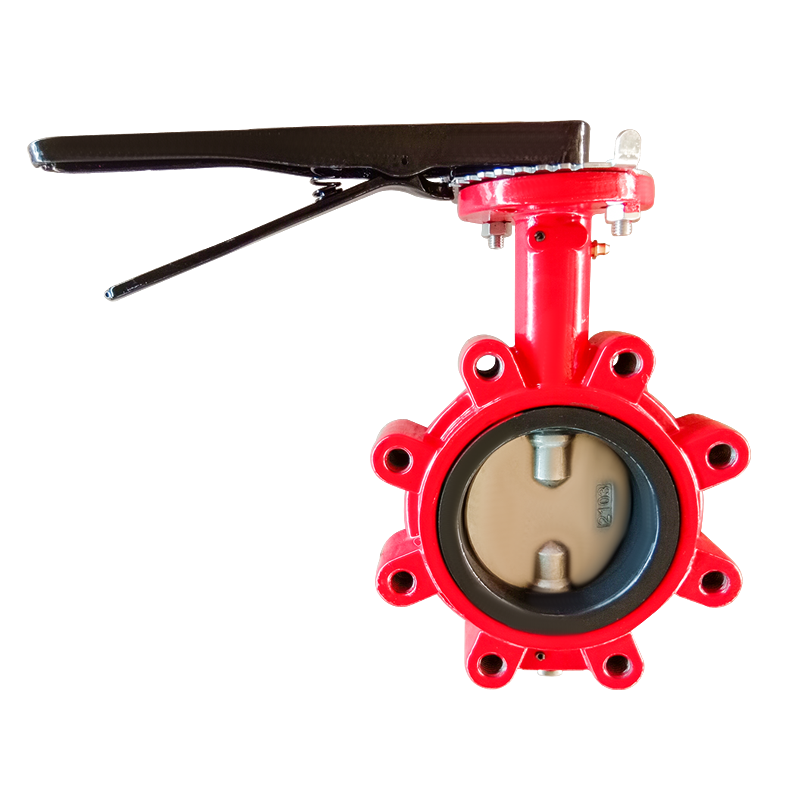
Illustration of a typical Short Neck Lug Type Butterfly Valve design.
Technical Specifications and Parameters
Understanding the technical specifications of a cast iron butterfly valve is crucial for proper selection and integration into industrial systems. Our Short Neck Lug Type Model 20 Butterfly Valve exemplifies robust engineering suitable for a wide array of applications. Key parameters include material composition, pressure ratings, temperature ranges, and sealing mechanisms.
| Parameter | Specification | Notes |
|---|---|---|
| Body Material | Ductile Iron (GGG40/GJS-400-15), Grey Cast Iron (GG25) | Conforming to EN 1563/EN 1561 |
| Disc Material | Ductile Iron Nickel Plated, Stainless Steel (CF8M/316, CF8/304), Aluminum Bronze | Selection based on media compatibility |
| Seat Material | EPDM, NBR, Viton, PTFE | Temperature and chemical resistance |
| Stem Material | Stainless Steel (410, 304, 316) | High strength and corrosion resistance |
| Nominal Diameter (DN) | DN50 to DN1200 (2" to 48") | Wide range for various pipe sizes |
| Pressure Rating | PN10, PN16, ASME Class 150 | Conforms to ISO 7005-2, API 609 |
| Temperature Range | -20°C to +150°C (depending on seat material) | Suitable for moderate temperature applications |
| Connection Type | Lug Type (Wafer Type also available) | Ideal for end-of-line service and easy maintenance |
| Actuation | Manual (Lever/Gearbox), Pneumatic, Electric | Versatile control options |
| Design Standard | API 609 Category A & B, EN 593 | Ensures robust design and performance |
These specifications highlight the adaptability and engineering precision inherent in modern `butterfly valve cast iron` designs. The selection of specific materials for the disc and seat is critical to ensure compatibility with the fluid media and operational temperatures, guaranteeing optimal performance and longevity for the cast iron butterfly valve.
Application Scenarios Across Key Industries
The inherent durability and cost-effectiveness of the cast iron butterfly valve make it a preferred choice across a multitude of industrial applications. Its quarter-turn operation and relatively compact design are beneficial in systems requiring quick shut-off and throttling capabilities.
- Water Supply & Drainage: These valves are ubiquitous in municipal water treatment plants, pumping stations, and distribution networks. Their ability to handle large volumes of water efficiently, combined with excellent corrosion resistance (especially with proper coatings), makes them ideal for potable water and wastewater applications.
- HVAC Systems: In heating, ventilation, and air conditioning systems for large commercial and industrial buildings, butterfly valve cast iron units are used for controlling the flow of chilled or hot water, contributing to energy-efficient temperature regulation.
- Chemical Processing (Non-Corrosive): For handling non-aggressive chemicals, sludges, or dry bulk materials, cast iron butterfly valves offer a reliable and economical solution. The choice of disc and liner materials can extend their suitability to mildly corrosive media.
- Power Generation: In cooling water circuits and low-pressure steam lines within power plants, the robustness of these valves ensures consistent performance and minimal maintenance.
- Food & Beverage (Utility Lines): While direct contact with food requires specialized hygienic valves, cast iron butterfly valve are frequently used in utility lines (water, air, non-process steam) within food and beverage facilities.
- Pulp & Paper Industry: Handling slurries and process water, these valves provide dependable shut-off and flow control in demanding environments.
The versatility stems from the wide range of available sizes, pressure classes, and actuation options, allowing the `butterfly valve cast iron` to be precisely matched to specific operational requirements.
Technical Advantages of Cast Iron Butterfly Valves
The enduring popularity of the cast iron butterfly valve in industrial applications is a testament to its significant technical advantages:
- Durability and Robustness: Cast iron, particularly ductile iron, offers high tensile strength and impact resistance, ensuring a long service life even in demanding operational conditions. This inherent strength contributes to the valve's ability to withstand significant pipe stresses.
- Cost-Effectiveness: Compared to valves made from higher-grade alloys like `butterfly valve stainless`, cast iron butterfly valves provide an economical solution without compromising essential performance for suitable applications. This leads to lower upfront investment and reduced maintenance costs over time.
- High Flow Capacity and Low-Pressure Drop: The streamlined disc design of butterfly valves allows for excellent flow characteristics and minimal resistance to fluid flow when fully open. This translates to energy savings, especially in large-scale pumping systems.
- Compact and Lightweight Design: Butterfly valves are generally more compact and lighter than gate or globe valves of comparable size. This reduces installation space and structural support requirements, particularly advantageous in crowded industrial environments.
- Ease of Maintenance and Repair: The modular design of many `butterfly valve cast iron` types, especially lug-type valves like the Model 20, allows for relatively straightforward inline maintenance, such as seat or stem seal replacement, minimizing downtime.
- Versatile Actuation Options: From simple manual levers and gearboxes to sophisticated pneumatic and electric actuators, cast iron butterfly valve can be easily integrated into various control systems, offering flexible automation possibilities.
- Corrosion Resistance: While raw cast iron can corrode, modern manufacturing techniques incorporate advanced epoxy coatings (fusion-bonded epoxy) that provide excellent protection against corrosion in aggressive environments, further extending the valve's operational life.
These advantages collectively position the cast iron butterfly valve as a reliable, efficient, and economically sound choice for a vast range of industrial fluid control applications.
Vendor Comparison: Cast Iron vs. Other Butterfly Valve Materials
When selecting a butterfly valve, the choice of material is critical and depends heavily on the specific application requirements, including media compatibility, pressure, temperature, and budget. While the cast iron butterfly valve offers a compelling blend of value and performance, it is essential to understand how it compares to other common materials like `carbon steel butterfly valve`, `aluminum butterfly valve`, and `butterfly valve stainless`.
| Feature | Cast Iron Butterfly Valve | Carbon Steel Butterfly Valve | Aluminum Butterfly Valve | Butterfly Valve Stainless Steel Body |
|---|---|---|---|---|
| Primary Applications | Water, Wastewater, HVAC, non-corrosive industrial fluids. | Oil & Gas, Petrochemical, high-pressure/temperature utility lines. | Specific chemical processes, marine, pneumatic conveying (where lightweight is key). | Highly corrosive media, food & beverage, pharmaceuticals, cryogenic. |
| Corrosion Resistance | Good with coatings (epoxy); fair without. | Requires coating for corrosion resistance; strong in non-corrosive, high-temp. | Excellent in specific mild chemical/atmospheric conditions; susceptible to certain acids. | Excellent in a broad range of corrosive environments. |
| Strength & Durability | High mechanical strength, good wear resistance. | Very high strength, suitable for high-pressure/temperature. | Moderate strength; lighter weight. | High strength, excellent resistance to temperature extremes. |
| Weight | Heavy (density approx. 7.2 g/cm³) | Heavy (density approx. 7.8 g/cm³) | Lightweight (density approx. 2.7 g/cm³) | Heavy (density approx. 7.9 g/cm³) |
| Temperature Range | Moderate (-20°C to 150°C, dependent on liner) | Wide (-40°C to 450°C for specific grades) | Moderate to low (-50°C to 200°C) | Very wide (-196°C to 600°C for specific grades) |
| Cost-Effectiveness | High (excellent value for suitable applications) | Medium-high (costlier than CI, less than SS) | Medium (can be cost-effective where weight/specific corrosion matters) | Lower (high initial cost, but long-term savings in specific environments) |
This comparison highlights that while materials like `butterfly valve stainless` offer superior chemical resistance and temperature capabilities, they come at a higher cost. For a vast majority of industrial and utility applications where fluid characteristics are moderate, the cast iron butterfly valve provides the most economically viable and robust solution.
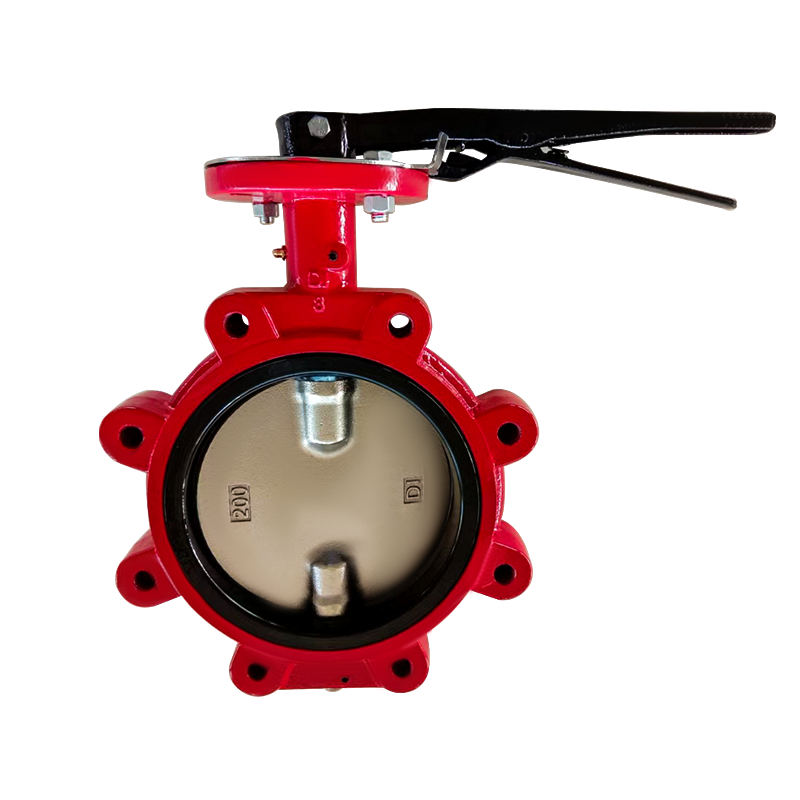
Detailed view of the internal components of a Lug Type Butterfly Valve, emphasizing sealing and disc design.
Customized Solutions for Diverse Industrial Needs
Recognizing that no two industrial applications are exactly alike, Hongda Valve, for instance, specializes in providing customized solutions for cast iron butterfly valve and other valve types. This flexibility allows clients to optimize performance and achieve precise operational requirements. Customization often involves:
- Material Configuration: Tailoring the disc, stem, and seat materials (e.g., EPDM, NBR, Viton, PTFE for seats; various grades of `butterfly valve stainless` for discs) to ensure compatibility with specific fluid media, temperatures, and pressures beyond standard offerings.
- Actuation Options: Supplying valves with specific manual (gearboxes for high torque), pneumatic, or electric actuators, often pre-calibrated and integrated with control systems for seamless operation.
- Coating and Lining: Applying specialized internal or external coatings (e.g., highly resistant epoxy, rubber lining) to enhance corrosion resistance or abrasion resistance for demanding services, extending the life of the `butterfly valve cast iron`.
- End Connections: Offering specific flange drilling patterns or connection types to match existing piping infrastructure, including compliance with various international standards (e.g., ANSI, DIN, JIS).
- Testing and Certifications: Conducting supplementary non-destructive testing (NDT), performance tests, or providing third-party certifications (e.g., ATEX, SIL) required for critical applications or specific geographical regulations.
Our engineering team collaborates closely with clients to define specifications and develop solutions that deliver superior functionality and long-term reliability for every unique industrial challenge. This bespoke approach ensures that even for a standard product like the Short Neck Lug Type Model 20 Butterfly Valve, its configuration can be finely tuned to maximize its effectiveness.
Application Case Studies and Customer Experience
Real-world applications underscore the performance and reliability of our cast iron butterfly valve solutions. Our extensive experience serving diverse industries has generated valuable insights and positive customer feedback.
Case Study 1: Municipal Water Treatment Plant Upgrade
A major municipal water treatment plant faced issues with aging flow control valves, leading to leakage and increased maintenance. After a detailed assessment, they opted to replace over 50 large-diameter (DN600-DN1000) `butterfly valve cast iron` units with our Short Neck Lug Type Model 20 Butterfly Valves, featuring ductile iron bodies and EPDM seats. The robust epoxy coating provided superior resistance to treated water environments.
- Outcome: The plant reported a 15% reduction in overall system leakage within the first six months. The ease of installation, attributed to the lug-type design, significantly reduced commissioning time. Customer feedback highlighted the valve's smooth operation and consistent shut-off, contributing to improved operational efficiency and reduced water losses.
Case Study 2: HVAC System Optimization in a Commercial Complex
A large commercial high-rise aimed to optimize its HVAC system for better energy efficiency and zone control. The existing gate valves caused significant pressure drops and slow response times. Our solution involved integrating several hundred DN150-DN300 cast iron butterfly valve with electric actuators into their chilled water and hot water loops.
- Outcome: The project achieved a measurable reduction in pumping energy consumption by 10% due to the butterfly valves' lower pressure drop. The precise flow modulation capability of the actuated `butterfly valve cast iron` improved climate control responsiveness and tenant comfort. The client praised the valves' compact footprint, which saved valuable plant room space.
These cases demonstrate our commitment to delivering high-performance, reliable `cast iron butterfly valve` solutions that meet and exceed customer expectations, validated by tangible improvements in operational metrics and positive client testimonials.
Authoritativeness and Trustworthiness
Establishing trust and authority is paramount in B2B relationships. Hongda Valve adheres to the highest industry standards, ensuring that every cast iron butterfly valve leaving our facility is of superior quality and reliability.
- Certifications and Compliance: Our manufacturing processes are certified to ISO 9001:2015, guaranteeing a robust quality management system. Our products comply with international standards such as CE, API 609, EN 593, and ANSI/ASME B16.34, providing assurance of design integrity and performance.
- Years of Service: With decades of experience in the valve manufacturing industry, our deep understanding of fluid dynamics and material science ensures that our `butterfly valve cast iron` products are engineered for maximum longevity and efficiency.
- Partner Clients: We serve a global clientele, including major players in municipal utilities, oil & gas, HVAC, and industrial processing, reflecting our proven track record and capability to deliver on large-scale, complex projects.
- Rigorous Testing: All valves undergo comprehensive in-house testing, including hydrostatic body and seat tests, operational torque tests, and dimensional checks, with detailed test data available upon request. This commitment to verification ensures every cast iron butterfly valve performs as specified.
Frequently Asked Questions (FAQ)
Q1: What are the primary advantages of a cast iron butterfly valve over other materials for water applications?
A1: Cast iron butterfly valves offer an excellent balance of cost-effectiveness, high flow capacity, and robust mechanical strength for water and wastewater applications. When equipped with appropriate coatings and seat materials, they provide reliable corrosion resistance and a long service life at a lower initial cost compared to `butterfly valve stainless` alternatives.
Q2: How do I select the correct seat material for my butterfly valve cast iron?
A2: Seat material selection is crucial and depends on the fluid type, temperature, and pressure. EPDM is common for water, NBR for hydrocarbons, Viton for higher temperatures and chemical resistance, and PTFE for aggressive chemicals and hygiene. Consult our technical team for specific recommendations based on your application.
Q3: Can cast iron butterfly valve be used for throttling, or are they strictly for on/off service?
A3: Butterfly valves are suitable for both on/off (shut-off) and throttling applications. When used for throttling, particularly with automated actuators, they can provide effective flow control, although specific disc designs or higher performance valves might be recommended for very fine regulation or high-cycle throttling duty.
Lead Time & Fulfillment
Our streamlined manufacturing and supply chain processes ensure efficient order fulfillment. Standard cast iron butterfly valve models typically have a lead time of 2-4 weeks, depending on quantity and specific configurations. For customized solutions or large-volume orders, detailed project timelines are provided. We prioritize timely delivery to keep your projects on schedule.
Warranty Commitments
We stand behind the quality of our products. All cast iron butterfly valve supplied by Hongda Valve come with a standard 12-month warranty from the date of installation or 18 months from shipment, whichever comes first, against manufacturing defects. Extended warranty options are available upon request for critical applications.
Customer Support and After-Sales Service
Our commitment extends beyond delivery. We provide comprehensive after-sales support, including technical assistance, troubleshooting guides, and spare parts availability. Our team of experienced engineers is ready to assist with any operational queries or maintenance requirements for your `butterfly valve cast iron` systems. Contact our support line or visit our website for immediate assistance.
Conclusion
The cast iron butterfly valve remains a cornerstone of industrial flow control, offering a compelling blend of durability, performance, and cost-effectiveness. From its meticulously engineered manufacturing process to its versatile applications across water treatment, HVAC, and general industrial sectors, the `butterfly valve cast iron` proves its value. By understanding its technical specifications, considering customization options, and partnering with authoritative manufacturers like Hongda Valve, B2B decision-makers can ensure optimal system performance and long-term operational reliability. The Short Neck Lug Type Model 20 Butterfly Valve exemplifies the robust and adaptable solutions available to meet today's complex industrial demands, bridging the gap between quality and economic viability in fluid handling.
References
- ISO 9001:2015 Quality Management Systems – Requirements. International Organization for Standardization.
- API Standard 609: Butterfly Valves: Double Flanged, Lug- and Wafer-Type. American Petroleum Institute.
- EN 593: Industrial Valves – Metallic Butterfly Valves. European Committee for Standardization.
- ASM Handbook, Volume 1: Properties and Selection: Irons, Steels, and High-Performance Alloys. ASM International.
- Valves, Piping, and Pipelines Handbook. R.H. Warring, Trade & Technical Press.
-
Comprehensive Guide to Wholesale 3 Butterfly Valve Price and Supplier Selection
NewsJan.28,2026
-
Comprehensive Guide to Wholesale Water Main Check Valve Selection and Application
NewsJan.27,2026
-
Wholesale 6 Lug Butterfly Valve – Durable & Cost-Effective Solutions for Industrial Applications
NewsJan.06,2026
-
Wholesale Composeal Butterfly Valve - Reliable Industrial Sealing Solutions
NewsJan.06,2026
-
Wholesale Marine Check Valve | Durable & Certified Marine Valves
NewsJan.06,2026
-
Wholesale Butterfly Valve Gas – B2B Solutions for Efficient Gas Flow Control | Hongda Valve
NewsJan.05,2026
 Afrikaans
 Albanian
 Amharic
 Arabic
 Armenian
 Azerbaijani
 Basque
 Belarusian
 Bengali
 Bosnian
 Bulgarian
 Catalan
 Cebuano
 Corsican
 Croatian
 Czech
Czech
 Danish
 Dutch
Dutch
 Esperanto
 Estonian
 Finnish
 French
 Frisian
 Galician
 Georgian
 German
 Greek
Greek
 Gujarati
 Haitian Creole
 Hausa
Hausa
 Hawaiian
 Hebrew
 Hindi
Hindi
 Miao
Miao
 Hungarian
 Icelandic
 Igbo
Igbo
 Indonesian
 Irish
Irish
 Italian
 Japanese
 Javanese
 Kannada
 Kazakh
 Khmer
Khmer
 Rwandese
 Korean
 Kurdish
 Kyrgyz
 Lao
Lao
 Latin
Latin
 Latvian
 Lithuanian
 Luxembourgish
 Macedonian
 Malgashi
 Malay
Malay
 Malayalam
 Maltese
 Maori
Maori
 Marathi
 Mongolian
 Myanmar
 Nepali
 Norwegian
 Norwegian
 Occitan
 Pashto
 Persian
 Polish
 Portuguese
 Punjabi
 Romanian
 Russian
 Samoan
 Scottish Gaelic
 Serbian
 Sesotho
 Shona
Shona
 Sindhi
 Sinhala
 Slovak
 Slovenian
 Somali
 Spanish
 Sundanese
 Swahili
 Swedish
 Tagalog
 Tajik
Tajik
 Tamil
Tamil
 Tatar
Tatar
 Telugu
 Thai
Thai
 Turkish
 Turkmen
 Ukrainian
 Urdu
Urdu
 Uighur
 Uzbek
Uzbek
 Vietnamese
 Welsh
Welsh
 Bantu
Bantu
 Yiddish
 Yoruba
 Zulu
Zulu
 English