
- Позвоните нам
- +8618633052223
- Электронная почта
- njhdvlz@163.com
Сен . 05, 2025 15:01 Обратно к списку
Unlock the Power of Precision with Superior Valve Quality
Understanding Valve Quality in Industrial Applications
In industrial operations, valve quality plays a pivotal role in ensuring operational efficiency, safety, and long-term durability. Whether you are dealing with oil and gas, chemical processing, or water treatment, high-quality valves directly impact performance. Superior valve quality can reduce maintenance costs, extend the service life of equipment, and minimize unexpected downtime.
The benchmark of valve quality is not just in the external finish or mechanical strength, but in how well the valve performs under pressure, resists corrosion, and retains sealing integrity over time. In many sectors, valve failure can result in catastrophic loss, which is why businesses increasingly seek out products from manufacturers that adhere to international standards like API, ASME, and ISO certifications. These standards verify rigorous testing, traceability, and quality assurance protocols.
Manufacturers who are serious about valve quality invest in comprehensive inspection processes, including radiographic testing, ultrasonic testing, and pressure testing. They also use advanced techniques like computational fluid dynamics (CFD) and finite element analysis (FEA) to optimize designs. The goal is simple: provide valves that not only meet but exceed operational demands.
Buyers should also consider post-sale support. The best valve quality often comes with warranties, robust customer service, and ready availability of replacement parts—factors that matter when business continuity is on the line.
Exploring Different Valve Kinds for Customized Needs
There are many valve kinds available in the market today, each tailored for specific applications. Selecting the right type requires understanding how the valve interacts with pressure, flow rate, and the medium (liquid, gas, or slurry).
Among the most common valve kinds are gate valves, globe valves, ball valves, butterfly valves, and check valves. Each has its strengths. Gate valves, for example, are ideal for on/off control without pressure drop, making them excellent for pipelines. Globe valves offer precise throttling and flow regulation. Ball valves are appreciated for their durability and tight sealing, often used in critical shutoff applications.
Butterfly valves are lightweight, cost-effective, and work well in large-diameter pipes. Check valves are designed to prevent backflow and protect pumps and compressors from damage.
In more advanced systems, we also see specialized valve kinds like pinch valves, diaphragm valves, and plug valves. These are often used in pharmaceutical, food-grade, or corrosive environments. High-pressure valves, cryogenic valves, and subsea valves are engineered for extreme conditions, proving that there truly is no one-size-fits-all.
When choosing between valve kinds, consider your operating pressure, temperature range, media compatibility, and how frequently the valve will be cycled. Each factor plays a role in the efficiency and longevity of your system.
Selecting the Right Valve Material for Maximum Efficiency
Choosing the right valve material is crucial in determining the valve’s resistance to wear, pressure, temperature, and chemical exposure. The performance and reliability of any valve are heavily dependent on what it’s made of.
Common valve material options include stainless steel, carbon steel, brass, bronze, and a wide range of high-performance alloys. Stainless steel is known for its corrosion resistance and is widely used in food and pharmaceutical industries. Carbon steel offers high strength and durability, ideal for high-pressure applications in oil and gas. Brass and bronze are preferred for their machinability and resistance to certain chemicals and are often used in water distribution.
For more aggressive environments, exotic materials like Hastelloy, Inconel, and Monel are employed. These materials withstand extreme temperatures and highly corrosive conditions, although at a higher cost. Plastic valves, including those made from PVC, CPVC, and PTFE, are increasingly used in applications where metal might fail due to chemical attack.
Matching valve material with the application's requirements ensures longevity and cost-effectiveness. For example, using a carbon steel valve in a seawater application would lead to rapid corrosion and system failure. Conversely, over-specifying materials (e.g., using Hastelloy when stainless steel would suffice) inflates costs unnecessarily.
Another aspect to consider is trim material—the internal moving parts of the valve. Often, the body and the trim are made from different materials to optimize performance and lifespan. Proper understanding and consultation with suppliers can ensure the right valve material for your operational environment.
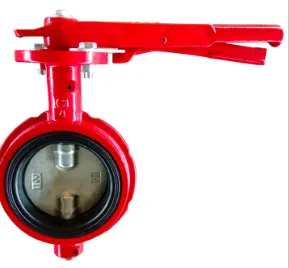
How Valve Design Drives Performance and Safety
Modern valve design focuses on efficiency, safety, and adaptability. Technological advancements have significantly transformed how valves are engineered, with a keen focus on minimizing leakage, reducing pressure drop, and improving controllability.
Key elements of valve design include body structure, sealing mechanisms, actuation methods, and flow dynamics. Double-seated or triple-offset designs offer improved sealing performance in high-pressure and high-temperature environments. Sealing technology has evolved too, with developments like live-loaded packing systems and fugitive emission controls to meet environmental regulations.
Today’s smart valve design also accommodates automation. With the integration of actuators, positioners, and digital control systems, valves can now be remotely monitored and operated, feeding real-time data back to centralized control systems. This level of control significantly enhances system safety, efficiency, and responsiveness.
Design innovation has also led to compact valve forms without compromising performance. For industries that require clean-in-place (CIP) or sterilize-in-place (SIP) processes, sanitary valve design ensures easy cleaning and minimal contamination.
From a business standpoint, superior valve design means fewer breakdowns, safer operations, and smoother maintenance workflows. Investing in well-designed valves often translates to tangible cost savings over the valve’s life cycle.
Streamlining Industrial Operations through Intelligent Valve Operation
In any industrial setting, valve operation is the bridge between system design and real-world function. A valve may be perfectly designed and built with the best materials, but if its operation is not seamless, the entire system’s reliability comes into question.
Valve operation can be manual, semi-automatic, or fully automated. Manual operation is suitable for low-frequency tasks and non-critical systems. However, industries now largely prefer automated or remotely controlled valves for their precision and reliability.
Automated valve operation ensures consistent performance, faster response times, and integration with industrial IoT (IIoT) networks. With sensors and controllers, businesses can implement predictive maintenance, minimizing downtime and optimizing resource allocation. Smart operation systems can detect wear, monitor flow rates, and even predict failures before they happen.
Another important aspect of valve operation is safety. Emergency shutdown systems (ESDVs), pressure relief valves, and blowdown valves all require rapid and reliable operation in critical moments. In such cases, there is no margin for error.
Training and user interface also play a part. Operators should be familiar with valve operation protocols, especially when working with complex control systems. User-friendly interfaces, proper labeling, and responsive controls can reduce human error and increase operational efficiency.
Valve Quality FAQs
What defines superior valve quality?
Superior valve quality is defined by durability, sealing performance, corrosion resistance, and compliance with international standards. It includes rigorous testing and material traceability.
How do different valve kinds affect performance?
Each of the valve kinds is engineered for specific flow control tasks. For example, gate valves are great for isolation, while globe valves are better for throttling. The choice impacts control, safety, and efficiency.
Why is valve material selection so critical?
Valve material affects how the valve handles pressure, temperature, and chemical compatibility. Using the wrong material can cause premature failure, while the right one extends service life.
What are the innovations in valve design today?
Modern valve design emphasizes compactness, automation readiness, and advanced sealing. Developments in computational modeling and materials science contribute to safer, more efficient valves.
How does smart valve operation benefit my business?
Automated valve operation increases accuracy, enables remote control, and reduces downtime. It integrates with IIoT systems for predictive maintenance and real-time monitoring.
-
Industrial Guide to Wholesale Large Butterfly Valve Procurement
НовостиApr.16,2026
-
High Quality Wholesale Inlet Butterfly Valve for Industrial Systems
НовостиApr.09,2026
-
Comprehensive Guide to Wholesale Butterfly Valve 8 Inch Price and Selection
НовостиApr.07,2026
-
Comprehensive Guide to Wholesale SS 304 Butterfly Valve Selection and Applications
НовостиApr.04,2026
-
Comprehensive Guide to Wholesale Valve Material Selection and Cost Optimization
НовостиMar.31,2026
-
Comprehensive Guide to Wholesale Inline Hydraulic Check Valve Solutions
НовостиMar.28,2026
 English
 Afrikaans
 Albanian
 Amharic
 Arabic
 Armenian
 Azerbaijani
 Basque
 Belarusian
 Bengali
 Bosnian
 Bulgarian
 Catalan
 Cebuano
 Corsican
 Croatian
 Czech
Czech
 Danish
 Dutch
Dutch
 Esperanto
 Estonian
 Finnish
 French
 Frisian
 Galician
 Georgian
 German
 Greek
Greek
 Gujarati
 Haitian Creole
 Hausa
Hausa
 Hawaiian
 Hebrew
 Hindi
Hindi
 Miao
Miao
 Hungarian
 Icelandic
 Igbo
Igbo
 Indonesian
 Irish
Irish
 Italian
 Japanese
 Javanese
 Kannada
 Kazakh
 Khmer
Khmer
 Rwandese
 Korean
 Kurdish
 Kyrgyz
 Lao
Lao
 Latin
Latin
 Latvian
 Lithuanian
 Luxembourgish
 Macedonian
 Malgashi
 Malay
Malay
 Malayalam
 Maltese
 Maori
Maori
 Marathi
 Mongolian
 Myanmar
 Nepali
 Norwegian
 Norwegian
 Occitan
 Pashto
 Persian
 Polish
 Portuguese
 Punjabi
 Romanian
 Samoan
 Scottish Gaelic
 Serbian
 Sesotho
 Shona
Shona
 Sindhi
 Sinhala
 Slovak
 Slovenian
 Somali
 Spanish
 Sundanese
 Swahili
 Swedish
 Tagalog
 Tajik
Tajik
 Tamil
Tamil
 Tatar
Tatar
 Telugu
 Thai
Thai
 Turkish
 Turkmen
 Ukrainian
 Urdu
Urdu
 Uighur
 Uzbek
Uzbek
 Vietnamese
 Welsh
Welsh
 Bantu
Bantu
 Yiddish
 Yoruba
 Zulu
Zulu
 Russian