
- Call Us
- +8618633052223
- njhdvlz@163.com
Oct . 17, 2025 09:05 Back to list
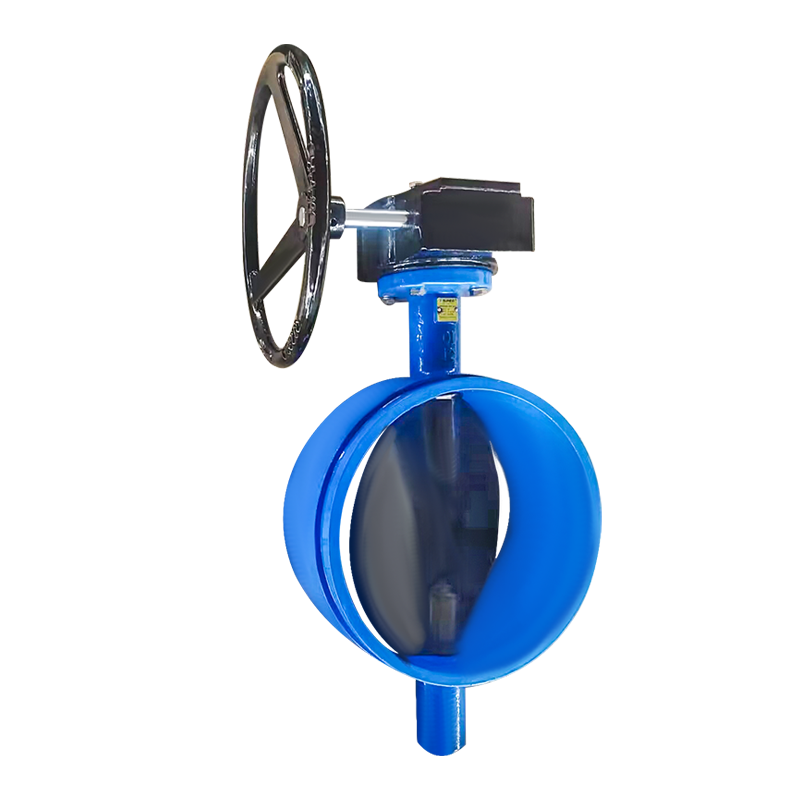
Groove Butterfly Valve - Quick Install, UL/FM, Leak-Tight
Groove Butterfly Valve: Field Notes, Specs, and What Buyers Actually Ask
In chilled-water rooms, fire loops, and plant retrofits, the groove butterfly valve has quietly become the go-to shutoff. To be honest, it’s popular because it’s simple: light, fast to install, and tolerant of tight spaces. The particular model I’ve been tracking comes out of the development area of Huanmadian, NingJin county, Hebei province, China—an area that’s been investing heavily in foundry QA and surface finishing. Actually, the supply chain there has matured a lot in the last five years.
What’s Trending
Three things: faster installs (grooved ends win), better elastomers for mixed-service water, and traceable conformance. Engineers are asking for MSS SP-67 alignment, groove geometry per AWWA C606, and factory test sheets they can drop into submittals without drama. Many customers say lever options with clearer detents matter more than they expected.
Technical Snapshot
| Parameter | Spec (≈ real-world use may vary) |
|---|---|
| Design standard | MSS SP-67 compliant; face-to-face per MSS SP-67 |
| Grooved ends | AWWA C606 Table 4 geometry |
| Size range | 2″–12″; handles or manual gear operators (2″–12″) |
| Body | Ductile iron (e.g., ASTM A536) |
| Disc | 316 SS or epoxy-coated ductile iron |
| Stem | Stainless steel (e.g., 420/431) |
| Seat | EPDM or NBR, potable-water compatible options available |
| Pressure class | Up to ≈ 200 psi typical for HVAC/fire loops |
| Leakage test | Hydrostatic per MSS SP-67; seat test per ISO 5208 (Rate A target) |
| Service life | ≥ 30,000 cycles (lab), installation-dependent |
Manufacturing and QA (Short Version)
- Materials: ductile iron casting, SS stem/disc options, molded elastomer seats.
- Methods: CNC machining of groove lands, disc profiling, fusion-bonded epoxy coating inside/out (where specified).
- Testing: shell @ 1.5× rated pressure; seat @ 1.1×; torque-to-operate checks; visual per MSS SP-67; dimensional per AWWA C606.
- Traceability: heat numbers and lot-based elastomer cure logs (ask for them—worth it).
Where It’s Used
Typical installs: campus chilled and condenser-water loops, fire sprinkler mains (verify NFPA and any UL/FM requirements at RFQ), light industrial process water, and gray water. It seems that maintenance teams like the groove butterfly valve for fast isolation when the clock is ticking.
Advantages in the Field
- Speed: grooved couplings cut install time notably vs. flanged.
- Compact: short face-to-face eases tight-room retrofits.
- Serviceability: replaceable seats and simple top-works.
- Documentation: MSS/AWWA references make approvals smoother.
Vendor Comparison (What Buyers Compare, Honestly)
| Vendor | Standards | Pressure (≈) | Lead Time | Notes |
|---|---|---|---|---|
| Hongda (Hebei) | MSS SP-67, AWWA C606 | Up to ~200 psi | 3–6 weeks (typ.) | Direct factory QA, customization-friendly |
| Importer B | MSS-equivalent (check docs) | 150–200 psi | Stock-dependent | Pricing sharp; traceability varies |
| Local Distributor C | MSS/AWWA listed | 200 psi | 1–2 weeks | Great support; premium price |
Customization
Options include lever or gear operator (2″–12″), disc material (316 SS vs. coated DI), EPDM vs. NBR seats, and coating thickness tweaks. If your spec calls for NSF/ANSI 61, UL/FM, or specific epoxy systems, confirm availability up front—some projects mandate third-party listings.
Field Data and Feedback
Sample test (8″ size, water, 20°C): shell @ 300 psi for 2 min—no visible leakage; seat test @ 220 psi—Rate A observed; operating torque ≈ 75 N·m at 100% differential. Surprisingly, maintenance techs noted the handle detent feels “positive,” reducing accidental drift. The groove butterfly valve also showed modest pressure drop at 50% open, but as always, consult your Cv curves.
Case Notes
University chiller retrofit: 6″ and 8″ sizes, night shift swap-outs. Grooved joints shaved hours per floor; commissioning flagged only one minor alignment tweak.
Warehouse fire main: 10″ loop. Engineer required MSS SP-67 submittals and AWWA C606 groove verification; documentation passed first review. UL/FM listing was handled at system level via other components.
Citations:
- MSS SP-67: Butterfly Valves (Manufacturer Standardization Society)
- AWWA C606: Grooved and Shouldered Joints (American Water Works Association)
- ISO 5208: Industrial valves—Pressure testing of metallic valves
- NFPA 13: Installation of Sprinkler Systems (National Fire Protection Association)
-
Comprehensive Guide to Wholesale 3 Butterfly Valve Price and Supplier Selection
NewsJan.28,2026
-
Comprehensive Guide to Wholesale Water Main Check Valve Selection and Application
NewsJan.27,2026
-
Wholesale 6 Lug Butterfly Valve – Durable & Cost-Effective Solutions for Industrial Applications
NewsJan.06,2026
-
Wholesale Composeal Butterfly Valve - Reliable Industrial Sealing Solutions
NewsJan.06,2026
-
Wholesale Marine Check Valve | Durable & Certified Marine Valves
NewsJan.06,2026
-
Wholesale Butterfly Valve Gas – B2B Solutions for Efficient Gas Flow Control | Hongda Valve
NewsJan.05,2026
 Afrikaans
 Albanian
 Amharic
 Arabic
 Armenian
 Azerbaijani
 Basque
 Belarusian
 Bengali
 Bosnian
 Bulgarian
 Catalan
 Cebuano
 Corsican
 Croatian
 Czech
Czech
 Danish
 Dutch
Dutch
 Esperanto
 Estonian
 Finnish
 French
 Frisian
 Galician
 Georgian
 German
 Greek
Greek
 Gujarati
 Haitian Creole
 Hausa
Hausa
 Hawaiian
 Hebrew
 Hindi
Hindi
 Miao
Miao
 Hungarian
 Icelandic
 Igbo
Igbo
 Indonesian
 Irish
Irish
 Italian
 Japanese
 Javanese
 Kannada
 Kazakh
 Khmer
Khmer
 Rwandese
 Korean
 Kurdish
 Kyrgyz
 Lao
Lao
 Latin
Latin
 Latvian
 Lithuanian
 Luxembourgish
 Macedonian
 Malgashi
 Malay
Malay
 Malayalam
 Maltese
 Maori
Maori
 Marathi
 Mongolian
 Myanmar
 Nepali
 Norwegian
 Norwegian
 Occitan
 Pashto
 Persian
 Polish
 Portuguese
 Punjabi
 Romanian
 Russian
 Samoan
 Scottish Gaelic
 Serbian
 Sesotho
 Shona
Shona
 Sindhi
 Sinhala
 Slovak
 Slovenian
 Somali
 Spanish
 Sundanese
 Swahili
 Swedish
 Tagalog
 Tajik
Tajik
 Tamil
Tamil
 Tatar
Tatar
 Telugu
 Thai
Thai
 Turkish
 Turkmen
 Ukrainian
 Urdu
Urdu
 Uighur
 Uzbek
Uzbek
 Vietnamese
 Welsh
Welsh
 Bantu
Bantu
 Yiddish
 Yoruba
 Zulu
Zulu
 English