
- Call Us
- +8618633052223
- njhdvlz@163.com
Sep . 30, 2025 11:50 Back to list
Cast Iron Butterfly Valve - Durable, Tight Seal - Why Ours?
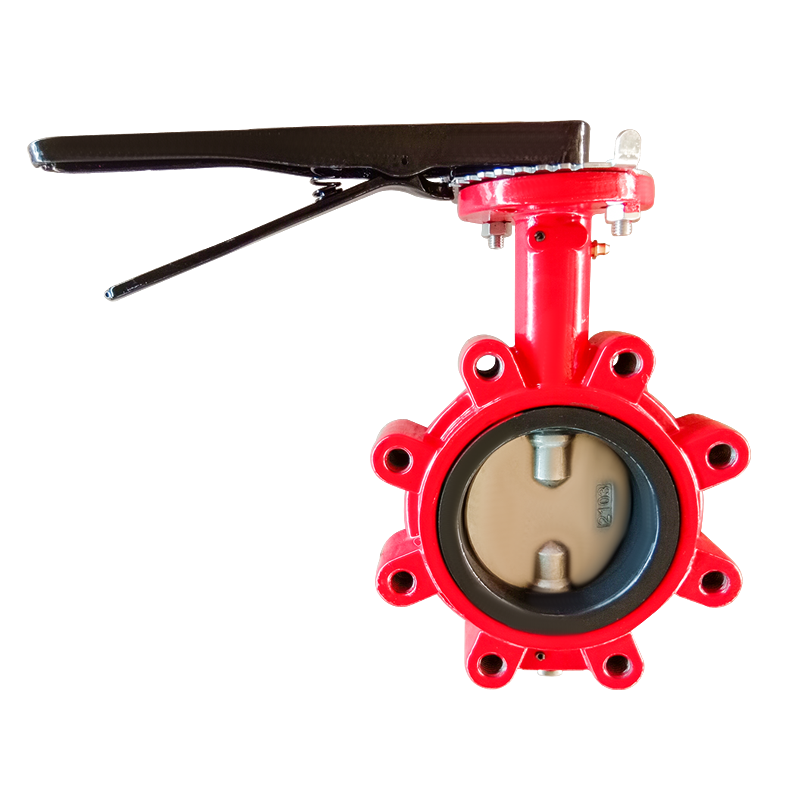
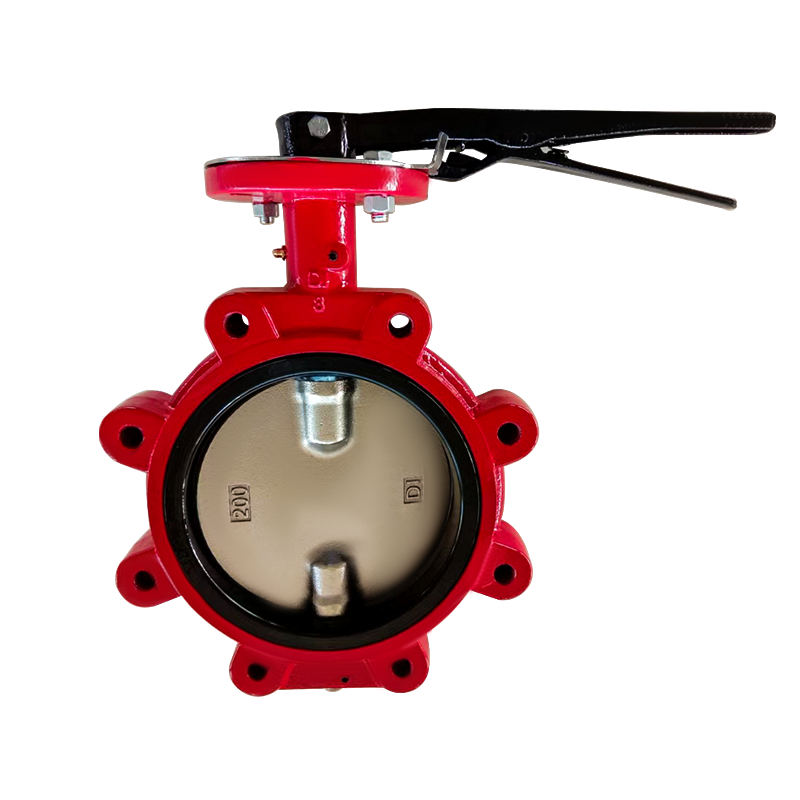
Short Neck Lug Type Model 20: your practical guide to the cast iron butterfly valve
If you work in water or HVAC, you already know the quiet hero in the line: the cast iron butterfly valve. Hongda’s Short Neck Lug Type Model 20 comes from the development area of Huanmadian, NingJin county, Hebei, and it’s built on a simple idea—one-piece bodies ribbed for high strength and minimum weight. I’ve handled enough lug valves to say: the balance of stiffness and mass matters, a lot.
What’s changing in the market
Trends? Lighter castings with better rib geometry, thicker epoxy systems, and more actuator-ready necks. Utilities are standardizing on PN16 for distribution, while industrial users push mixed media—chlorinated water now, glycol tomorrow. And, to be honest, procurement teams want traceability without paying boutique prices. This is where a short-neck, lugged cast iron butterfly valve with modular tops makes sense.
Typical specifications (real-world use may vary)
| Model | Short Neck Lug Type Model 20 |
| Body | Cast iron EN-GJL-250 (optional ductile iron EN-GJS-400-15) |
| Disc | Stainless steel 304/316 or ductile iron with nickel plating |
| Seat | EPDM or NBR; optional potable-water compounds |
| Shaft | SS410/SS304, anti-blowout design |
| Size range | DN50–DN600 (≈2″–24″) |
| Pressure rating | PN10/PN16 |
| Temperature | -10 °C to +110 °C, media-dependent |
| Face-to-face | ISO 5752, Series 20 (short pattern) |
| Ends | Lug type; drilling per EN 1092-2 / ASME B16.1 Class 125/150 patterns |
| Coating | Fusion-bonded epoxy ≈250 μm total DFT |
| Test | Shell 1.5×PN; seat 1.1×PN per ISO 5208/API 598, Rate A (zero visible leakage) |
| Service life | ≈15–25 years with routine maintenance |
How it’s made (quick process flow)
Sand casting → heat treatment → precision machining (seat pocket, stem bore) → shot-blast (Sa 2.5) → FBE coating → seat insertion and disc fit-up → torque test → hydrotest → final inspection (dimensions per ISO 5752) → packing. The ribbed, one-piece body keeps weight down without the “bell” flex you sometimes feel on budget valves.
Applications and feedback
Water treatment, distribution mains, HVAC loops, light chemicals, mining slurries (with NBR and nickel-plated disc). Many customers say lever operation is crisp up to DN200 and gearboxes feel smoother than they expected. I guess that’s the payoff of tighter stem tolerances.
Mini case study
A municipal plant in Southeast Asia swapped 36 aging gate valves for lugged cast iron butterfly valve units. Result: ≈30% weight reduction per valve, installation time down by about half (no line spreading), and zero visible leakage on DN200 at 24 bar shell test, 17.6 bar seat test. Not glamorous, just solid wins.
Vendor comparison (snapshot)
| Item | Hongda Model 20 | Import A | OEM B |
|---|---|---|---|
| Casting grade | EN-GJL-250 (option GJS-400) | Unspecified | GJL-200 |
| Coating DFT | ≈250 μm FBE | ≈180 μm | ≈200 μm |
| Face-to-face | ISO 5752 S20 | Proprietary | ISO 5752 S14 |
| QC/testing | API 598 / ISO 5208 Rate A | Factory standard | ISO 5208 Rate B |
| Actuator-ready | ISO 5211 top | Adapter only | ISO 5211 |
Customization and compliance
Options include EPDM/NBR seats (WRAS/NSF-61 compounds on request), nickel or SS discs, ISO 5211 mounting for gear/pneumatic/electric actuators, and mixed flange drilling. CE marking under PED 2014/68/EU may apply by size/medium; documentation is available. Frankly, the paperwork can feel heavy—but it protects your project.
References
-
Comprehensive Guide to Wholesale 3 Butterfly Valve Price and Supplier Selection
NewsJan.28,2026
-
Comprehensive Guide to Wholesale Water Main Check Valve Selection and Application
NewsJan.27,2026
-
Wholesale 6 Lug Butterfly Valve – Durable & Cost-Effective Solutions for Industrial Applications
NewsJan.06,2026
-
Wholesale Composeal Butterfly Valve - Reliable Industrial Sealing Solutions
NewsJan.06,2026
-
Wholesale Marine Check Valve | Durable & Certified Marine Valves
NewsJan.06,2026
-
Wholesale Butterfly Valve Gas – B2B Solutions for Efficient Gas Flow Control | Hongda Valve
NewsJan.05,2026
 Afrikaans
 Albanian
 Amharic
 Arabic
 Armenian
 Azerbaijani
 Basque
 Belarusian
 Bengali
 Bosnian
 Bulgarian
 Catalan
 Cebuano
 Corsican
 Croatian
 Czech
Czech
 Danish
 Dutch
Dutch
 Esperanto
 Estonian
 Finnish
 French
 Frisian
 Galician
 Georgian
 German
 Greek
Greek
 Gujarati
 Haitian Creole
 Hausa
Hausa
 Hawaiian
 Hebrew
 Hindi
Hindi
 Miao
Miao
 Hungarian
 Icelandic
 Igbo
Igbo
 Indonesian
 Irish
Irish
 Italian
 Japanese
 Javanese
 Kannada
 Kazakh
 Khmer
Khmer
 Rwandese
 Korean
 Kurdish
 Kyrgyz
 Lao
Lao
 Latin
Latin
 Latvian
 Lithuanian
 Luxembourgish
 Macedonian
 Malgashi
 Malay
Malay
 Malayalam
 Maltese
 Maori
Maori
 Marathi
 Mongolian
 Myanmar
 Nepali
 Norwegian
 Norwegian
 Occitan
 Pashto
 Persian
 Polish
 Portuguese
 Punjabi
 Romanian
 Russian
 Samoan
 Scottish Gaelic
 Serbian
 Sesotho
 Shona
Shona
 Sindhi
 Sinhala
 Slovak
 Slovenian
 Somali
 Spanish
 Sundanese
 Swahili
 Swedish
 Tagalog
 Tajik
Tajik
 Tamil
Tamil
 Tatar
Tatar
 Telugu
 Thai
Thai
 Turkish
 Turkmen
 Ukrainian
 Urdu
Urdu
 Uighur
 Uzbek
Uzbek
 Vietnamese
 Welsh
Welsh
 Bantu
Bantu
 Yiddish
 Yoruba
 Zulu
Zulu
 English