
- Call Us
- +8618633052223
- njhdvlz@163.com
Oct . 28, 2025 12:50 Back to list
8 Wafer Butterfly Valve - Tight Seal & Corrosion-Resistant
Field Notes on the 8-inch Wafer Butterfly Valve: what matters in the real world
If you’re speccing an 8 Wafer Butterfly Valve for water, HVAC, or light chemical service, you probably don’t want marketing fluff—you want what installers and maintenance teams actually care about. I’ve been in and around valve rooms long enough to know: standards, reliability, and lead time routinely trump fancy buzzwords. And yes, price—but not at the expense of shutoff integrity.
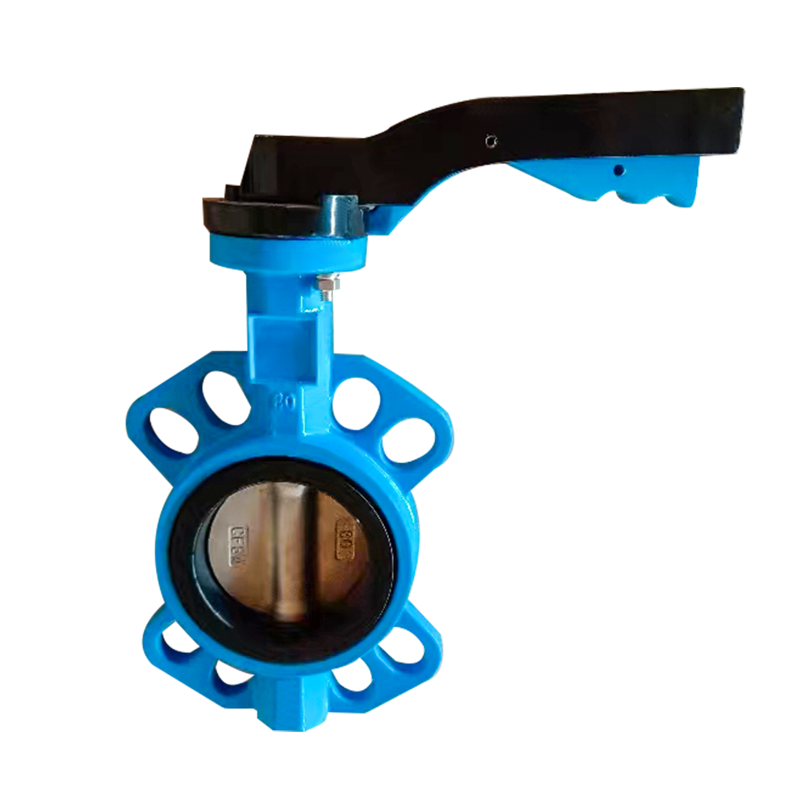
What’s trending (quietly) in wafer butterfly valves
There’s a steady pull toward valves that meet globally recognized specs—API 609, MSS SP-67—and can land in mixed-standard plants without drama. The F170 series I reviewed is designed to these benchmarks and mates with GB, ANSI, DIN, BS, and JIS flanges. To be honest, that multi-standard compatibility is a lifesaver when you inherit legacy lines.
Product snapshot (8-inch, wafer body)
| Series / Model | F170, WAFER TYPE BUTTERFLY VALVE |
| Nominal size | 8" (DN200) — series range 2" to 12" |
| Standards | API 609, MSS SP-67, BS 5155 (legacy), face-to-face ≈ EN 558 Series 20 |
| Flange compatibility | GB, ANSI Class 150, DIN PN10/PN16, BS, JIS 10K |
| Body / Disc | Ductile iron, WCB, or stainless (CF8/CF8M) options |
| Seat | EPDM, NBR, FKM, PTFE-lined (selection by media & temp) |
| Pressure & test | Class 150 / PN16 typical; shell test 1.5×PN, seat test 1.1×PN per ISO 5208 Rate A (zero visible leakage) in many configs |
| Shaft | One-piece thru shaft; positive stem drive disc movement |
| Actuation | Lever, gearbox, pneumatic or electric actuator (ISO 5211 top pad where specified) |
| Temperature window | ≈ -10°C to +120°C (EPDM); up to ≈ +180°C with FKM/PTFE — real-world use may vary |
How it’s built (short version)
Materials are sourced per BOM—ductile iron for economy, or stainless where chloride-rich media lurk. CNC machining aligns body, disc, and bushing tolerances; seats are molded or lined depending on elastomer vs PTFE. The one-piece shaft (I’m a fan) removes a common failure point. Coatings? Typically fusion-bonded epoxy around 250–300 μm DFT for water service. Hydrostatic shell and seat tests follow ISO 5208/EN 12266 rules. Typical service life: ≈ 50,000 on/off cycles in clean water with correct sizing and actuation—more if it’s pampered, less in abrasive slurries.
Where an 8 Wafer Butterfly Valve earns its keep
- Municipal and industrial water, wastewater, desal pre-treatment
- HVAC chilled/condensed water loops in high-rises (space is tight)
- Food & beverage utility lines (EPDM/SS trims, easy wash-down)
- Light chemicals and brine—PTFE seat/disc coatings where needed
Many customers say the big surprise is torque—properly sized gear operators make 8" operation a one-hand task. I guess that’s why maintenance crews keep a few spares on the shelf.
Vendor snapshot (8" wafer, indicative)
| Vendor | Hongda (F170) | EU OEM | Low-cost Importer |
| Compliance | API 609 / MSS SP-67 | API 609 / EN 593 | Claims vary; verify |
| Seat options | EPDM/NBR/FKM/PTFE | EPDM/FKM/PTFE | EPDM only (often) |
| Test docs | Hydrostatic + MTRs | Full DTR + PED | Basic |
| Lead time | ≈ 2–4 weeks | ≈ 4–6 weeks | Stock varies |
| Price (8") | Mid | High | Low |
Customization and QA
Options include disc material upgrades, PTFE liners for chemically aggressive media, gear or pneumatic actuation, limit switches, and epoxy thickness tweaks. Factory testing follows ISO 5208/EN 12266; certificates (MTRs, hydrostatic reports) provided on request. PED/CE documentation may be available depending on destination market.
Two quick case notes
- HVAC loop, 18-story hospital: 8 Wafer Butterfly Valve with gear operator replaced decade-old gates—leak-off dropped to near-zero, balancing got easier.
- Bottling plant utility water: stainless disc + EPDM seat units ran ≈ 18 months before first seat swap; operators liked the shorter handles in tight racks.
Origin note: these valves are produced in the development area of Huanmadian, NingJin county, Hebei, China—an area with a dense supply chain for iron casting and valve assembly, which, in fact, keeps lead times sensible.
Final take
For an 8 Wafer Butterfly Valve, standards compliance, a one-piece shaft, and multi-flange compatibility tick the big boxes. The F170 checks them, and the pricing is usually friendly without cutting corners where it counts—the seat and the test regime.
Authoritative citations
- API 609: Butterfly Valves—Double-flanged, Lug- and Wafer-type. American Petroleum Institute.
- MSS SP-67: Butterfly Valves. Manufacturers Standardization Society.
- ISO 5208: Industrial valves—Pressure testing of metallic valves. International Organization for Standardization.
- BS 5155 (superseded by EN 593): Specification for butterfly valves. British Standards.
- EN 1092-1 / ASME B16.5: Flanges and their joints—dimensions and drilling patterns.
-
Comprehensive Guide to Wholesale 3 Butterfly Valve Price and Supplier Selection
NewsJan.28,2026
-
Comprehensive Guide to Wholesale Water Main Check Valve Selection and Application
NewsJan.27,2026
-
Wholesale 6 Lug Butterfly Valve – Durable & Cost-Effective Solutions for Industrial Applications
NewsJan.06,2026
-
Wholesale Composeal Butterfly Valve - Reliable Industrial Sealing Solutions
NewsJan.06,2026
-
Wholesale Marine Check Valve | Durable & Certified Marine Valves
NewsJan.06,2026
-
Wholesale Butterfly Valve Gas – B2B Solutions for Efficient Gas Flow Control | Hongda Valve
NewsJan.05,2026
 Afrikaans
 Albanian
 Amharic
 Arabic
 Armenian
 Azerbaijani
 Basque
 Belarusian
 Bengali
 Bosnian
 Bulgarian
 Catalan
 Cebuano
 Corsican
 Croatian
 Czech
Czech
 Danish
 Dutch
Dutch
 Esperanto
 Estonian
 Finnish
 French
 Frisian
 Galician
 Georgian
 German
 Greek
Greek
 Gujarati
 Haitian Creole
 Hausa
Hausa
 Hawaiian
 Hebrew
 Hindi
Hindi
 Miao
Miao
 Hungarian
 Icelandic
 Igbo
Igbo
 Indonesian
 Irish
Irish
 Italian
 Japanese
 Javanese
 Kannada
 Kazakh
 Khmer
Khmer
 Rwandese
 Korean
 Kurdish
 Kyrgyz
 Lao
Lao
 Latin
Latin
 Latvian
 Lithuanian
 Luxembourgish
 Macedonian
 Malgashi
 Malay
Malay
 Malayalam
 Maltese
 Maori
Maori
 Marathi
 Mongolian
 Myanmar
 Nepali
 Norwegian
 Norwegian
 Occitan
 Pashto
 Persian
 Polish
 Portuguese
 Punjabi
 Romanian
 Russian
 Samoan
 Scottish Gaelic
 Serbian
 Sesotho
 Shona
Shona
 Sindhi
 Sinhala
 Slovak
 Slovenian
 Somali
 Spanish
 Sundanese
 Swahili
 Swedish
 Tagalog
 Tajik
Tajik
 Tamil
Tamil
 Tatar
Tatar
 Telugu
 Thai
Thai
 Turkish
 Turkmen
 Ukrainian
 Urdu
Urdu
 Uighur
 Uzbek
Uzbek
 Vietnamese
 Welsh
Welsh
 Bantu
Bantu
 Yiddish
 Yoruba
 Zulu
Zulu
 English