
- Call Us
- +8618633052223
- njhdvlz@163.com
Oct . 20, 2025 14:40 Back to list
High Quality Wafer Check Valve Suppliers: Fast & OEM?
How to vet high quality wafer check valve suppliers in 2025
If you work in water, HVAC, or midstream process lines, you already know: a wafer check valve is a small component with very big consequences. I’ve walked sites where a $70 part saved a $70,000 pump, and others where the opposite happened. The difference often comes down to materials, testing rigor, and—let’s be honest—the supplier’s discipline.
Industry trend watch: lower cracking pressure (to reduce pump energy), cleaner internal finishes for hygienic lines, and retainerless designs that address fugitive emissions. And documentation is finally getting the respect it deserves—digital MTRs, hydrostatic charts, PMI, all bundled and traceable. Many customers say that lead time plus paperwork readiness now beats price by a nose.
A quick note on a benchmark maker
In northern China’s Development area of Huanmadian, NingJin county (Hebei province), Hongda Valve manufactures a broad portfolio. Their Series F170 Lug Type Butterfly Valve complies with MSS SP-67, BS5155, and API 609; it matches GB, ANSI, DIN, BS, JIS flanges; sizes 1½″ to 24″; wafer and lug type; with a one-piece thru shaft for dependability. Different product, yes, but the same factory discipline typically carries over to wafer check valves. That breadth and standards literacy matters when you’re screening high quality wafer check valve suppliers.
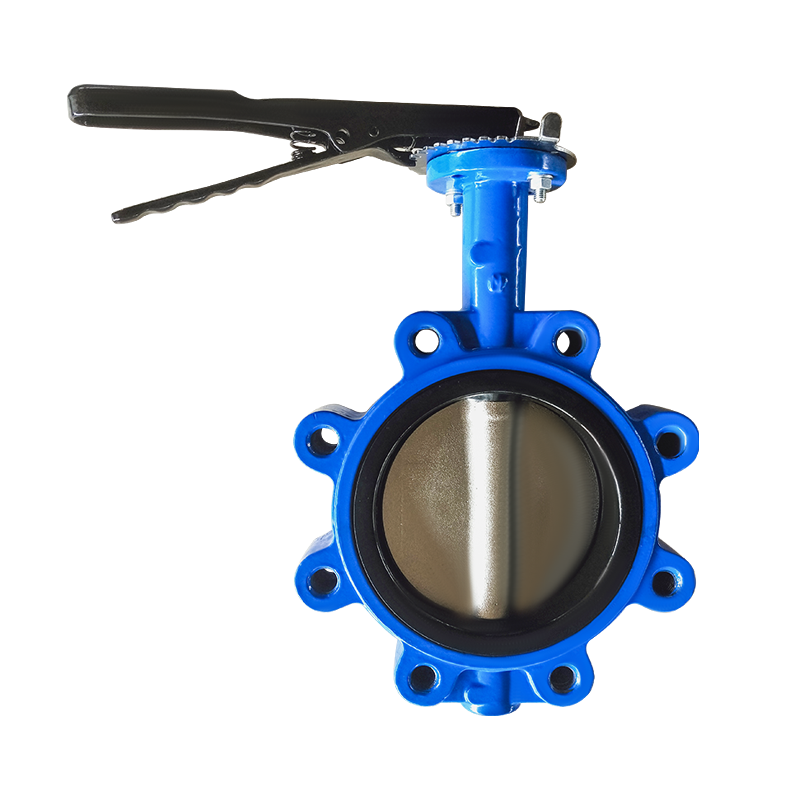
Typical wafer check valve specifications (what to ask for)
| Size Range | 1″–24″ (DN25–DN600) |
| Pressure Class | PN10/PN16/PN25, ASME 150# (real-world use may vary) |
| Body | WCB, GGG40/50 (ductile iron), CF8/CF8M |
| Disc | CF8/CF8M, Duplex on request |
| Seat | NBR, EPDM, Viton, PTFE |
| Spring | Inconel X-750 (≈ best for fatigue) |
| Cracking Pressure | ≈0.02–0.05 bar (low Δp trend) |
| Leakage | ISO 5208 Rate A; API 598 seat test |
| Face-to-Face | API 594 / EN 558 (series 16/20) |
| Ends | Wafer for EN 1092-1 / ASME B16.5 flanges |
| Temperature | -10 to 200°C (seat-dependent) |
| Certifications | ISO 9001, CE; NSF/ANSI/CAN 61 or WRAS optional |
| Service Life | ≥1,000,000 cycles (lab), field ≈ depends on fluid |
Process and testing you should expect
Look for: PMI on stainless heats; CNC machining with Ra targets on sealing surfaces; spring fatigue checks; hydrostatic and seat tests per API 598; torque-to-open logs; coating to ISO 12944 if coated. For sour service, ask for NACE MR0175 compliance. I guess a lot of failures trace back to skimping on springs and seat geometry.
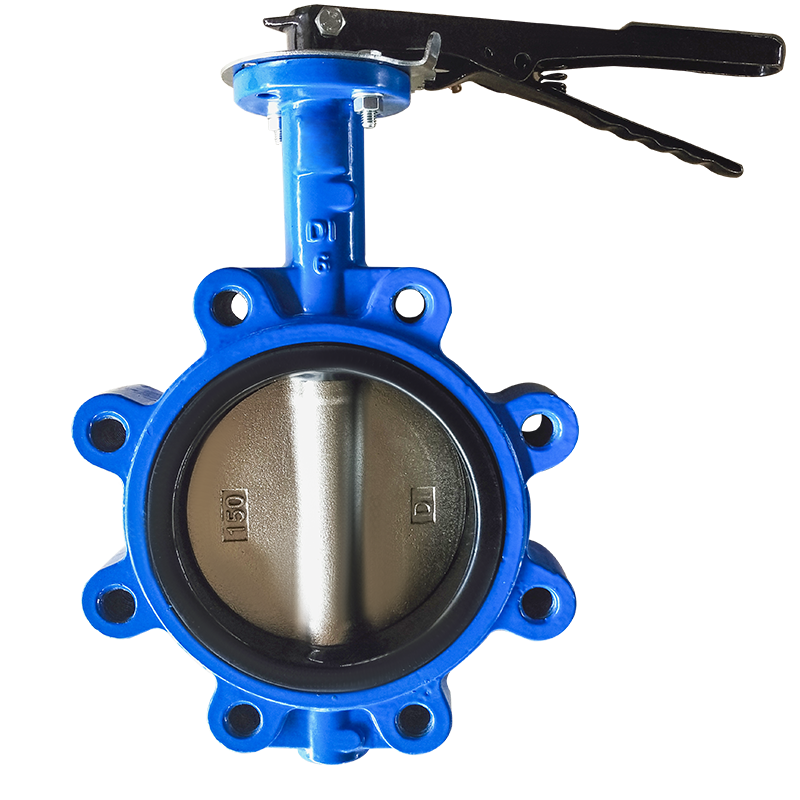
Where they’re used (and why it matters)
- Water & wastewater: pumps and lift stations; dual-plate for quick close to curb hammer.
- HVAC & district cooling: low Δp means energy savings; EPDM seats common.
- Desalination & chemical: CF8M/duplex; Viton/PTFE seats; documentation-heavy.
- Fire protection: listed/approved variants; confirm applicable listing before use.
Vendor snapshot (what I’ve seen work)
| Vendor | Strength | Certs | Lead Time | Customization |
|---|---|---|---|---|
| Hongda Valve (Hebei, CN) | Standards depth; broad flange compatibility | ISO 9001; API practice familiarity | ≈3–6 weeks | Seats, alloys, cracking pressure |
| EU Specialist A | Premium springs; retainerless designs | CE, PED | ≈4–8 weeks | High-spec docs, duplex/SMO |
| US Maker B | Fast service; local testing | NSF/ANSI/CAN 61, ISO 9001 | ≈1–4 weeks | Custom springs/trim, coatings |
Customization checklist
Specify: medium, temperature, target Δp, vertical/horizontal installation, soft vs. metal seat, cracking pressure (e.g., 0.02 bar), NACE or potable-water approvals, and face-to-face standard. This is where high quality wafer check valve suppliers separate themselves—by asking the right annoying questions up front.
Two quick case notes
- District cooling retrofit: swapping swing checks for dual-plate wafer cut pump kWh ~3–5% and reduced slam. Seat leakage verified to ISO 5208 Rate A.
- Food plant CIP line: CF8M + PTFE seats, documented to FDA contact guidance; cracking pressure tuned to 0.03 bar to stop backflow without starving pumps.
Actually, feedback was simple: “arrived with complete test packs.” It seems that’s half the battle.
Authoritative references
- API 594: Check Valves—Flanged, Lug, Wafer (standard scope)
- API 598: Valve Inspection and Testing (pressure & seat tests)
- ISO 5208: Pressure testing of valves (leakage rates)
- MSS SP-67, BS 5155, API 609 (butterfly valve standards for comparison)
- NACE MR0175/ISO 15156 (sour-service materials)
- EN 1092-1, ASME B16.5 (flange compatibility)
- NSF/ANSI/CAN 61 (potable-water components)
-
Industrial Guide to Wholesale Large Butterfly Valve Procurement
NewsApr.16,2026
-
High Quality Wholesale Inlet Butterfly Valve for Industrial Systems
NewsApr.09,2026
-
Comprehensive Guide to Wholesale Butterfly Valve 8 Inch Price and Selection
NewsApr.07,2026
-
Comprehensive Guide to Wholesale SS 304 Butterfly Valve Selection and Applications
NewsApr.04,2026
-
Comprehensive Guide to Wholesale Valve Material Selection and Cost Optimization
NewsMar.31,2026
-
Comprehensive Guide to Wholesale Inline Hydraulic Check Valve Solutions
NewsMar.28,2026
 Afrikaans
 Albanian
 Amharic
 Arabic
 Armenian
 Azerbaijani
 Basque
 Belarusian
 Bengali
 Bosnian
 Bulgarian
 Catalan
 Cebuano
 Corsican
 Croatian
 Czech
Czech
 Danish
 Dutch
Dutch
 Esperanto
 Estonian
 Finnish
 French
 Frisian
 Galician
 Georgian
 German
 Greek
Greek
 Gujarati
 Haitian Creole
 Hausa
Hausa
 Hawaiian
 Hebrew
 Hindi
Hindi
 Miao
Miao
 Hungarian
 Icelandic
 Igbo
Igbo
 Indonesian
 Irish
Irish
 Italian
 Japanese
 Javanese
 Kannada
 Kazakh
 Khmer
Khmer
 Rwandese
 Korean
 Kurdish
 Kyrgyz
 Lao
Lao
 Latin
Latin
 Latvian
 Lithuanian
 Luxembourgish
 Macedonian
 Malgashi
 Malay
Malay
 Malayalam
 Maltese
 Maori
Maori
 Marathi
 Mongolian
 Myanmar
 Nepali
 Norwegian
 Norwegian
 Occitan
 Pashto
 Persian
 Polish
 Portuguese
 Punjabi
 Romanian
 Russian
 Samoan
 Scottish Gaelic
 Serbian
 Sesotho
 Shona
Shona
 Sindhi
 Sinhala
 Slovak
 Slovenian
 Somali
 Spanish
 Sundanese
 Swahili
 Swedish
 Tagalog
 Tajik
Tajik
 Tamil
Tamil
 Tatar
Tatar
 Telugu
 Thai
Thai
 Turkish
 Turkmen
 Ukrainian
 Urdu
Urdu
 Uighur
 Uzbek
Uzbek
 Vietnamese
 Welsh
Welsh
 Bantu
Bantu
 Yiddish
 Yoruba
 Zulu
Zulu
 English