- Call Us
- +8618633052223
- njhdvlz@163.com
When managing large-scale fluid control systems, the distinction between wafer and lug mounting styles often determines the long-term operational stability of a pipeline. Procurement managers frequently search for a wholesale lug valve solution not just for cost-efficiency, but to ensure that their infrastructure can handle "dead-end" service conditions where the valve must remain secure even if the downstream piping is removed. This requirement makes the lug-style butterfly valve a critical component in high-pressure or critical-flow industrial environments.
The importance of this selection extends beyond simple installation; it impacts maintenance downtime and system safety. Unlike wafer designs that rely on the pipe flanges for compression, lug valves feature threaded inserts that allow them to be bolted directly to the flange. This architectural difference is vital for applications involving water supply, sewage treatment, and petrochemical pipelines, where the ability to isolate sections of the system without disturbing the entire line is a non-negotiable safety requirement for plant engineers.
Navigating the technical specifications of these valves requires an understanding of material compatibility and sealing integrity. By analyzing the structural advantages and procurement criteria, operators can optimize their fluid handling systems for maximum reliability. In this guide, we provide a professional analysis of how to evaluate and source a wholesale lug valve that meets rigorous industrial standards for durability and leak prevention.


The fundamental design of a lug-type butterfly valve centers on the integration of threaded mounting holes (lugs) around the outer diameter of the valve body. This allows the valve to be bolted independently to the mating flange. Unlike wafer valves, which are sandwiched between two flanges and rely on the total bolt tension to stay in place, the lug design creates a semi-permanent attachment that facilitates easier removal of downstream piping without compromising the upstream seal.
Internally, the valve operates through a rotating disc that regulates flow. When the actuator or handle is turned, the disc moves from a fully open position to a perpendicular closed position, pressing the edge of the disc against a resilient seat. This mechanism provides a tight shut-off with minimal pressure drop, making it an ideal choice for systems requiring quick actuation and reliable isolation in a compact footprint.
Material selection is the primary driver of valve longevity, especially in corrosive environments. For the valve body, the use of ductile cast iron (such as ASTM A536) or gray cast iron (ASTM A126) provides the necessary structural rigidity to withstand pressure surges. Ductile iron is particularly valued in high-stress applications due to its superior tensile strength and impact resistance compared to standard gray iron.
The interaction between the stem, disc, and seat determines the leak rate; using Stainless Steel (ASTM A276 Type 316) for stems ensures corrosion resistance, while O-rings made of EPDM or Viton allow the valve to remain compatible with specific chemicals and temperature ranges.
Furthermore, the surface treatment of the disc—such as nickel plating for ductile iron discs or the use of Al-Bronze—prevents oxidation and reduces friction during operation. By matching the material of the seal (NBR, Neoprene, or Viton) to the chemical composition of the transported medium, engineers can prevent premature seat failure and extend the mean time between maintenance (MTBM).
The operational value of a lug-style valve is most apparent during system expansion or emergency repairs. Because the valve is bolted to the flange via lugs, it can function as a reliable isolation point. In a dead-end service configuration, the valve can hold back the pressure of the entire upstream line even if the downstream pipe is completely disconnected, a capability that wafer valves cannot provide.
For facility managers, this means reduced risk during maintenance, as the valve acts as a secure barrier, eliminating the need to drain the entire system before performing downstream repairs.
Moreover, the compact design of the Series F101 lug type valves reduces the total weight of the piping assembly and saves critical space in crowded mechanical rooms. This efficiency in space and weight, combined with the ability to perform independent isolation, lowers the overall total cost of ownership (TCO) by reducing installation labor and accelerating repair timelines.
When comparing different butterfly valve series, such as the F101 Lug vs. Wafer types, the primary metrics for evaluation are seal integrity, installation time, and pressure rating. Lug valves typically offer higher versatility in mounting but may require slightly more installation time due to the number of bolts used in the lugs compared to the sandwiching method of wafer valves.
To visualize the efficiency of these designs, we analyze the relative "System Flexibility Score," which accounts for the ease of maintenance, adaptability to different pipe ends, and the ability to handle dead-end pressure. This helps procurement teams determine which series best fits their specific industrial layout.
Lug-type valves are indispensable in water supply and drainage networks and sewage treatment plants, where the medium often contains abrasive particulates or corrosive elements. In these settings, the resilience of the EPDM or NBR seats is critical to maintaining a bubble-tight seal. The ability to isolate a segment of a sewage line for cleaning without shutting down the entire plant makes the lug design the industry standard for these applications.
Additionally, the petrochemical and power station industries utilize these valves in cooling water systems and long-distance oil and gas pipelines. In these high-stakes environments, the use of ductile iron and stainless steel components ensures that the valve can withstand significant thermal expansion and contraction without losing its seal or suffering structural deformation.
The industry has shifted toward advanced elastic soft-sealed butterfly valves to achieve zero-leakage performance. Modern seals are engineered to deform slightly under the pressure of the disc, creating a vacuum-tight seal that exceeds the performance of traditional metal-to-metal seats. This evolution is particularly evident in the Series F101 and similar professional lines designed for high-cycle applications.
Current trends also emphasize the customization of valve castings. By utilizing high-quality gray and ductile iron castings, manufacturers can now personalize the valve's dimensions and material grade to meet specific ASME or DIN standards. This flexibility allows for the integration of valves into legacy systems where non-standard flange spacings were previously a barrier to upgrade.
Looking forward, the integration of smarter actuation systems—combining traditional lug-style bodies with electronic positioners—is likely to increase the precision of flow control in automated industrial plants, further reducing waste and improving energy efficiency across the fluid handling chain.
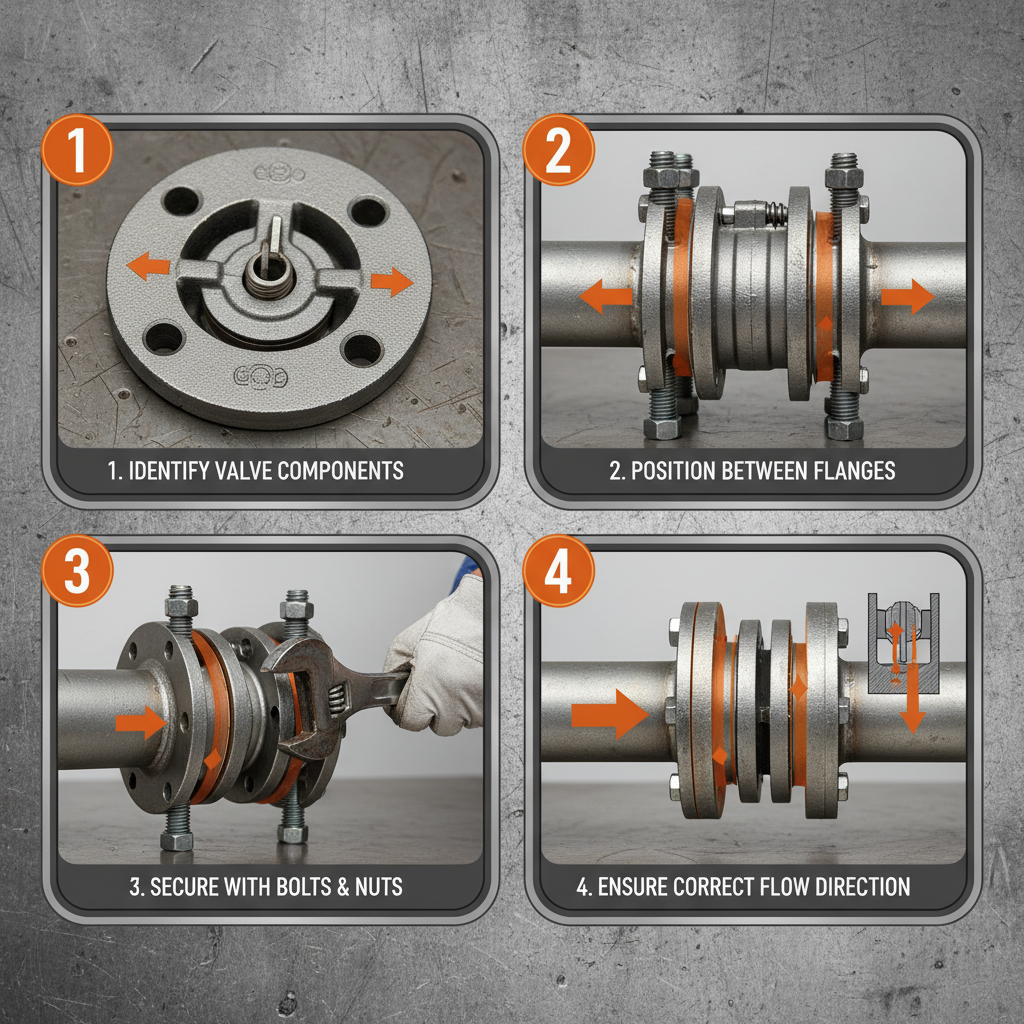
Despite their advantages, implementing lug valves can present challenges, primarily regarding bolt torque consistency. Uneven tightening of the lug bolts can lead to flange misalignment, which potentially causes premature seat wear or external leakage. The solution lies in implementing a strict cross-pattern tightening sequence and utilizing calibrated torque wrenches during installation.
Another common issue is the selection of the wrong elastomer for the medium. For instance, using NBR in an environment with high ozone exposure can lead to cracking. Engineers must refer to chemical compatibility charts to choose between Viton for chemicals, EPDM for potable water, or Neoprene for general industrial use to ensure the seal's lifecycle is maximized.
Finally, for systems with extreme temperature fluctuations, the choice of stem material is paramount. Stainless Steel Type 410 or 316 is recommended to prevent seizing in the guide, ensuring that the valve remains operable even after years of dormancy in harsh outdoor environments.
| Component | Standard Material | High-End Option | Primary Benefit |
|---|---|---|---|
| Valve Body | Gray Cast Iron | Ductile Iron | Higher Pressure Limit |
| Disc | Nickel Plated Iron | Al-Bronze | Superior Corrosion Resistance |
| Stem | SS 410 | SS 316 | Enhanced Chemical Stability |
| Seat/O-Ring | NBR | Viton / EPDM | Temperature/Chemical Range |
| Connection | Lug Type | Threaded/Wafer | Dead-end Service Ability |
| Treatment | Painting | Epoxy Coating | Extended Exterior Life |
The primary difference is the mounting method. A lug valve has threaded inserts (lugs) that allow it to be bolted directly to a flange, meaning it can be used for dead-end service where the downstream piping can be removed while the valve remains in place. A wafer valve is compressed between two flanges and cannot be used as a standalone isolation point if the downstream pipe is removed.
EPDM is generally the preferred choice for potable water applications due to its excellent resistance to aging and weather, as well as its compatibility with water-based systems. For applications involving oils or hydrocarbons, NBR is more suitable, while Viton should be selected for high-temperature or aggressive chemical environments.
Yes, provided that the body is constructed from ductile iron (ASTM A536) and the disc is made of corrosion-resistant materials like Al-Bronze or Stainless Steel. The lug design provides the necessary structural integrity to manage high-pressure differentials, though engineers must ensure the flange ratings match the valve's pressure class.
To prevent leaks, ensure that the flange faces are clean and that the gaskets are properly seated. Use a calibrated torque wrench and follow a cross-pattern tightening sequence for the lug bolts to ensure even pressure across the seal. Over-tightening can deform the seat, while under-tightening leads to external seepage.
The maintenance cycle varies by medium, but typically involves an annual inspection of the actuator and a seal integrity test every 2-3 years. In highly corrosive environments, the stem packing should be checked more frequently. Replacing the O-ring or seat is a straightforward process that doesn't require removing the entire valve body from the pipeline.
Yes, professional suppliers design their valves to meet multiple standards including DIN, ANSI, and GB. Because lug valves can be personalized during the casting and machining phases, dimensions can be adjusted to fit specific regional flange standards, making them highly versatile for global export markets.
Selecting a lug-type butterfly valve is a strategic decision that balances installation flexibility with long-term operational safety. By prioritizing material compatibility—specifically the use of ductile iron bodies and targeted elastomer seals—industrial operators can ensure a leak-proof system capable of handling the rigors of dead-end service and high-pressure isolation. The structural advantage of the lug design ultimately translates into reduced maintenance risks and lower lifecycle costs.
For enterprises seeking reliable fluid control components, sourcing from a manufacturer that integrates design, casting, and machining is essential for quality assurance. To explore technical specifications or request a customized solution for your piping network, you are invited to visit the official resources at www.hongdavalve.com for professional guidance and product support.