
- Call Us
- +8618633052223
- njhdvlz@163.com
Aug . 22, 2025 18:40 Back to list
T Check Valves in Chemical Processing Plants
In the high-stakes environment of chemical processing plants, where corrosive fluids, high pressures, and precise flow control are daily challenges, reliable valve systems are non-negotiable. T check valve, along with a check valve and back check valve, play a critical role in preventing reverse flow, protecting equipment, and ensuring operational safety. These valves are designed to allow fluid flow in one direction while stopping backflow, a function that safeguards pumps, pipelines, and reactors from damage. Ningjin Hongda Valve Co., Ltd., a professional valve supplier integrating design, production, and sales, is a key provider of such solutions. With specialized production lines for casting, machining, and assembly, along with a dedicated team, the company manufactures high-quality check valves—including t check valve variants—suitable for the rigorous demands of chemical processing, among other industries.
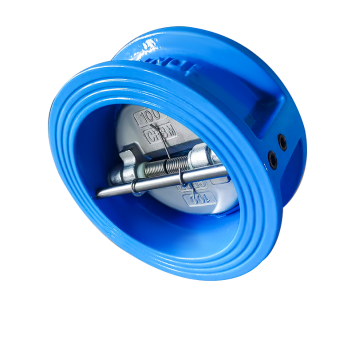
How T Check Valve Functions in Chemical Systems
- Flow Direction Control: A t check valve features a T-shaped body that splits or combines fluid paths, allowing flow in one direction through its main passage while blocking reverse flow via a closing mechanism (often a ball, disc, or spring-loaded piston). This design is particularly useful in chemical plants where pipelines branch, ensuring that corrosive or hazardous fluids don’t backtrack into sensitive equipment.
- Pressure Responsiveness: Unlike a standard a check valve, which relies on fluid pressure to open and close, a t check valveoften includes a spring to assist closure, making it more reliable in low-pressure or vertical pipeline setups common in chemical processing. This spring ensures the valve seals tightly even when flow rates fluctuate, preventing leaks of toxic or reactive substances.
- Compatibility with Chemicals: T check valvebodies are typically made from corrosion-resistant materials like stainless steel, Hastelloy, or PVC, chosen to withstand harsh chemicals such as acids, solvents, and alkalis. This compatibility is vital in chemical plants, where material degradation could lead to system failures or safety hazards.
Types of Check Valves Used in Chemical Processing
- T Check Valve: Ideal for branching pipelines, this valve’s T-shaped design allows for flow control at junctions, making it perfect for systems where fluids need to be directed to multiple reactors or storage tanks. Its compact size and ability to handle high pressures make it a staple in complex chemical setups.
- Back Check Valve: Also known as a non-return valve, a back check valveis designed to prevent reverse flow in straight pipelines. It’s often used downstream of pumps to protect them from water hammer—a sudden pressure surge caused by backflow—which can damage impellers and seals in chemical processing equipment.
- Standard A Check Valve: A versatile option, a check valveworks well in low-to-medium pressure systems, such as those transferring non-corrosive or moderately aggressive chemicals. Its simple design (often a swing or lift mechanism) makes it easy to maintain, a plus for busy chemical plant operations.
Advantages of T Check Valve in Chemical Environments
- Versatility in Pipeline Design: The T-shaped body of a t check valveallows it to integrate seamlessly into complex piping networks with branches, eliminating the need for multiple valves. This reduces installation space and simplifies system design, a key benefit in chemical plants where space is often limited.
- Enhanced Safety Features: T check valve’s reliable sealing—especially when equipped with spring-loaded mechanisms—prevents cross-contamination between different chemical streams. This is critical in plants handling reactive substances, where mixing could cause dangerous reactions or product spoilage.
- Durability and Low Maintenance: Constructed from robust materials and designed for minimal wear, t check valverequires little upkeep compared to some other valve types. This is essential in chemical processing, where shutdowns for maintenance are costly and disruptive. Ningjin Hongda Valve Co., Ltd.’s focus on quality ensures their t check valve models stand up to frequent use and harsh conditions.
Comparing T Check Valve with Other Check Valves
|
Valve Type |
Best For |
Pressure Handling |
Installation Flexibility |
Resistance to Corrosion |
|
T Check Valve |
Branching pipelines, junction points |
High (up to extreme pressures) |
Excellent (fits T-junctions) |
High (with proper materials) |
|
Back Check Valve |
Straight pipelines, pump protection |
Medium to High |
Good (straight-line installation) |
High |
|
A Check Valve |
Simple, low-pressure systems |
Low to Medium |
Basic (straight or vertical) |
Moderate to High |
This comparison highlights why t check valve is indispensable in chemical plants with complex piping, offering unique advantages in versatility and pressure handling.
T Check Valve FAQS
When Should a T Check Valve Be Used Instead of a Back Check Valve?
A t check valve is preferred when dealing with branching pipelines, as its T-shape allows flow control at junctions. A back check valve is better for straight lines where the primary need is to prevent backflow to protect pumps or equipment.
Can T Check Valve Handle High-Temperature Chemicals?
Yes, t check valve models made from heat-resistant materials (like stainless steel or Inconel) can handle high-temperature chemicals common in chemical processing, such as molten salts or hot acids.
How Often Should a T Check Valve Be Inspected in a Chemical Plant?
T check valve should be inspected quarterly in high-use systems to check for wear, corrosion, or debris buildup. In less demanding applications, bi-annual inspections are sufficient to ensure proper function.
What Causes a T Check Valve to Fail, and How to Prevent It?
Failure is often due to debris blocking the closing mechanism or corrosion weakening seals. Prevent this by installing filters upstream and choosing corrosion-resistant t check valve, as offered by Ningjin Hongda Valve Co., Ltd.
Where Can I Source Reliable T Check Valve for Chemical Processing?
Ningjin Hongda Valve Co., Ltd. produces high-quality t check valve designed for chemical processing plants. Their expertise in valve manufacturing, including personalized options, ensures the valves meet specific plant requirements for safety and performance.
-
Industrial Guide to Wholesale Large Butterfly Valve Procurement
NewsApr.16,2026
-
High Quality Wholesale Inlet Butterfly Valve for Industrial Systems
NewsApr.09,2026
-
Comprehensive Guide to Wholesale Butterfly Valve 8 Inch Price and Selection
NewsApr.07,2026
-
Comprehensive Guide to Wholesale SS 304 Butterfly Valve Selection and Applications
NewsApr.04,2026
-
Comprehensive Guide to Wholesale Valve Material Selection and Cost Optimization
NewsMar.31,2026
-
Comprehensive Guide to Wholesale Inline Hydraulic Check Valve Solutions
NewsMar.28,2026
 Afrikaans
 Albanian
 Amharic
 Arabic
 Armenian
 Azerbaijani
 Basque
 Belarusian
 Bengali
 Bosnian
 Bulgarian
 Catalan
 Cebuano
 Corsican
 Croatian
 Czech
Czech
 Danish
 Dutch
Dutch
 Esperanto
 Estonian
 Finnish
 French
 Frisian
 Galician
 Georgian
 German
 Greek
Greek
 Gujarati
 Haitian Creole
 Hausa
Hausa
 Hawaiian
 Hebrew
 Hindi
Hindi
 Miao
Miao
 Hungarian
 Icelandic
 Igbo
Igbo
 Indonesian
 Irish
Irish
 Italian
 Japanese
 Javanese
 Kannada
 Kazakh
 Khmer
Khmer
 Rwandese
 Korean
 Kurdish
 Kyrgyz
 Lao
Lao
 Latin
Latin
 Latvian
 Lithuanian
 Luxembourgish
 Macedonian
 Malgashi
 Malay
Malay
 Malayalam
 Maltese
 Maori
Maori
 Marathi
 Mongolian
 Myanmar
 Nepali
 Norwegian
 Norwegian
 Occitan
 Pashto
 Persian
 Polish
 Portuguese
 Punjabi
 Romanian
 Russian
 Samoan
 Scottish Gaelic
 Serbian
 Sesotho
 Shona
Shona
 Sindhi
 Sinhala
 Slovak
 Slovenian
 Somali
 Spanish
 Sundanese
 Swahili
 Swedish
 Tagalog
 Tajik
Tajik
 Tamil
Tamil
 Tatar
Tatar
 Telugu
 Thai
Thai
 Turkish
 Turkmen
 Ukrainian
 Urdu
Urdu
 Uighur
 Uzbek
Uzbek
 Vietnamese
 Welsh
Welsh
 Bantu
Bantu
 Yiddish
 Yoruba
 Zulu
Zulu
 English