
- Call Us
- +8618633052223
- njhdvlz@163.com
Oct . 07, 2025 09:15 Back to list
8 Wafer Butterfly Valve for Tight Shutoff & Low Torque?
Field Notes on the 8-inch Wafer Butterfly Valve: Specs, Trends, and Real-World Fit
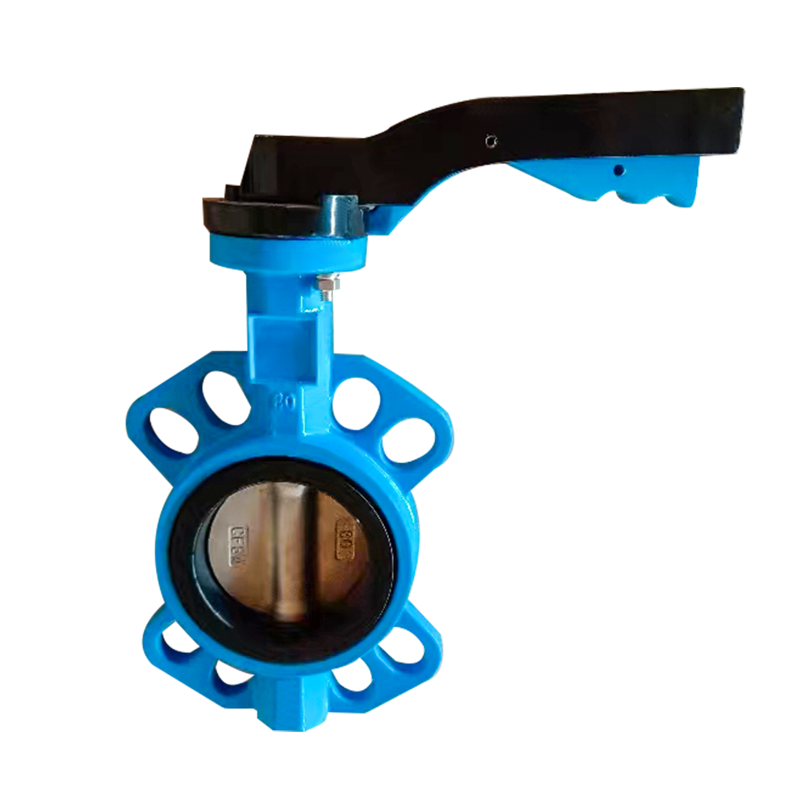
If you’re shortlisting an 8 wafer butterfly valve for water, HVAC, or light chemical duty, here’s a concise insider’s view. I’ve watched the Series F170 line coming out of the Development area of Huanmadian, NingJin county, Hebei province, China, for a while. It’s built to MSS SP-67, BS5155, and API 609, which—honestly—already filters out a lot of “close enough” catalog parts.
What’s moving the market
Two ongoing trends: faster retrofits and tighter torque windows. Utilities and OEM skids want compact, low-torque valves that drop into mixed flanges without drama. The F170 wafer body mates with GB, ANSI, DIN, BS, and JIS flanges—handy when your site drawings are… optimistic. I guess that’s why many customers say the install takes longer to get the old bolts free than to seat the new valve.
Key specs at a glance
This WAFER TYPE BUTTERFLY VALVE covers 2″ to 12″. The 8″ size sits in the sweet spot for water distribution, chilled water, and general process lines.
| Standard compliance | MSS SP-67, BS5155, API 609; testing per ISO 5208 / API 598 (Rate A, zero visible leakage) |
| Face-to-face | EN 558 / ISO 5752 Series 20 (≈) |
| Pressure class | PN10/PN16 and ANSI Class 150 (real-world use may vary with seat) |
| Body / disc / seat | Ductile iron body; SS304/SS316 or Nylon-coated DI disc; EPDM/NBR/PTFE seat options |
| Shaft | One-piece thru shaft for dependability; stem drives disc directly |
| Temperature | EPDM ≈ -20°C to +120°C; PTFE up to ≈ +180°C (media-dependent) |
| Operation | Lever up to DN200 (8″); gear/actuated for DN250–DN300 |
Manufacturing and testing—short version
Materials are traceable (heat numbers on castings), then CNC machining brings tight stem-disk tolerances. Seats are compression-molded; assemblies get FBE or epoxy paint ≈ 200–300 μm DFT. Every valve is hydro-tested—shell at 1.5× rated pressure, seat at 1.1×—per ISO 5208/API 598. Typical life is ≥50,000 cycles in clean water service; I’ve seen higher when alignment is spot-on.
Where it fits best
- Municipal water and wastewater (isolation and throttling)
- HVAC chilled/condensed water loops
- Light chemical, desalination pretreatment, food & beverage utilities
- Mining process water and slurry bypass (check the seat/disc pairing)
Advantages I’ve noticed
The one-piece shaft is boring—in a good way. Less play, fewer surprises. The disc profile helps keep torque low; on an 8″ EPDM-seated unit, I’ve measured ≈ 120–150 N·m to break at PN16 with clean water. Many customers say the shutoff is “quiet” compared with older elastomer seats.
Vendor snapshot (quick compare)
| Vendor | Standards | Seat options | Lead time | Notes |
|---|---|---|---|---|
| Hongda (F170) | API 609, MSS SP-67, BS5155 | EPDM, NBR, PTFE | ≈ 2–4 weeks | One-piece shaft; broad flange compatibility |
| Brand B | API 609, EN 593 | EPDM, FKM | ≈ 4–6 weeks | Nice gear operators; pricier |
| Import A | Partial MSS | EPDM only | Stock varies | Check test certificates carefully |
Customization and compliance
Options include PTFE seat for chemical duty, SS316 disc, gear or pneumatic actuator, locking lever, FBE coating, and NACE MR0175 trim on request. ISO 9001 and CE/PED documentation are standard; WRAS/ACS can be discussed for potable applications. Traceability and MTRs are available—it’s not glamorous, but procurement teams love it.
Quick case study
A municipal booster station swapped aging 8″ gate valves for the 8 wafer butterfly valve to reduce footprint and torque. Results: install time dropped by ≈ 35%, no machining of flanges, zero visible leakage at 1.1× PN16 on site tests, and operators reported smoother throttling around 25–40° open. After six months, no seat set issues—helped by correct bolt torques and proper centering (too often overlooked).
When to choose something else
If you’ve got abrasive slurry or cavitation risks at high ΔP, consider a lined pinch valve or high-performance double-offset butterfly. Otherwise, for clean utility service, the 8 wafer butterfly valve is a pragmatic, budget-sensible choice.
Authoritative references
- API 609: Butterfly Valves, Lug-, Wafer-, and Double-flanged Types.
- MSS SP-67: Butterfly Valves.
- BS 5155: Specification for Butterfly Valves.
- ISO 5208: Industrial valves — Pressure testing of metallic valves.
- EN 12266-1: Industrial valves — Testing of metallic valves — Part 1: Pressure tests.
-
Comprehensive Guide to Wholesale 3 Butterfly Valve Price and Supplier Selection
NewsJan.28,2026
-
Comprehensive Guide to Wholesale Water Main Check Valve Selection and Application
NewsJan.27,2026
-
Wholesale 6 Lug Butterfly Valve – Durable & Cost-Effective Solutions for Industrial Applications
NewsJan.06,2026
-
Wholesale Composeal Butterfly Valve - Reliable Industrial Sealing Solutions
NewsJan.06,2026
-
Wholesale Marine Check Valve | Durable & Certified Marine Valves
NewsJan.06,2026
-
Wholesale Butterfly Valve Gas – B2B Solutions for Efficient Gas Flow Control | Hongda Valve
NewsJan.05,2026
 Afrikaans
 Albanian
 Amharic
 Arabic
 Armenian
 Azerbaijani
 Basque
 Belarusian
 Bengali
 Bosnian
 Bulgarian
 Catalan
 Cebuano
 Corsican
 Croatian
 Czech
Czech
 Danish
 Dutch
Dutch
 Esperanto
 Estonian
 Finnish
 French
 Frisian
 Galician
 Georgian
 German
 Greek
Greek
 Gujarati
 Haitian Creole
 Hausa
Hausa
 Hawaiian
 Hebrew
 Hindi
Hindi
 Miao
Miao
 Hungarian
 Icelandic
 Igbo
Igbo
 Indonesian
 Irish
Irish
 Italian
 Japanese
 Javanese
 Kannada
 Kazakh
 Khmer
Khmer
 Rwandese
 Korean
 Kurdish
 Kyrgyz
 Lao
Lao
 Latin
Latin
 Latvian
 Lithuanian
 Luxembourgish
 Macedonian
 Malgashi
 Malay
Malay
 Malayalam
 Maltese
 Maori
Maori
 Marathi
 Mongolian
 Myanmar
 Nepali
 Norwegian
 Norwegian
 Occitan
 Pashto
 Persian
 Polish
 Portuguese
 Punjabi
 Romanian
 Russian
 Samoan
 Scottish Gaelic
 Serbian
 Sesotho
 Shona
Shona
 Sindhi
 Sinhala
 Slovak
 Slovenian
 Somali
 Spanish
 Sundanese
 Swahili
 Swedish
 Tagalog
 Tajik
Tajik
 Tamil
Tamil
 Tatar
Tatar
 Telugu
 Thai
Thai
 Turkish
 Turkmen
 Ukrainian
 Urdu
Urdu
 Uighur
 Uzbek
Uzbek
 Vietnamese
 Welsh
Welsh
 Bantu
Bantu
 Yiddish
 Yoruba
 Zulu
Zulu
 English