
- Call Us
- +8618633052223
- njhdvlz@163.com
Oct . 10, 2025 11:40 Back to list
8 Wafer Butterfly Valve—Tight Seal, Low Torque: Why Choose?
Field Notes on the 8-inch Wafer Butterfly Valve: What Buyers Are Really Asking in 2025
I spent a week around the Development area of Huanmadian, NingJin county, Hebei, and, to be honest, you can tell which plants obsess over the little things. One standout was the Series F170 from Hongda Valve—their 8 wafer butterfly valve sits in that sweet spot of practical engineering and no-fuss maintenance. It’s designed to comply with MSS SP-67, BS 5155, and API 609, and it interfaces neatly with GB, ANSI, DIN, BS, and JIS flanges. Available from 2″ to 12″ in wafer and lug types, with a one-piece thru shaft that—many customers say—feels reassuringly solid during actuation.
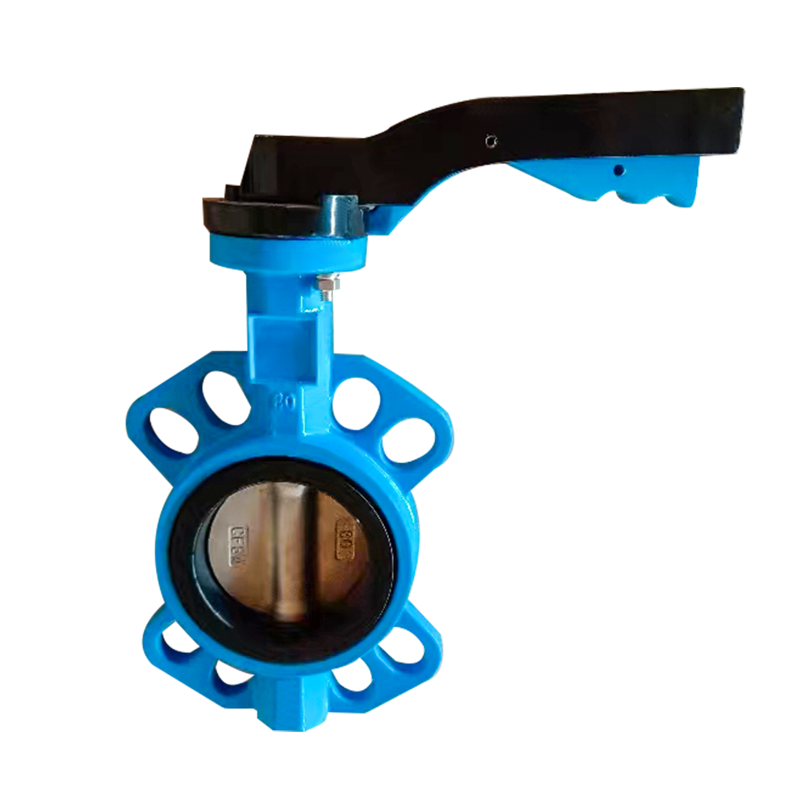
Quick Spec Snapshot (8-inch, Series F170, wafer)
| Nominal Size | 8" (DN200) |
| Pressure Rating | PN16 / Class 150 (≈16 bar; real-world use may vary) |
| Body / Disc | Ductile iron or WCB; disc in SS304/SS316 or Ni-plated DI |
| Seat Options | EPDM, NBR, PTFE (application-driven) |
| Temperature Window | ≈-10°C to +120°C (EPDM); up to ≈+180°C (PTFE) |
| Face-to-Face | MSS SP-67 / API 609 (wafer) |
| Leakage Class | ISO 5208 Rate A (bubble-tight) on soft seat |
| Torque (indicative) | ≈120–180 N·m at ΔP 10 bar (clean water, EPDM) |
Why this matters (trends and real uses)
Two big currents in the market: retrofit jobs in HVAC/water plants demanding multi-standard flange fit, and OEMs wanting compact, actuator-ready valves. The one-piece shaft and stem-driven disc movement reduce play—actually noticeable when you cycle the handle under pressure. In water treatment, food beverage utilities, and light chemicals, a 8 wafer butterfly valve with EPDM seat is often the lowest TCO choice; for solvents or higher temp lines, swap to PTFE and you’re safer.
How it’s built (short version)
- Materials: ductile iron body, precision-machined; stainless or Ni-plated disc; SS stem (one-piece thru-shaft).
- Methods: sand casting or investment casting (disc), CNC machining on bores and stem flats, elastomer seat molding.
- Coating: epoxy powder or liquid epoxy (≈200–300 μm) for corrosion resistance.
- Testing: hydrostatic shell 1.5× rating; seat test 1.1×; bubble-tight per ISO 5208 Rate A.
- Service life: ≈70,000–100,000 cycles in clean water when sized/installed correctly.
- Certs and standards: MSS SP-67, API 609, BS 5155; flange fit to GB/ANSI/DIN/BS/JIS.
Applications and advantages
Water distribution, HVAC loops, pump isolation, wastewater, and mild chemical lines. Advantages: compact face-to-face, lower torque than gate valves, multi-flange compatibility, and that sturdy one-piece stem. In fact, maintenance crews tell me the gearbox versions on the 8 wafer butterfly valve are the fastest swap-in during night-shift shutdowns.
Vendor snapshot (what buyers compare)
| Vendor | Lead Time | Certs/Standards | Customization | Typical Price (8") |
|---|---|---|---|---|
| Hongda Valve (Hebei, China) | ≈2–4 weeks | MSS SP-67, API 609, BS 5155 | Seat, disc, coatings, ISO 5211 pad, actuation | Mid-range, competitive FOB |
| Regional Vendor A | Stock to 3 weeks | API 609; partial DIN | Limited trims | Higher (local markup) |
| Catalog Brand B | 1–6 weeks | Various (depends on series) | Actuator kits only | Premium |
Customization tips
If your medium is chlorinated water, pick Ni-plated disc plus EPDM; for aromatic solvents, go PTFE seat and SS316 disc. Add ISO 5211 mounting for electric or pneumatic actuators. And for coastal installs, ask for heavy epoxy or FBE coating and SS fasteners. It sounds obvious, but seat choice makes or breaks a 8 wafer butterfly valve in the first six months.
Mini case study
A beverage plant retrofit (Southeast Asia) swapped out aging gate valves for 8″ wafer units on a CIP return loop. Post-change: torque dropped by ≈35%, leak checks passed ISO 5208 Rate A, and downtime during sanitation cycles fell from 50 to 28 minutes. Their maintenance lead told me, “Gear-operated, one-piece stem—no drama.” Not scientific, sure, but the trend pops up across sites.
Note: data above are indicative; actual performance depends on media, temperature, pressure, and installation.
Authoritative references
-
Comprehensive Guide to Wholesale 3 Butterfly Valve Price and Supplier Selection
NewsJan.28,2026
-
Comprehensive Guide to Wholesale Water Main Check Valve Selection and Application
NewsJan.27,2026
-
Wholesale 6 Lug Butterfly Valve – Durable & Cost-Effective Solutions for Industrial Applications
NewsJan.06,2026
-
Wholesale Composeal Butterfly Valve - Reliable Industrial Sealing Solutions
NewsJan.06,2026
-
Wholesale Marine Check Valve | Durable & Certified Marine Valves
NewsJan.06,2026
-
Wholesale Butterfly Valve Gas – B2B Solutions for Efficient Gas Flow Control | Hongda Valve
NewsJan.05,2026
 Afrikaans
 Albanian
 Amharic
 Arabic
 Armenian
 Azerbaijani
 Basque
 Belarusian
 Bengali
 Bosnian
 Bulgarian
 Catalan
 Cebuano
 Corsican
 Croatian
 Czech
Czech
 Danish
 Dutch
Dutch
 Esperanto
 Estonian
 Finnish
 French
 Frisian
 Galician
 Georgian
 German
 Greek
Greek
 Gujarati
 Haitian Creole
 Hausa
Hausa
 Hawaiian
 Hebrew
 Hindi
Hindi
 Miao
Miao
 Hungarian
 Icelandic
 Igbo
Igbo
 Indonesian
 Irish
Irish
 Italian
 Japanese
 Javanese
 Kannada
 Kazakh
 Khmer
Khmer
 Rwandese
 Korean
 Kurdish
 Kyrgyz
 Lao
Lao
 Latin
Latin
 Latvian
 Lithuanian
 Luxembourgish
 Macedonian
 Malgashi
 Malay
Malay
 Malayalam
 Maltese
 Maori
Maori
 Marathi
 Mongolian
 Myanmar
 Nepali
 Norwegian
 Norwegian
 Occitan
 Pashto
 Persian
 Polish
 Portuguese
 Punjabi
 Romanian
 Russian
 Samoan
 Scottish Gaelic
 Serbian
 Sesotho
 Shona
Shona
 Sindhi
 Sinhala
 Slovak
 Slovenian
 Somali
 Spanish
 Sundanese
 Swahili
 Swedish
 Tagalog
 Tajik
Tajik
 Tamil
Tamil
 Tatar
Tatar
 Telugu
 Thai
Thai
 Turkish
 Turkmen
 Ukrainian
 Urdu
Urdu
 Uighur
 Uzbek
Uzbek
 Vietnamese
 Welsh
Welsh
 Bantu
Bantu
 Yiddish
 Yoruba
 Zulu
Zulu
 English