
- Call Us
- +8618633052223
- njhdvlz@163.com
Oct . 19, 2025 12:10 Back to list
Butterfly Valve Rubber: Durable, Leak-Tight, Anti-Corrosion
A Practical Look at Butterfly Valve Rubber Seats (with real shop-floor context)
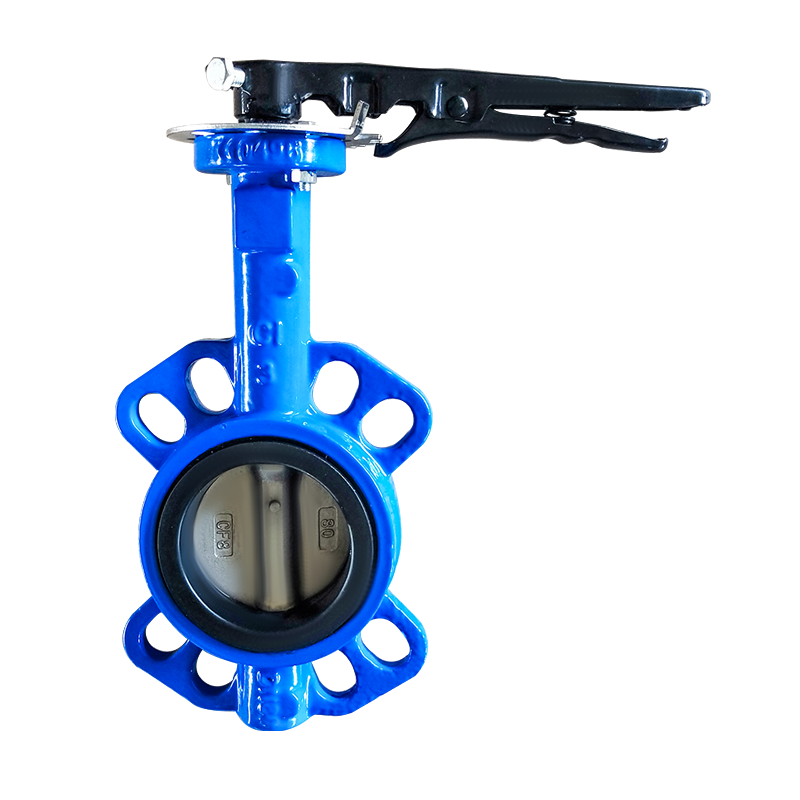
If you work around pumps and pipelines, you already know the rubber seat is the unsung hero. When I first toured the plant in the development area of Huanmadian, NingJin county, Hebei, I kept hearing technicians mutter “seat quality decides everything.” They’re right. So let’s talk butterfly valve rubber using a real product: the Series F101 Wafer Type Butterfly Valve—built to MSS SP-67, BS 5155, and API 609, and matched to GB, ANSI, DIN, BS, and JIS flanges.
What’s trending (and why it matters)
Three quick notes from the field: 1) operators are shifting toward peroxide-cured EPDM for longer compression set life in water duty, 2) FKM seats are getting more common where mild chemicals float around, and 3) buyers want documented test data, not claims. Honestly, the days of “trust me, it seals” are gone.
Series F101 snapshot
The F101 comes wafer, lug, and U-section wafer. Sizes 1½″ to 48″. It’s the kind of valve that shows up everywhere—water treatment, HVAC loops, light chemical lines. The seat is the heart: EPDM for potable water, NBR for oils, FKM (Viton) when temperatures tick up or media is trickier. In fact, many customers say they pick the brand based on the seat supplier alone.
| Item | Specification (≈/around where noted) |
|---|---|
| Model | Series F101 Wafer Type Butterfly Valve |
| Size Range | 1½″–48″ (DN40–DN1200) |
| Pressure Rating | PN10/PN16; Class 125/150 (real-world use may vary) |
| Seat Options | EPDM (water), NBR (oil), FKM (chemicals/temperature) |
| Disc Materials | Ductile iron (epoxy/Ni plated), SS304/SS316 |
| Standards | MSS SP-67, BS 5155, API 609; ISO 5208/EN 12266-1 test |
| Leakage Class | Rate A (bubble-tight) on water, seat test ≈1.1×PN |
| Temperature Window | EPDM ≈ -20 to +120°C; NBR ≈ -10 to +80°C; FKM up to ≈ +150°C |
How the seat is made (short version)
Materials: peroxide-cured EPDM or specialty NBR/FKM compounds, with fillers tuned for compression set and swell resistance. Methods: precision molding, controlled vulcanization, and post-cure where required (especially FKM). Testing: shell test at ≈1.5× PN; seat test at ≈1.1× PN per ISO 5208/API 598 protocols. Service life: I’ve seen in-house rigs clock 50,000–100,000 cycles on water duty with no visible scoring—your mileage depends on media and throttling habits.
Where it’s used and how people customize it
- Water & wastewater (EPDM, epoxy-coated disc, ISO 9001 traceability)
- HVAC loops and cooling towers (gearbox or electric actuators, position feedback)
- Light chemical distribution (FKM seat, SS316 disc/shaft)
Customization: lever, worm-gear, pneumatic or electric actuators; flange drilling per GB/ANSI/DIN/BS/JIS; coatings around 200–300 μm fusion-bonded epoxy. For butterfly valve rubber longevity, specify media, temperature, and duty cycle—don’t guess.
Vendor comparison (field-notes)
| Vendor | Standards | Seat Options | Lead Time | Warranty | Price Band |
|---|---|---|---|---|---|
| Hongda F101 (Hebei) | MSS SP-67, API 609 | EPDM/NBR/FKM | ≈ 2–5 weeks | 12–18 months | Mid |
| Regional OEM B | API 609/EN 593 | EPDM/NBR | around 4–8 weeks | 12 months | Low–Mid |
| Global Brand C | API 609, ISO 5752 | EPDM/NBR/FKM | ≈ 6–10 weeks | 18–24 months | Mid–High |
Real-world feedback and cases
A Southeast Asia municipal plant swapped in 280 F101 valves (DN200–DN600). After commissioning, seat leakage measured 0 ml/min at 1.1× PN on water, and maintenance reported “lighter hand torque than the old batch.” Another HVAC retrofit (hotel tower, Middle East) standardized on FKM seats and electric actuators; the facility team liked the clear position indication and said, to be honest, “we finally stopped chasing drips.”
Certifications and documentation
ISO 9001 QMS, material certificates (EN 10204 3.1), coating thickness records, hydrostatic seat/shell test sheets, and optional potable-water approvals (where applicable). Always ask for the test report, especially if butterfly valve rubber is going into potable or sensitive service.
Bottom line
Pick the seat to match the media, temperature, and duty cycle. The F101’s mix of standards compliance, flexible seating, and practical lead times makes it, I guess, a very safe spec in most water and light-chem installations—without breaking the budget.
References
- API 609: Butterfly Valves—Double-flanged, Lug- and Wafer-type, American Petroleum Institute.
- MSS SP-67: Butterfly Valves, Manufacturers Standardization Society.
- ISO 5208 / EN 12266-1: Industrial valves—Pressure testing of valves.
- BS 5155 / EN 593: Specification for Butterfly Valves (Resilient seated).
-
Comprehensive Guide to Wholesale 3 Butterfly Valve Price and Supplier Selection
NewsJan.28,2026
-
Comprehensive Guide to Wholesale Water Main Check Valve Selection and Application
NewsJan.27,2026
-
Wholesale 6 Lug Butterfly Valve – Durable & Cost-Effective Solutions for Industrial Applications
NewsJan.06,2026
-
Wholesale Composeal Butterfly Valve - Reliable Industrial Sealing Solutions
NewsJan.06,2026
-
Wholesale Marine Check Valve | Durable & Certified Marine Valves
NewsJan.06,2026
-
Wholesale Butterfly Valve Gas – B2B Solutions for Efficient Gas Flow Control | Hongda Valve
NewsJan.05,2026
 Afrikaans
 Albanian
 Amharic
 Arabic
 Armenian
 Azerbaijani
 Basque
 Belarusian
 Bengali
 Bosnian
 Bulgarian
 Catalan
 Cebuano
 Corsican
 Croatian
 Czech
Czech
 Danish
 Dutch
Dutch
 Esperanto
 Estonian
 Finnish
 French
 Frisian
 Galician
 Georgian
 German
 Greek
Greek
 Gujarati
 Haitian Creole
 Hausa
Hausa
 Hawaiian
 Hebrew
 Hindi
Hindi
 Miao
Miao
 Hungarian
 Icelandic
 Igbo
Igbo
 Indonesian
 Irish
Irish
 Italian
 Japanese
 Javanese
 Kannada
 Kazakh
 Khmer
Khmer
 Rwandese
 Korean
 Kurdish
 Kyrgyz
 Lao
Lao
 Latin
Latin
 Latvian
 Lithuanian
 Luxembourgish
 Macedonian
 Malgashi
 Malay
Malay
 Malayalam
 Maltese
 Maori
Maori
 Marathi
 Mongolian
 Myanmar
 Nepali
 Norwegian
 Norwegian
 Occitan
 Pashto
 Persian
 Polish
 Portuguese
 Punjabi
 Romanian
 Russian
 Samoan
 Scottish Gaelic
 Serbian
 Sesotho
 Shona
Shona
 Sindhi
 Sinhala
 Slovak
 Slovenian
 Somali
 Spanish
 Sundanese
 Swahili
 Swedish
 Tagalog
 Tajik
Tajik
 Tamil
Tamil
 Tatar
Tatar
 Telugu
 Thai
Thai
 Turkish
 Turkmen
 Ukrainian
 Urdu
Urdu
 Uighur
 Uzbek
Uzbek
 Vietnamese
 Welsh
Welsh
 Bantu
Bantu
 Yiddish
 Yoruba
 Zulu
Zulu
 English