
- Call Us
- +8618633052223
- njhdvlz@163.com
Oct . 27, 2025 12:10 Back to list
Wafer Type Check Valve | Non-Slam, Low Pressure Drop
Why a modern Wafer Type Check Valve keeps showing up on my project specs
Short version: space is expensive, energy is tighter than ever, and nobody likes water hammer. The Series F16 Dual Plate design from Hongda Valve has been popping up in submittals I review, and—honestly—it’s not hard to see why. Dual plates cut pressure drop, the wafer body slips between flanges, and the whole package meets API 594 with inspection/testing to API 598. That’s the boring compliance bit, but it matters when pumps and uptime are on the line.
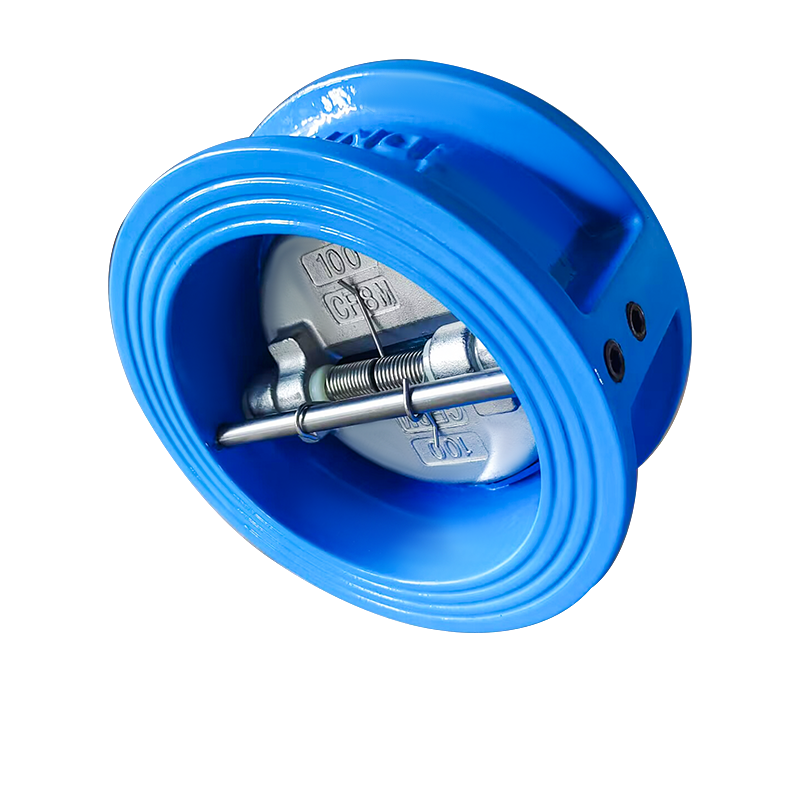
What’s new in the market
Industry trend-wise, compact dual-plate checks are edging out bulky swing checks in HVAC, desalination, and even midstream water injection. Lower mass means less stress on piping. And, surprisingly, many customers say the fast-closing springs noticeably tame surge events. It’s not magic, but it helps.
Quick spec snapshot (Series F16)
| Design standard | API 594 (dual plate) |
| Inspection & testing | API 598 (shell, seat) |
| Face-to-face | ISO 5752 basic series 16 (wafer long) |
| Flange compatibility | GB / DIN / BS (Series F16). Also available: Series F125 |
| Sizes | ≈ DN50–DN600 (real-world availability may vary) |
| Body materials | WCB, CF8, CF8M ≈ (others on request) |
| Seat options | NBR, EPDM, FKM/Viton (temp window depends on media) |
| Springs | Stainless steel or Inconel® (for higher temps) |
| Cracking pressure | ≈ 0.02–0.05 bar (size-dependent) |
Where it’s built and how it’s made
Origin: Development area of Huanmadian, NingJin county, Hebei province, China. The production flow is pretty classic, with a few smart touches:
- Materials: cast carbon steel or stainless body; 2-piece discs; high-resilience elastomer seat.
- Methods: precision casting, CNC machining, shot blasting, spring-balanced dual plate assembly.
- Testing: API 598 shell at ≈1.5× rating, seat at ≈1.1×. Hydro + air leakage checks.
- Service life: lab-cycled to ≈100k–250k operations; field results vary by media and slam conditions.
Applications (and what users say)
- HVAC/chilled water: fast close-up reduces backflow; maintenance crew likes the slim profile.
- Desalination/RO: low ΔP through the Wafer Type Check Valve helps pump efficiency.
- Fire water and irrigation: straightforward install between existing GB/DIN/BS flanges.
- Refining/chemicals: stainless versions for process media (check compatibility, of course).
Mini case: A Gulf RO plant swapped swing checks for Wafer Type Check Valve units on DN250 lines; recorded ≈8–12% reduction in pump energy (ΔP drop) and fewer nuisance hammer events per month. Another job in a high-rise HVAC loop saw simpler commissioning—less chasing of reverse spin alarms.
Vendor snapshot (what differs, in practice)
| Vendor | Standards | Lead time | Customization | Notes |
|---|---|---|---|---|
| Hongda (Series F16/F125) | API 594 / API 598; ISO 5752 | ≈2–6 weeks | Seats, springs, materials | Good GB/DIN/BS flange fit, pragmatic pricing |
| Brand A | API 594 / 598 | ≈4–10 weeks | Limited options | Strong global stocking |
| Brand B | API 594; EN variants | ≈3–8 weeks | Coatings, exotic alloys | Price premium in some regions |
Customization checklist
- Seat material by media (EPDM for water, FKM for hydrocarbons, etc.).
- Spring metallurgy for temperature and corrosion class.
- Coatings (e.g., epoxy) and NACE-related materials on request.
- Tagging, MTRs, hydro test reports, and third-party inspection if needed.
Test data, install tips, and paperwork
- Seat leakage: API 598 zero visible leakage on water/air for resilient-seated units.
- Pressure drop: at water 3 m/s, DN200 shows ≈0.05–0.08 bar (indicative).
- Install vertically (flow up) or horizontally; keep discs aligned with flow. Avoid pulsation near pump discharge if you can.
- Certs: API/ISO compliance statements; material certificates; test reports.
In fact, the biggest “aha” is mundane: a Wafer Type Check Valve that just fits, seals, and saves a few kilopascals—over a year, that’s real money on pump curves.
Authoritative references
-
Comprehensive Guide to Wholesale 3 Butterfly Valve Price and Supplier Selection
NewsJan.28,2026
-
Comprehensive Guide to Wholesale Water Main Check Valve Selection and Application
NewsJan.27,2026
-
Wholesale 6 Lug Butterfly Valve – Durable & Cost-Effective Solutions for Industrial Applications
NewsJan.06,2026
-
Wholesale Composeal Butterfly Valve - Reliable Industrial Sealing Solutions
NewsJan.06,2026
-
Wholesale Marine Check Valve | Durable & Certified Marine Valves
NewsJan.06,2026
-
Wholesale Butterfly Valve Gas – B2B Solutions for Efficient Gas Flow Control | Hongda Valve
NewsJan.05,2026
 Afrikaans
 Albanian
 Amharic
 Arabic
 Armenian
 Azerbaijani
 Basque
 Belarusian
 Bengali
 Bosnian
 Bulgarian
 Catalan
 Cebuano
 Corsican
 Croatian
 Czech
Czech
 Danish
 Dutch
Dutch
 Esperanto
 Estonian
 Finnish
 French
 Frisian
 Galician
 Georgian
 German
 Greek
Greek
 Gujarati
 Haitian Creole
 Hausa
Hausa
 Hawaiian
 Hebrew
 Hindi
Hindi
 Miao
Miao
 Hungarian
 Icelandic
 Igbo
Igbo
 Indonesian
 Irish
Irish
 Italian
 Japanese
 Javanese
 Kannada
 Kazakh
 Khmer
Khmer
 Rwandese
 Korean
 Kurdish
 Kyrgyz
 Lao
Lao
 Latin
Latin
 Latvian
 Lithuanian
 Luxembourgish
 Macedonian
 Malgashi
 Malay
Malay
 Malayalam
 Maltese
 Maori
Maori
 Marathi
 Mongolian
 Myanmar
 Nepali
 Norwegian
 Norwegian
 Occitan
 Pashto
 Persian
 Polish
 Portuguese
 Punjabi
 Romanian
 Russian
 Samoan
 Scottish Gaelic
 Serbian
 Sesotho
 Shona
Shona
 Sindhi
 Sinhala
 Slovak
 Slovenian
 Somali
 Spanish
 Sundanese
 Swahili
 Swedish
 Tagalog
 Tajik
Tajik
 Tamil
Tamil
 Tatar
Tatar
 Telugu
 Thai
Thai
 Turkish
 Turkmen
 Ukrainian
 Urdu
Urdu
 Uighur
 Uzbek
Uzbek
 Vietnamese
 Welsh
Welsh
 Bantu
Bantu
 Yiddish
 Yoruba
 Zulu
Zulu
 English