
- Call Us
- +8618633052223
- njhdvlz@163.com
Oct . 24, 2025 12:25 Back to list
High Quality Wafer Check Valve Factories | ISO, OEM, Low MOQ
Inside High Quality Wafer Check Valve Factories: What Really Matters in 2025
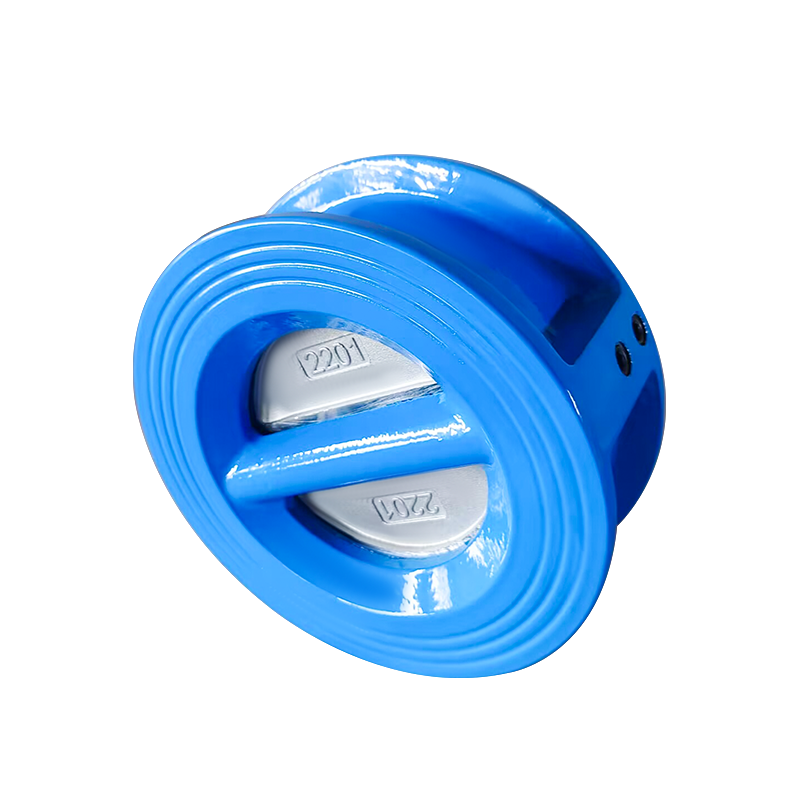
I’ve walked enough factory floors to know the smell of fresh epoxy and machine oil. In Hebei’s NingJin county—specifically the development area of Huanmadian—you’ll find a cluster of makers turning out dual plate wafer check valves that punch well above their weight. The Series F125 is one I keep bumping into at plants and trade shows. To be honest, it’s not flashy; it just works, which is probably why maintenance folks keep asking for it.
What’s driving demand
Two things keep coming up: tighter efficiency targets and fewer hands in maintenance teams. Dual plate wafer designs cut weight and install space, which translates into faster shutdowns and fewer crane calls. The trend I’m seeing is simple interchangeability—ANSI 125/150 compatibility, predictable cracking pressure, and hard seats that actually seal when things get hot.
Series F125 at a glance (real-world notes)
The F125 wafer type check valve is built for ANSI 125/150 flanges, sizes 2″–24″. Plenty of body/trim combos exist, so you can match media and temperature without overpaying. Below is a quick spec sheet I trust when planning retrofits.
| Feature | Spec (≈ means typical) |
|---|---|
| Size Range | 2″–24″ (DN50–DN600) |
| Pressure Class | ANSI 125/150 compatible; design per API 594 |
| Body Materials | Ductile Iron ASTM A536, Carbon Steel WCB, Stainless CF8/CF8M |
| Trim / Springs | SS 304/316 plates; 17-7PH springs; seats: EPDM/NBR/Viton |
| Cracking Pressure | ≈ 0.02–0.05 bar (size dependent) |
| Pressure Drop | 4″ valve at 3 m/s water: ≈ 0.12 bar (real-world use may vary) |
| Tests | API 598: shell 1.5×, seat 1.1×; zero-bubble for soft seats |
| Service Life | ≈ 10–15 years or 250k–500k cycles with correct sizing |
Manufacturing flow (how the “good ones” do it)
- Materials: certified heats; PMI for stainless; 3.1 MTRs on request.
- Methods: precision casting or forging per size; CNC machining; shot blasting; epoxy or zinc-rich primer.
- Assembly: calibrated torque on hinge pins; spring preload checks; optional retainerless design for zero external leakage paths.
- Testing: API 598 hydro & seat; DP test on sealing surfaces; cycle test samples to 50k+.
- Docs: ISO 9001 QMS; PED/CE where required; coating reports; dimensional checks to API 594/ASME flanges.
Where they’re used (and why)
Water and wastewater mains, HVAC chilled water loops, fire protection bypasses, seawater intakes, light hydrocarbon transfer, and steam condensate lines (with metal seats). Advantages? Compact face-to-face, low weight, quick close to reduce water hammer, and frankly, easy stocking.
Vendor landscape: factory vs. trader
| Criteria | Hebei OEM Factory | Distributor/Trader | EU Premium OEM |
|---|---|---|---|
| Lead Time | 2–5 weeks (stock sizes faster) | Depends on factory; variable | 3–8 weeks; stable |
| Customization | High: trims, coatings, branding | Medium; relays factory options | High; pricier |
| Certifications | ISO 9001; API 598 tests; PED on request | Varies by source | Broad portfolio |
| Price | Competitive | Markup 5–20% | Highest |
Customization notes
Common picks: EPDM for potable water, Viton for hydrocarbons, CF8M for seawater, and fusion-bonded epoxy exterior. Engraved tag plates, low-crack springs, and NACE-like material controls for sour service are available if you ask early.
Field feedback and mini case studies
- Municipal water utility, Southeast Asia: swapped swing checks for F125 dual plates on 12″ mains; reported ≈35% lower slam incidents and easier flange alignment. “Install time dropped by half,” the supervisor said.
- Food plant condensate return, Europe: 4″ CF8M with metal seat; after 18 months, seat leakage was still within API 598 limits—surprisingly clean internals thanks to better upstream straining.
If you’re shortlisting suppliers, factories in NingJin’s cluster often balance price, speed, and documentation better than expected. Many customers say that once they standardize on F2xx dual plates, stocking gets simpler and outages get quieter. That, to me, is the sign of High Quality Wafer Check Valve Factories at work.
Citations
-
Comprehensive Guide to Wholesale 3 Butterfly Valve Price and Supplier Selection
NewsJan.28,2026
-
Comprehensive Guide to Wholesale Water Main Check Valve Selection and Application
NewsJan.27,2026
-
Wholesale 6 Lug Butterfly Valve – Durable & Cost-Effective Solutions for Industrial Applications
NewsJan.06,2026
-
Wholesale Composeal Butterfly Valve - Reliable Industrial Sealing Solutions
NewsJan.06,2026
-
Wholesale Marine Check Valve | Durable & Certified Marine Valves
NewsJan.06,2026
-
Wholesale Butterfly Valve Gas – B2B Solutions for Efficient Gas Flow Control | Hongda Valve
NewsJan.05,2026
 Afrikaans
 Albanian
 Amharic
 Arabic
 Armenian
 Azerbaijani
 Basque
 Belarusian
 Bengali
 Bosnian
 Bulgarian
 Catalan
 Cebuano
 Corsican
 Croatian
 Czech
Czech
 Danish
 Dutch
Dutch
 Esperanto
 Estonian
 Finnish
 French
 Frisian
 Galician
 Georgian
 German
 Greek
Greek
 Gujarati
 Haitian Creole
 Hausa
Hausa
 Hawaiian
 Hebrew
 Hindi
Hindi
 Miao
Miao
 Hungarian
 Icelandic
 Igbo
Igbo
 Indonesian
 Irish
Irish
 Italian
 Japanese
 Javanese
 Kannada
 Kazakh
 Khmer
Khmer
 Rwandese
 Korean
 Kurdish
 Kyrgyz
 Lao
Lao
 Latin
Latin
 Latvian
 Lithuanian
 Luxembourgish
 Macedonian
 Malgashi
 Malay
Malay
 Malayalam
 Maltese
 Maori
Maori
 Marathi
 Mongolian
 Myanmar
 Nepali
 Norwegian
 Norwegian
 Occitan
 Pashto
 Persian
 Polish
 Portuguese
 Punjabi
 Romanian
 Russian
 Samoan
 Scottish Gaelic
 Serbian
 Sesotho
 Shona
Shona
 Sindhi
 Sinhala
 Slovak
 Slovenian
 Somali
 Spanish
 Sundanese
 Swahili
 Swedish
 Tagalog
 Tajik
Tajik
 Tamil
Tamil
 Tatar
Tatar
 Telugu
 Thai
Thai
 Turkish
 Turkmen
 Ukrainian
 Urdu
Urdu
 Uighur
 Uzbek
Uzbek
 Vietnamese
 Welsh
Welsh
 Bantu
Bantu
 Yiddish
 Yoruba
 Zulu
Zulu
 English