
- Call Us
- +8618633052223
- njhdvlz@163.com
Oct . 16, 2025 14:40 Back to list
Wafer Type Check Valve | Compact, Non-Slam, Low Headloss
Field notes from the valve aisle: dual plates, fewer headaches
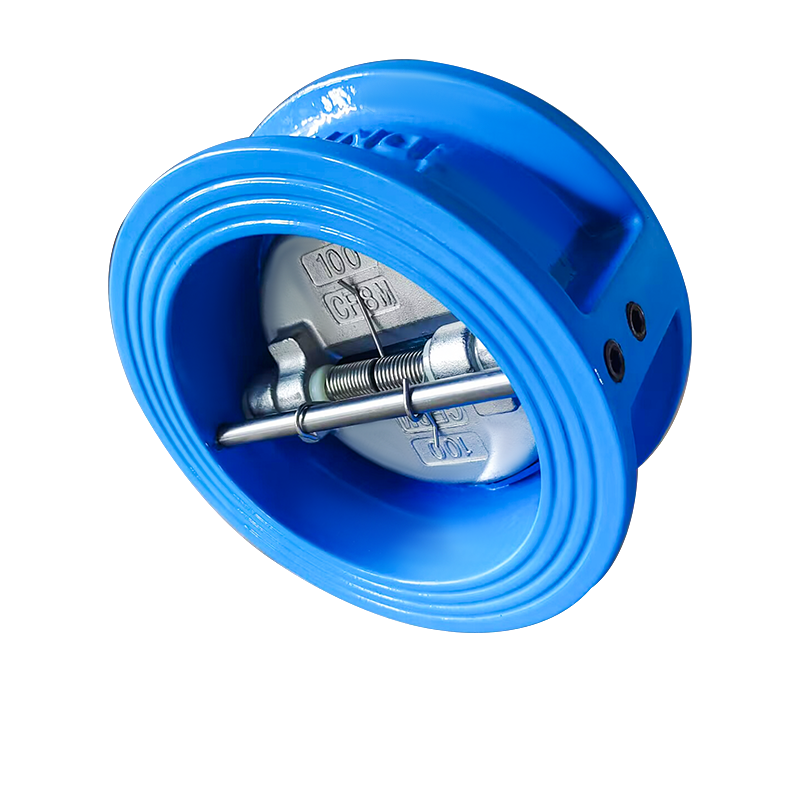
People in plants rarely wax poetic about check valves, but when they fail, everyone talks. The wafer type check valve format—especially the dual-plate style—has been quietly winning space in crowded pipe racks, HVAC risers, and pump rooms. I’ve been poking around install sites and QA labs, and one unit keeps coming up in conversations: the Series F16 Dual Plate from Hongda Valve, built in the development area of Huanmadian, NingJin county, Hebei province, China.
Why dual-plate wafer? The quick version
Two spring-loaded half-discs mean faster closure and less slam. In fact, many customers say surge and noise drop notably when they switch from bulky swing checks. Plus, the thin profile slips between GB/DIN/BS flanges without gobbling space. To be honest, installers appreciate the weight savings more than they admit.
Standards and core specs (real-world, not brochure-speak)
Designed to comply with API 594 for check valves; inspection and testing per API 598. Face-to-face per ISO 5752 basic series 16 (wafer long). The Series F16 mates with GB, DIN, and BS flanges; there’s also an F125 line for alternate ratings. Here’s a snapshot:
| Size range | ≈ DN50–DN600 (2”–24”), larger on request |
| Pressure ratings | PN10/16/25 and Class 125/150 (series-dependent, confirm per order) |
| Body / disc materials | WCB, CF8/CF8M; others available for corrosive media |
| Seat options | Metal, EPDM, NBR, FKM (choose per fluid/temperature) |
| Springs | Stainless steel; special alloys for high temp/chemicals |
| Cracking pressure | Around 0.2–0.35 bar (varies with size and disc mass) |
| Testing | API 598: shell ≈1.5× rated; seat ≈1.1×; leakage per standard |
| Service life | 5–15 years typical; media, cycles, and water quality matter |
Applications I keep seeing
- HVAC chilled/condensing water loops (vertical or horizontal lines)
- Municipal water and desalination headers
- General industry: compressed air, clean process water, light chemicals
- Oil and gas utilities, firewater, and non-sour services; sour service requires material review
Manufacturing and QA flow (what actually happens)
Materials are cast or forged (WCB/CF8M), machined to ISO 5752 tolerances, then discs are lapped to seat. Springs are selected for target cracking pressure. Seat elastomers are molded and bonded where applicable. Hydro tests run per API 598; visual and dimension checks follow. On request: PMI, hardness, and NDE. Many buyers ask for ISO 9001 certificates and, for EU, PED/CE declarations. For sour services, NACE MR0175 material review is prudent.
Case snapshot (short and sweet)
A municipal booster station in Southeast Asia replaced old swing checks with wafer type check valve units (DN300, EPDM seats). Pump trip events recorded on a portable logger showed a ≈28% reduction in peak reverse differential and audible slam basically vanished. Maintenance crew notes? “Easier to handle; two guys, no chain block.”
Vendor landscape (what buyers compare)
| Vendor | Compliance | Typical sizes | Lead time | Notes |
|---|---|---|---|---|
| Hongda Valve (Series F16/F125) | API 594 / API 598; ISO 5752 S16 | DN50–DN600 ≈ | ~2–5 weeks (varies) | GB/DIN/BS flange compatibility; flexible seating options |
| European brand A | API 594 / EN standards | DN50–DN500 ≈ | ~6–8 weeks | Strong documentation pack; higher price bracket |
| Regional maker B | API 598 testing (select models) | DN50–DN300 ≈ | ~1–3 weeks | Fast delivery; check seat materials and certificate scope |
Customization tips
- Media-driven seats: EPDM for water, FKM for hydrocarbons, metal for high temp/erosion.
- Low-cracking springs for low NPSH pumps; higher-force springs for vertical downflow.
- Coatings: epoxy or zinc-rich for seawater atmospheres; duplex stainless if chloride-heavy.
Mini test data (typical lab report excerpt)
DN200, PN16, shell at 24 bar for 120 s: no visible leakage; seat test at 17.6 bar: leakage within API 598 soft-seat criteria. Pressure drop at 3 m/s water: ≈4–6 kPa. Real-world use may vary; confirm per project spec.
Bottom line: if you’re battling slam or space, a wafer type check valve like the Series F16 is a sensible, standards-backed pick—with the bonus that it’s easier on riggers and maintenance crews.
Authoritative citations
- API 594: Check Valves—Flanged, Lug, Wafer, and Butt-welding
- API 598: Valve Inspection and Testing
- ISO 5752: Metal valves for use in flanged pipe systems—Face-to-face dimensions
- EN 1092-1 / BS flange standards for PN-class bolt-up compatibility
-
Comprehensive Guide to Wholesale 3 Butterfly Valve Price and Supplier Selection
NewsJan.28,2026
-
Comprehensive Guide to Wholesale Water Main Check Valve Selection and Application
NewsJan.27,2026
-
Wholesale 6 Lug Butterfly Valve – Durable & Cost-Effective Solutions for Industrial Applications
NewsJan.06,2026
-
Wholesale Composeal Butterfly Valve - Reliable Industrial Sealing Solutions
NewsJan.06,2026
-
Wholesale Marine Check Valve | Durable & Certified Marine Valves
NewsJan.06,2026
-
Wholesale Butterfly Valve Gas – B2B Solutions for Efficient Gas Flow Control | Hongda Valve
NewsJan.05,2026
 Afrikaans
 Albanian
 Amharic
 Arabic
 Armenian
 Azerbaijani
 Basque
 Belarusian
 Bengali
 Bosnian
 Bulgarian
 Catalan
 Cebuano
 Corsican
 Croatian
 Czech
Czech
 Danish
 Dutch
Dutch
 Esperanto
 Estonian
 Finnish
 French
 Frisian
 Galician
 Georgian
 German
 Greek
Greek
 Gujarati
 Haitian Creole
 Hausa
Hausa
 Hawaiian
 Hebrew
 Hindi
Hindi
 Miao
Miao
 Hungarian
 Icelandic
 Igbo
Igbo
 Indonesian
 Irish
Irish
 Italian
 Japanese
 Javanese
 Kannada
 Kazakh
 Khmer
Khmer
 Rwandese
 Korean
 Kurdish
 Kyrgyz
 Lao
Lao
 Latin
Latin
 Latvian
 Lithuanian
 Luxembourgish
 Macedonian
 Malgashi
 Malay
Malay
 Malayalam
 Maltese
 Maori
Maori
 Marathi
 Mongolian
 Myanmar
 Nepali
 Norwegian
 Norwegian
 Occitan
 Pashto
 Persian
 Polish
 Portuguese
 Punjabi
 Romanian
 Russian
 Samoan
 Scottish Gaelic
 Serbian
 Sesotho
 Shona
Shona
 Sindhi
 Sinhala
 Slovak
 Slovenian
 Somali
 Spanish
 Sundanese
 Swahili
 Swedish
 Tagalog
 Tajik
Tajik
 Tamil
Tamil
 Tatar
Tatar
 Telugu
 Thai
Thai
 Turkish
 Turkmen
 Ukrainian
 Urdu
Urdu
 Uighur
 Uzbek
Uzbek
 Vietnamese
 Welsh
Welsh
 Bantu
Bantu
 Yiddish
 Yoruba
 Zulu
Zulu
 English