
- Call Us
- +8618633052223
- njhdvlz@163.com
Oct . 16, 2025 11:50 Back to list
Stainless Steel Sanitary Butterfly Valve | 3A Hygienic, 316L
Field notes on the stainless steel sanitary butterfly valve everybody keeps asking about
I spent a morning in Ningjin county, Hebei—where the Long Neck Wafer Type Model 25 is built—watching operators run seat-leak tests. It’s not glamorous, but it matters. In dairy, beer, or pharma, a tiny bypass can ruin a batch. This Long Neck wafer design, offered in Model 15/25 wafer and Model 20/30 lug bodies, is sized from 1″ to 12″ and, honestly, it hits the sweet spot between cost and cleanability. To be honest, it’s the kind of hardware you install and forget—provided you spec it correctly.
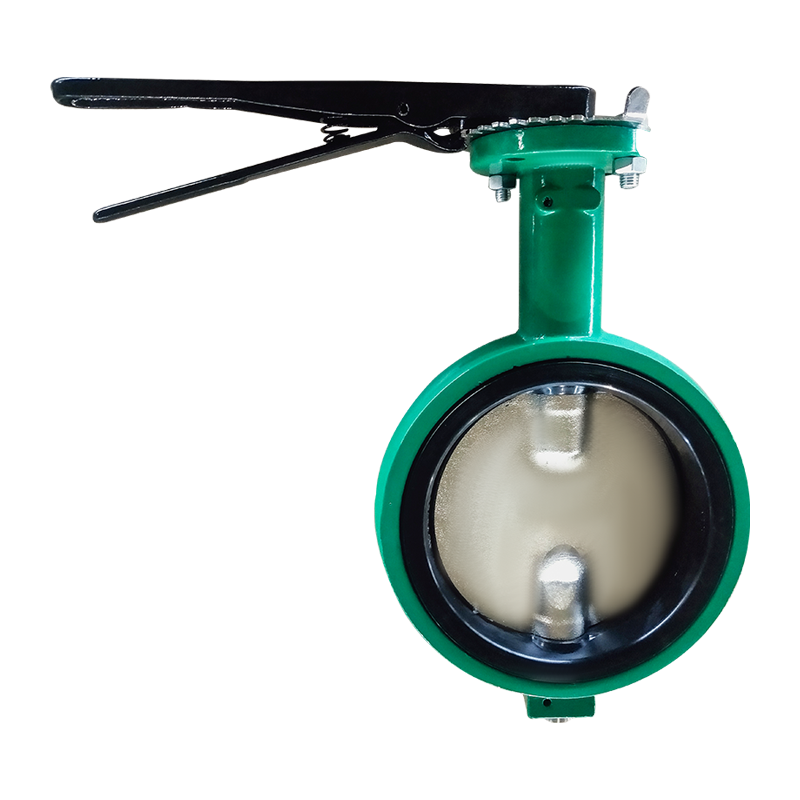
Where it fits: industries and scenarios
- Dairy and beverage lines needing CIP/SIP and fast changeovers.
- Pharma utility and WFI loops (with electropolished internals and proper gaskets).
- Craft breweries—tank isolation and transfer manifolds (gear or pneumatic actuation).
- Food, cosmetic, and water treatment skids where hygiene and budget both matter.
Key specs (real-world oriented)
| Model | Long Neck Wafer Type Model 25 (also wafer Model 15; lug Model 20/30) |
| Size range | 1″–12″ |
| Body/disc material | SS316/316L (CF8M) standard; SS304 optional |
| Seat options | EPDM, FKM, PTFE (FDA-compliant materials available) |
| Finish | Internal Ra ≤0.8 μm; electropolish option ≈0.4 μm |
| Pressure rating | up to PN16 / 150 psi (size/seat dependent) |
| Temperature window | ≈ -10 to 180°C (check seat curve; real-world use may vary) |
| Top flange | ISO 5211 for actuation (lever/gear/pneumatic/electric) |
| Testing | Seat test to ISO 5208 Rate A (zero visible leakage), hydrostatic shell per API 598 |
| Service life | ≈ 100k–500k cycles with proper alignment and clean media |
Process flow and quality checkpoints
Materials are traceable SS316/316L; discs and bodies are precision-machined, then optionally electropolished. Seats are molded and post-cured. Assembly is clean-bench staged; torque and concentricity are verified. Each valve gets hydrostatic shell and seat tests; surface roughness is sampled with a profilometer; gaskets meet FDA 21 CFR where specified. Documentation packs (MTRs, pressure test certificates) can be supplied on request. Origin: Development area of Huanmadian, NingJin county, Hebei, China.
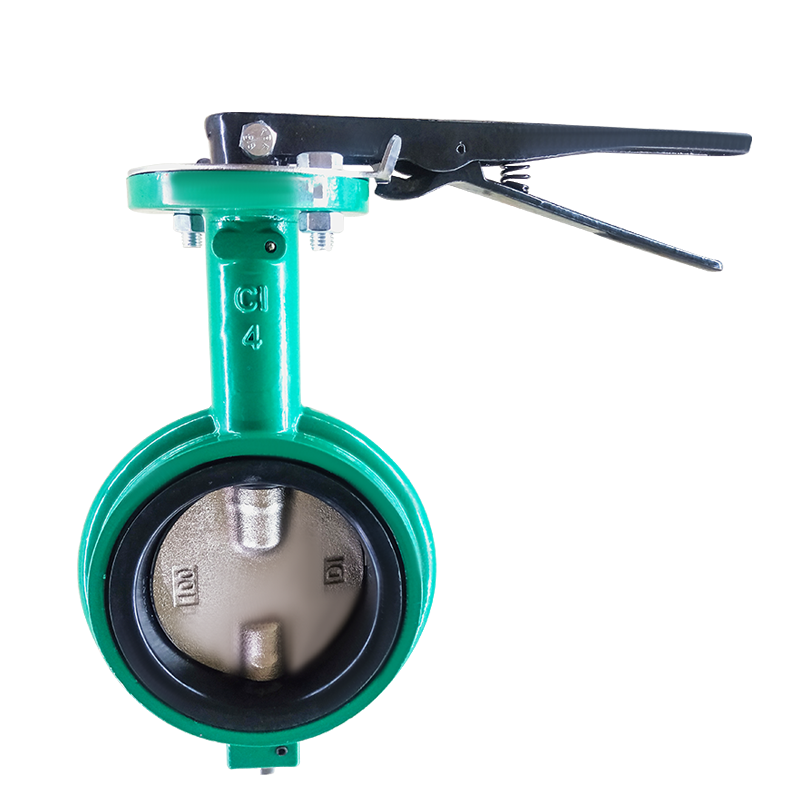
Vendor snapshot (what buyers usually compare)
| Vendor | Materials/Finish | Cert docs | Lead time | Price |
|---|---|---|---|---|
| Hongda Valve (Ningjin, Hebei) | 316L standard; Ra ≤0.8 μm; EP/≤0.4 μm optional | MTRs, ISO 5208/API 598 test reports | ≈ 2–4 weeks | Value-tier |
| EU Trading Co. | 316L/EP standard | 3-A/EHEDG on request | ≈ 5–7 weeks | Premium |
| OEM Aggregator | Varies by lot | Basic CoC | ≈ 3–8 weeks | Budget |
Customization and actuation
- Seats: EPDM for CIP alkalines, FKM for solvents, PTFE for high-temp media.
- Electropolish for ASME BPE environments; tri-clamp ends via spool adaptors.
- Pneumatic rack-and-pinion with ISO 5211 direct mount; positioners for modulating duty.
Two quick case notes
– A Midwest brewery swapped older gate valves for the stainless steel sanitary butterfly valve on bright beer tanks; CIP time dropped about 12% (mostly from better drainability).
– A dairy in Southeast Asia standardized on lug-style bodies for a pasteurizer manifold; with PTFE seats and EP finish, they extended seat replacement intervals from quarterly to roughly biannual—surprisingly robust in hot cycles.
What customers keep telling me
Many customers say the long neck helps with insulation clearance and actuator mounting. It seems that the torque curve stays predictable after SIP, provided you don’t overspec the spring set on the actuator. And yes, the stainless steel sanitary butterfly valve isn’t a magic wand—alignment and gasket choice still make or break performance.
Citations
-
Comprehensive Guide to Wholesale 3 Butterfly Valve Price and Supplier Selection
NewsJan.28,2026
-
Comprehensive Guide to Wholesale Water Main Check Valve Selection and Application
NewsJan.27,2026
-
Wholesale 6 Lug Butterfly Valve – Durable & Cost-Effective Solutions for Industrial Applications
NewsJan.06,2026
-
Wholesale Composeal Butterfly Valve - Reliable Industrial Sealing Solutions
NewsJan.06,2026
-
Wholesale Marine Check Valve | Durable & Certified Marine Valves
NewsJan.06,2026
-
Wholesale Butterfly Valve Gas – B2B Solutions for Efficient Gas Flow Control | Hongda Valve
NewsJan.05,2026
 Afrikaans
 Albanian
 Amharic
 Arabic
 Armenian
 Azerbaijani
 Basque
 Belarusian
 Bengali
 Bosnian
 Bulgarian
 Catalan
 Cebuano
 Corsican
 Croatian
 Czech
Czech
 Danish
 Dutch
Dutch
 Esperanto
 Estonian
 Finnish
 French
 Frisian
 Galician
 Georgian
 German
 Greek
Greek
 Gujarati
 Haitian Creole
 Hausa
Hausa
 Hawaiian
 Hebrew
 Hindi
Hindi
 Miao
Miao
 Hungarian
 Icelandic
 Igbo
Igbo
 Indonesian
 Irish
Irish
 Italian
 Japanese
 Javanese
 Kannada
 Kazakh
 Khmer
Khmer
 Rwandese
 Korean
 Kurdish
 Kyrgyz
 Lao
Lao
 Latin
Latin
 Latvian
 Lithuanian
 Luxembourgish
 Macedonian
 Malgashi
 Malay
Malay
 Malayalam
 Maltese
 Maori
Maori
 Marathi
 Mongolian
 Myanmar
 Nepali
 Norwegian
 Norwegian
 Occitan
 Pashto
 Persian
 Polish
 Portuguese
 Punjabi
 Romanian
 Russian
 Samoan
 Scottish Gaelic
 Serbian
 Sesotho
 Shona
Shona
 Sindhi
 Sinhala
 Slovak
 Slovenian
 Somali
 Spanish
 Sundanese
 Swahili
 Swedish
 Tagalog
 Tajik
Tajik
 Tamil
Tamil
 Tatar
Tatar
 Telugu
 Thai
Thai
 Turkish
 Turkmen
 Ukrainian
 Urdu
Urdu
 Uighur
 Uzbek
Uzbek
 Vietnamese
 Welsh
Welsh
 Bantu
Bantu
 Yiddish
 Yoruba
 Zulu
Zulu
 English