
- Call Us
- +8618633052223
- njhdvlz@163.com
Aug . 22, 2025 18:44 Back to list
Pressure Ratings for Double Flanged Butterfly Valves
In industrial fluid systems, where reliability under varying pressures is paramount, the double flanged butterfly valve emerges as a robust solution. Also known as butterfly valve double flange or butterfly double flange, this valve features flanges on both ends, allowing for secure, bolted connections to pipelines—making it ideal for high-pressure applications like power generation and petrochemical processing. Ningjin Hongda Valve Co., Ltd., a professional valve supplier with specialized production lines for casting and assembly, manufactures such valves. Their Series F401 double flanged butterfly valve (available in sizes 2″ to 48″) boasts spliced rubber liners for enhanced strength and reliable seating, with O-rings cast into the seat’s seal surface to eliminate the need for flange gaskets. Understanding pressure ratings is key to selecting the right valve, and the following guide breaks down this critical aspect.
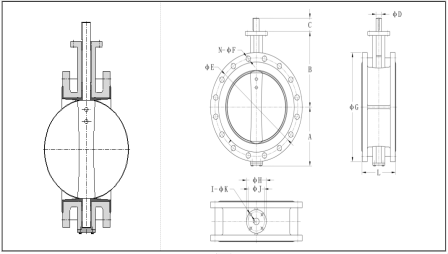
Understanding Pressure Ratings for Double Flanged Butterfly Valve
- Definition and Standards: Pressure ratings for a double flanged butterfly valve indicate the maximum pressure it can safely handle at a given temperature. These ratings adhere to global standards like ISO 5752 (basic series 13 for short face-to-face dimensions) and DIN 3202 part 1 (series F16), ensuring consistency across industries. Ningjin Hongda’s valves comply with these standards, providing clear, reliable ratings for users.
- Temperature Influence: A butterfly valve double flange’s pressure rating decreases as temperature rises. For example, a valve rated for 150 psi at 100°F may only handle 100 psi at 300°F, due to material expansion and seal softening. This is crucial in applications like steam systems, where high temperatures are common.
- Material Impact: The body material (gray cast iron, ductile iron, etc.) and seal type (rubber, PTFE) of a butterfly double flangevalve affect its pressure capacity. Ductile iron bodies, used in Ningjin Hongda’s valves, offer higher strength than cast iron, supporting higher pressure ratings, while robust rubber liners (like those in Series F401) maintain seals under pressure.
Common Pressure Classes for Butterfly Valve Double Flange
- Class 150: This is the most common rating for double flanged butterfly valvein water treatment, HVAC, and low-pressure industrial systems. It handles pressures up to 150 psi (10 bar), making it suitable for applications like municipal water pipelines.
- Class 300: Designed for higher pressures, butterfly valve double flangewith a Class 300 rating (300 psi/20 bar) is used in power plants, petrochemical processing, and industrial boilers. Ningjin Hongda’s Series F401 includes options in this class, thanks to their reinforced rubber liners and ductile iron construction.
- Class 600: Though less common, butterfly double flangevalves with Class 600 ratings (600 psi/40 bar) are used in high-pressure systems like offshore oil pipelines. These require specialized materials and stricter manufacturing tolerances, which Ningjin Hongda can provide through personalized production.
Selecting the Right Double Flanged Butterfly Valve for Pressure Needs
- Assess System Requirements: Calculate the maximum operating pressure and temperature of your system. For example, a sewage treatment plant with 100 psi pressure would thrive with a Class 150 double flanged butterfly valve, while a refinery with 250 psi needs a Class 300 model.
- Match Standards to Application: Ensure the butterfly valve double flangecomplies with industry standards. For instance, API-based systems (common in oil and gas) may require valves meeting API 609, while water systems often follow ISO or DIN standards—Ningjin Hongda’s valves are compatible with multiple standards for versatility.
- Consider Flow Characteristics: Even with the right pressure rating, a butterfly double flangevalve’s design (disc shape, seat type) affects pressure drop. Full-bore designs minimize pressure loss, making them ideal for systems where maintaining flow efficiency is critical.
Pressure Testing and Certification for Double Flanged Butterfly Valve
|
Test Type |
Purpose |
Procedure |
|
Hydrostatic Shell Test |
Verify body strength |
Fill the valve body with water and pressurize to 1.5 times the rated pressure; check for leaks. |
|
Seat Leak Test |
Ensure tight closure under pressure |
Apply pressure to the valve (in closed position) and monitor for leakage through the seat. |
|
Operational Test |
Confirm functionality under pressure |
Cycle the valve open/closed under working pressure to check for smooth operation and seal integrity. |
Ningjin Hongda subjects their double flanged butterfly valve to these tests, ensuring compliance with standards and reliable performance in real-world conditions.
Double Flanged Butterfly Valve FAQS
What Happens If a Double Flanged Butterfly Valve Exceeds Its Pressure Rating?
Exceeding the pressure rating can cause the double flanged butterfly valve body to crack, seals to fail, or discs to deform, leading to leaks, system damage, or safety hazards. Always operate within the rated pressure.
Can a Butterfly Double Flange Valve’s Pressure Rating Be Increased?
No, the pressure rating is determined by design and materials. Modifying a butterfly double flange valve to handle higher pressure risks failure. Instead, select a valve with a higher rating, such as upgrading from Class 150 to Class 300.
How Does Temperature Affect a Butterfly Valve Double Flange’s Pressure Capacity?
High temperatures weaken materials and seals, reducing the butterfly valve double flange’s pressure capacity. Check the valve’s temperature-pressure chart (provided by manufacturers like Ningjin Hongda) to ensure compatibility.
Do All Double Flanged Butterfly Valves Withstand Vacuum Pressure?
Not all—vacuum service requires specialized double flanged butterfly valve designs with reinforced seats. Ningjin Hongda can customize valves for vacuum applications, ensuring they maintain seals under negative pressure.
Where Can I Find Double Flanged Butterfly Valve with Specific Pressure Ratings?
Ningjin Hongda Valve Co., Ltd. offers double flanged butterfly valve in various pressure classes (Class 150 to 600) and sizes (2″ to 48″), with personalized options to meet specific needs. Their Series F401 valves, with reliable seals and robust construction, are trusted for high-pressure applications worldwide. Visit their website to explore options.
-
Industrial Guide to Wholesale Large Butterfly Valve Procurement
NewsApr.16,2026
-
High Quality Wholesale Inlet Butterfly Valve for Industrial Systems
NewsApr.09,2026
-
Comprehensive Guide to Wholesale Butterfly Valve 8 Inch Price and Selection
NewsApr.07,2026
-
Comprehensive Guide to Wholesale SS 304 Butterfly Valve Selection and Applications
NewsApr.04,2026
-
Comprehensive Guide to Wholesale Valve Material Selection and Cost Optimization
NewsMar.31,2026
-
Comprehensive Guide to Wholesale Inline Hydraulic Check Valve Solutions
NewsMar.28,2026
 Afrikaans
 Albanian
 Amharic
 Arabic
 Armenian
 Azerbaijani
 Basque
 Belarusian
 Bengali
 Bosnian
 Bulgarian
 Catalan
 Cebuano
 Corsican
 Croatian
 Czech
Czech
 Danish
 Dutch
Dutch
 Esperanto
 Estonian
 Finnish
 French
 Frisian
 Galician
 Georgian
 German
 Greek
Greek
 Gujarati
 Haitian Creole
 Hausa
Hausa
 Hawaiian
 Hebrew
 Hindi
Hindi
 Miao
Miao
 Hungarian
 Icelandic
 Igbo
Igbo
 Indonesian
 Irish
Irish
 Italian
 Japanese
 Javanese
 Kannada
 Kazakh
 Khmer
Khmer
 Rwandese
 Korean
 Kurdish
 Kyrgyz
 Lao
Lao
 Latin
Latin
 Latvian
 Lithuanian
 Luxembourgish
 Macedonian
 Malgashi
 Malay
Malay
 Malayalam
 Maltese
 Maori
Maori
 Marathi
 Mongolian
 Myanmar
 Nepali
 Norwegian
 Norwegian
 Occitan
 Pashto
 Persian
 Polish
 Portuguese
 Punjabi
 Romanian
 Russian
 Samoan
 Scottish Gaelic
 Serbian
 Sesotho
 Shona
Shona
 Sindhi
 Sinhala
 Slovak
 Slovenian
 Somali
 Spanish
 Sundanese
 Swahili
 Swedish
 Tagalog
 Tajik
Tajik
 Tamil
Tamil
 Tatar
Tatar
 Telugu
 Thai
Thai
 Turkish
 Turkmen
 Ukrainian
 Urdu
Urdu
 Uighur
 Uzbek
Uzbek
 Vietnamese
 Welsh
Welsh
 Bantu
Bantu
 Yiddish
 Yoruba
 Zulu
Zulu
 English