
- Call Us
- +8618633052223
- njhdvlz@163.com
Oct . 20, 2025 12:00 Back to list
Red Butterfly Valve | Durable, Anti-Corrosion, PTFE Seat
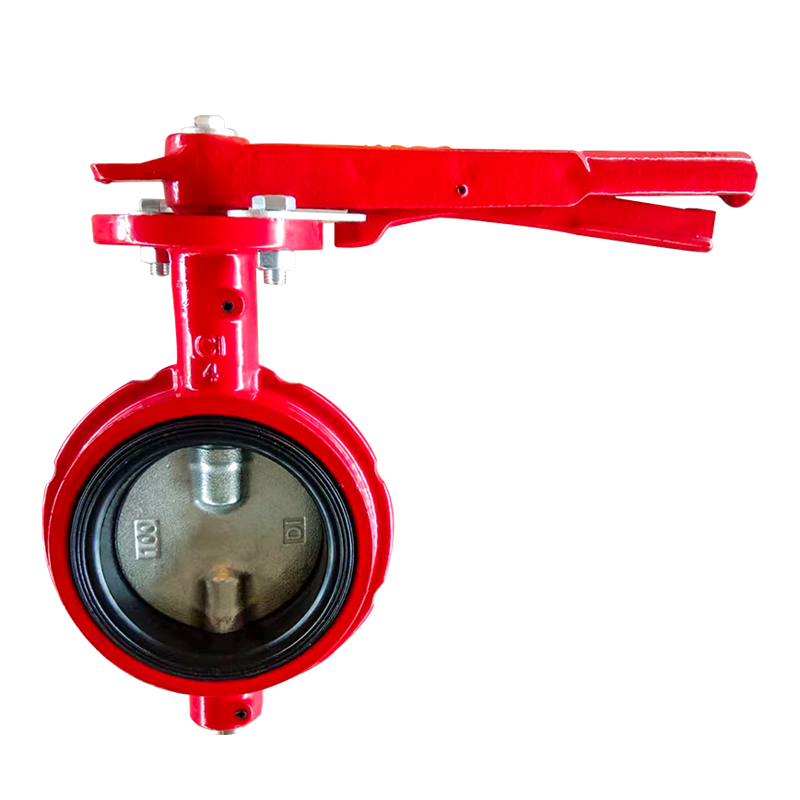
Red Butterfly Valve Buyer’s Notes: Short Neck Wafer Type Model 15 (Series F235)
If you’re scanning the market for a red butterfly valve, here’s the insider view. The Short Neck Wafer Type Model 15—Series F235, a careful remodification of the F201—keeps the footprint compact, the price sensible, and the alignment predictable. It’s only compatible with ANSI 125/150 flanges, which matters if your plant has a mix of drilling standards (I’ve seen that bind projects more than once). Origin: the development area of Huanmadian, NingJin county, Hebei, China—an established manufacturing cluster that, frankly, knows its castings.
What’s trending in butterfly valves (and why it helps you)
Plants are consolidating SKUs, leaning on wafer bodies for lighter weight and easier maintenance. Rubber-seated designs are still king for water/HVAC, but I’m seeing more dual-material disc options for mild chemicals. Digital torque verification at the factory is also creeping into QA reports—small thing, big trust booster. And yes, the red butterfly valve paint is not just for looks; high-build epoxy coatings are getting thicker for corrosion resistance.
Spec snapshot (real-world use may vary)
| Parameter | Model 15 (F235) — indicative |
|---|---|
| Body | Ductile Iron (≈ EN-GJS-450) with red epoxy coating |
| Disc | SS304/SS316 or Ni-plated DI (selection by medium) |
| Seat | EPDM/NBR/Viton (FKM) options |
| Pressure class | ANSI 125/150 flange compatibility; typical working ≤ 16 bar (≈232 psi) |
| Sizes | DN50–DN600 (2"–24") common; larger on request |
| Top flange | ISO 5211 mounting pad (select sizes) |
| Testing | Shell 1.5× rated; seat 1.1×; leakage: zero-seat per API/EN |
| Service life | ≈ 50,000 cycles (clean water, correct torque) |
How it’s made (quick process flow)
- Materials: DI body casting; precision-machined disc; elastomer seats.
- Methods: CNC machining, shot-blast, epoxy powder coat (around 200–250 μm DFT), vulcanized seat fit.
- Assembly: stem-disc alignment, bushing install, seat compression check, ISO 5211 pad verification.
- Testing: hydrostatic shell and seat per API 598/EN 12266-1; torque mapping and handle stop set.
- Docs: MTRs, QA checklist, pressure test log; optional 3.1 certs.
Where it fits best
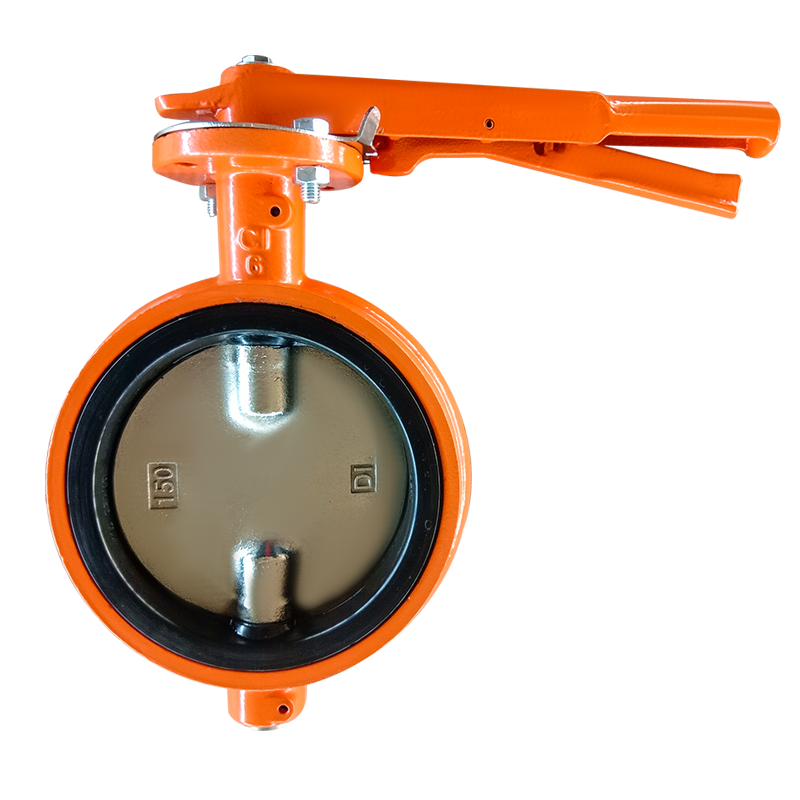
- HVAC loops, cooling towers, district energy (fast shutoff, compact).
- Municipal water and wastewater (EPDM seat, SS disc for longevity).
- Light chemicals, food-grade water, desal pretreatment (with appropriate seat/disc pairing).
- Fire protection bypasses and isolation (check project standards first).
Many customers say the red butterfly valve is easy to spot in crowded galleries—small perk when you’re troubleshooting at 2 a.m.
Customization options
Handle, gear, or ISO-mounted actuator; EPDM vs NBR vs FKM seat; SS316 disc for chlorides; NSF/WRAS compliance on request; lockable lever; etched tags. To be honest, a simple material swap often doubles service life.
Vendor snapshot (what buyers compare)
| Vendor | Indicative 8" Price | Lead Time | Certs | Notes |
|---|---|---|---|---|
| Hongda (F235) | Mid | ≈ 2–4 weeks | ISO 9001; API/EN test reports | Short-neck wafer; ANSI 125/150 only |
| Regional Assembler | Mid–High | Stock-to-2 weeks | ISO 9001; local approvals | Fast swaps; limited metallurgy |
| Generic Importer | Low | 4–8 weeks | Basic QC | Specs vary; check test records carefully |
Field notes and mini case studies
- Food plant retrofit: swapped NBR to FKM seat on a red butterfly valve line—reduced swelling after CIP cycles; leakage dropped to zero on seat test.
- Cooling loop in a coastal hotel: SS316 disc upgrade curbed pitting; customer feedback called torque “surprisingly light.”
Standards, testing, and paperwork you should see
- Design/performance: API 609 or AWWA C504 (rubber-seated), as applicable.
- Pressure test: API 598 or EN 12266-1 (zero visible seat leakage).
- Mounting: ISO 5211 for actuator interface.
- Flange drilling: ANSI 125/150 (per ASME B16.1/B16.5 alignment).
Actually, the quickest risk check is simple: ask for the hydro test report—with the valve’s serial number. If they hesitate, keep looking.
Bottom line
For water/HVAC/light-chem pipelines needing a compact isolation piece, the red butterfly valve in the F235 short-neck wafer form is a practical, budget-sane choice—provided your flanges are ANSI 125/150 and your seat material matches the medium.
References:
- API 609: Butterfly Valves: Double-flanged, Lug- and Wafer-type.
- API 598: Valve Inspection and Testing.
- EN 12266-1: Industrial valves—Testing of metallic valves—Pressure tests.
- ISO 5211: Industrial valves—Part-turn actuator attachments.
- ASME B16.1/B16.5: Flanges and Flanged Fittings (Class 125/150 alignment context).
-
Comprehensive Guide to Wholesale 3 Butterfly Valve Price and Supplier Selection
NewsJan.28,2026
-
Comprehensive Guide to Wholesale Water Main Check Valve Selection and Application
NewsJan.27,2026
-
Wholesale 6 Lug Butterfly Valve – Durable & Cost-Effective Solutions for Industrial Applications
NewsJan.06,2026
-
Wholesale Composeal Butterfly Valve - Reliable Industrial Sealing Solutions
NewsJan.06,2026
-
Wholesale Marine Check Valve | Durable & Certified Marine Valves
NewsJan.06,2026
-
Wholesale Butterfly Valve Gas – B2B Solutions for Efficient Gas Flow Control | Hongda Valve
NewsJan.05,2026
 Afrikaans
 Albanian
 Amharic
 Arabic
 Armenian
 Azerbaijani
 Basque
 Belarusian
 Bengali
 Bosnian
 Bulgarian
 Catalan
 Cebuano
 Corsican
 Croatian
 Czech
Czech
 Danish
 Dutch
Dutch
 Esperanto
 Estonian
 Finnish
 French
 Frisian
 Galician
 Georgian
 German
 Greek
Greek
 Gujarati
 Haitian Creole
 Hausa
Hausa
 Hawaiian
 Hebrew
 Hindi
Hindi
 Miao
Miao
 Hungarian
 Icelandic
 Igbo
Igbo
 Indonesian
 Irish
Irish
 Italian
 Japanese
 Javanese
 Kannada
 Kazakh
 Khmer
Khmer
 Rwandese
 Korean
 Kurdish
 Kyrgyz
 Lao
Lao
 Latin
Latin
 Latvian
 Lithuanian
 Luxembourgish
 Macedonian
 Malgashi
 Malay
Malay
 Malayalam
 Maltese
 Maori
Maori
 Marathi
 Mongolian
 Myanmar
 Nepali
 Norwegian
 Norwegian
 Occitan
 Pashto
 Persian
 Polish
 Portuguese
 Punjabi
 Romanian
 Russian
 Samoan
 Scottish Gaelic
 Serbian
 Sesotho
 Shona
Shona
 Sindhi
 Sinhala
 Slovak
 Slovenian
 Somali
 Spanish
 Sundanese
 Swahili
 Swedish
 Tagalog
 Tajik
Tajik
 Tamil
Tamil
 Tatar
Tatar
 Telugu
 Thai
Thai
 Turkish
 Turkmen
 Ukrainian
 Urdu
Urdu
 Uighur
 Uzbek
Uzbek
 Vietnamese
 Welsh
Welsh
 Bantu
Bantu
 Yiddish
 Yoruba
 Zulu
Zulu
 English