
- Call Us
- +8618633052223
- njhdvlz@163.com
Oct . 26, 2025 11:45 Back to list
Red Butterfly Valve – PTFE Seat, Ductile Iron & Stainless
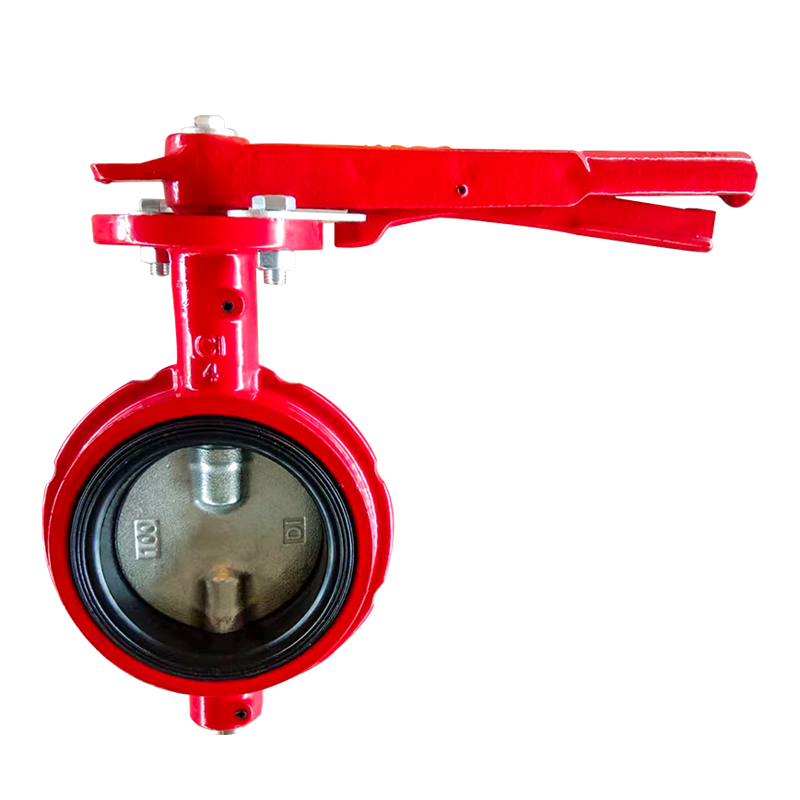
Short Neck Wafer Type Model 15: the practical red workhorse many plants swear by
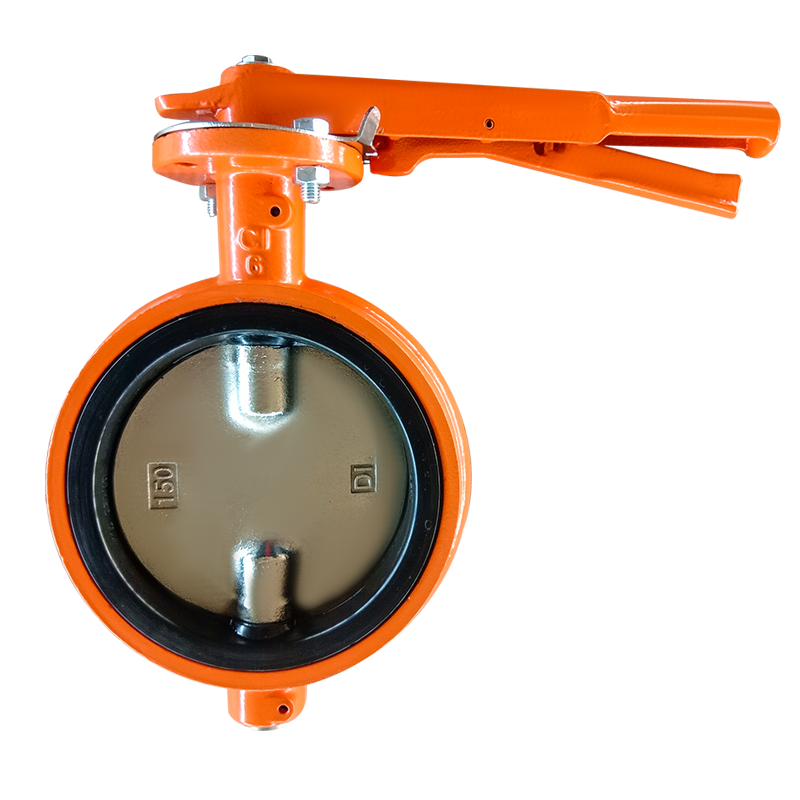
If you work in water, HVAC, or light industrial lines, you’ve almost certainly handled a Red Butterfly Valve that looks just like this one. The Series F235—essentially a careful rework of the F201—keeps the no-drama behavior maintenance teams like, while tightening compatibility around ANSI 125/150 flanges only. It’s made in the development area of Huanmadian, NingJin County, Hebei, China. And yes, it’s really red.
What’s trending (and why this matters)
There’s a quiet trend toward compact, wafer-style valves that drop into mixed-material piping—ductile iron to steel, that kind of thing. To be honest, the fewer bolt-up surprises, the better. The Red Butterfly Valve here leans into that: short neck, ANSI 125/150 drilling, simple lever/gear options. Fewer SKUs, faster installs. Many customers say that’s half the battle on retrofits.
Core specs at a glance
| Item | Specification (≈ = typical; real-world use may vary) |
|---|---|
| Model | Short Neck Wafer Type Model 15, Series F235 (remod of F201) |
| Size Range | DN50–DN600 (2"–24") |
| Pressure Class | ANSI Class 125/150 compatibility (wafer), PN16 typical |
| Body / Disc | Ductile Iron (EN-GJS-500-7); optional SS 304/316 disc |
| Seat | EPDM or NBR; bubble-tight (ISO 5208 Rate A) |
| Stem | SS 410/420/431, anti-blowout design |
| Temperature | ≈ -20 °C to +120 °C (seat-dependent) |
| Coating | Fusion-bonded epoxy, red, potable-water friendly options |
| Testing | Shell 1.5× rated; seat 1.1× (ISO 5208), API 609/MSS SP-67 guidance |
| Torque (DN200) | ≈ 85–110 N·m (clean water, 20 °C) |
How it’s built (brief process flow)
Materials are incoming-checked (spectro for DI heats; polymer hardness for seats). Cast bodies are shot-blasted, machined, and FBE-coated. Seats are molded and interference-fitted; stems are precision-ground. Assemblies get hydrostatic shell and seat tests per ISO 5208, with random API 609 audits. Typical service life? Around 15–20 years in treated water; harsher slurries, less—honestly depends on solids and cycling.
Where it fits (and shines)
- Municipal and building water, HVAC chilled/condensed loops
- Light industrial process water, irrigation mains
- Fire-protection loops (check your AHJ and listing requirements)
- Food & beverage utilities—when requested with compliant elastomers
Advantages: compact envelope, easy drop-in alignment, forgiving sealing, and—this is underrated—predictable torque. The Red Butterfly Valve is the definition of “install and forget” for utility lines.
Vendor snapshot (quick comparison)
| Vendor | Certs | Customization | Lead Time ≈ | Notes |
|---|---|---|---|---|
| Hongda (F235) | ISO 9001; test to ISO 5208/API 609 | Seats, discs, coatings | 2–5 weeks | ANSI 125/150 only—less guesswork |
| Regional OEM B | ISO 9001, some UL/FM lines | Broad, pricing higher | 3–8 weeks | Good for listed fire service |
| Import A (generic) | Varies | Limited | 1–6 weeks | Check seat/test reports closely |
Customization and documentation
Options typically include EPDM vs. NBR seats, 304/316 discs, gear operator vs. lever, lockable handles, and potable-water grade coatings. Test certificates (hydro/seat) are standard; material certs and torque curves available on request. The Red Butterfly Valve can be tagged to project QA packs and painted to RAL specs—practical for EPCs.
Real-world snapshots
Case 1, HVAC retrofit (DN200): Contractor reported install time down ≈25% vs. lug style. Leak test: 0 ml/min at 1.1× design per ISO 5208. “No re-torque needed after 30 days,” they told me—surprisingly rare.
Case 2, irrigation trunk (DN300): Silty water, seasonal cycling. After 10 months, seat wear within acceptable range; closing torque rose ≈12%—expected given fines. The Red Butterfly Valve kept bubble-tight shutoff.
Standards and compliance (quick note)
Flange match follows ANSI 125/150 (ASME B16.1/B16.5 drilling). Design/testing references include API 609 and MSS SP-67; hydrostatic and seat tests per ISO 5208. For municipal or fire service, confirm local approvals—always a good habit.
References
- API 609, Butterfly Valves: Double-flanged, lug- and wafer-type.
- MSS SP-67, Butterfly Valves.
- ASME B16.1 and ASME B16.5, Pipe Flanges and Flanged Fittings.
- ISO 5208, Industrial valves — Pressure testing of metallic valves.
- AWWA C504, Rubber-Seated Butterfly Valves.
-
Comprehensive Guide to Wholesale 3 Butterfly Valve Price and Supplier Selection
NewsJan.28,2026
-
Comprehensive Guide to Wholesale Water Main Check Valve Selection and Application
NewsJan.27,2026
-
Wholesale 6 Lug Butterfly Valve – Durable & Cost-Effective Solutions for Industrial Applications
NewsJan.06,2026
-
Wholesale Composeal Butterfly Valve - Reliable Industrial Sealing Solutions
NewsJan.06,2026
-
Wholesale Marine Check Valve | Durable & Certified Marine Valves
NewsJan.06,2026
-
Wholesale Butterfly Valve Gas – B2B Solutions for Efficient Gas Flow Control | Hongda Valve
NewsJan.05,2026
 Afrikaans
 Albanian
 Amharic
 Arabic
 Armenian
 Azerbaijani
 Basque
 Belarusian
 Bengali
 Bosnian
 Bulgarian
 Catalan
 Cebuano
 Corsican
 Croatian
 Czech
Czech
 Danish
 Dutch
Dutch
 Esperanto
 Estonian
 Finnish
 French
 Frisian
 Galician
 Georgian
 German
 Greek
Greek
 Gujarati
 Haitian Creole
 Hausa
Hausa
 Hawaiian
 Hebrew
 Hindi
Hindi
 Miao
Miao
 Hungarian
 Icelandic
 Igbo
Igbo
 Indonesian
 Irish
Irish
 Italian
 Japanese
 Javanese
 Kannada
 Kazakh
 Khmer
Khmer
 Rwandese
 Korean
 Kurdish
 Kyrgyz
 Lao
Lao
 Latin
Latin
 Latvian
 Lithuanian
 Luxembourgish
 Macedonian
 Malgashi
 Malay
Malay
 Malayalam
 Maltese
 Maori
Maori
 Marathi
 Mongolian
 Myanmar
 Nepali
 Norwegian
 Norwegian
 Occitan
 Pashto
 Persian
 Polish
 Portuguese
 Punjabi
 Romanian
 Russian
 Samoan
 Scottish Gaelic
 Serbian
 Sesotho
 Shona
Shona
 Sindhi
 Sinhala
 Slovak
 Slovenian
 Somali
 Spanish
 Sundanese
 Swahili
 Swedish
 Tagalog
 Tajik
Tajik
 Tamil
Tamil
 Tatar
Tatar
 Telugu
 Thai
Thai
 Turkish
 Turkmen
 Ukrainian
 Urdu
Urdu
 Uighur
 Uzbek
Uzbek
 Vietnamese
 Welsh
Welsh
 Bantu
Bantu
 Yiddish
 Yoruba
 Zulu
Zulu
 English